
A timely session for boat owners
America's Boating Club, also known as the United States Power Squadrons, has scheduled an online seminar titled Introduction to Marine Batteries for 12 November 2026. The event is listed from 8pm to 10pm Eastern Standard Time, with registration closing on 10 November according to the organiser's booking page. Its announced focus is practical: flooded lead-acid, absorbed-glass-mat (AGM) and lithium iron phosphate systems, including how boaters choose, charge and maintain them. A live question-and-answer session with presenters and industry partners is also planned. This is a forthcoming educational event, not a claim that the organisers have issued new mandatory standards. It is particularly relevant to owners of small leisure boats because limited space, irregular use and growing electrical loads can make battery decisions unexpectedly complicated.
Why the battery matters on a small boat
A modern runabout may depend on a battery to start its outboard and power navigation electronics, bilge pumping, lights, communications equipment and accessories. A compact cruising boat may also support refrigeration, water pumps and overnight lighting. These are different duties: an engine-starting battery may need a short burst of high current, while a service battery may be expected to deliver a smaller load for hours. If one battery is asked to perform both tasks, the owner should understand the limitations. The answer is not simply to buy the largest or most expensive unit that fits in a locker. The system must suit the installed charging equipment, physical mounting, battery duty and space available. The organiser's decision to cover several technologies acknowledges that there is no one-size-fits-all solution.
Flooded lead-acid remains part of the picture
Traditional flooded lead-acid batteries are familiar to many boat owners and service technicians. Their performance, charging behaviour and maintenance requirements are well understood, but they do require suitable installation and attention. A battery compartment should be designed with the necessary securing, cable protection and ventilation considerations. Maintenance requirements depend on the exact product; an owner should never open or top up a battery unless the manufacturer directs that procedure. Some boaters appreciate the cost and availability of conventional technology, while others seek lower routine maintenance. The relevant comparison is not merely purchase price. It includes expected duty, recharge opportunities, installation requirements and the consequences of neglect. A webinar can help owners ask better questions, although an individual boat's electrical design still requires competent assessment.
Where AGM fits
AGM batteries are a type of lead-acid technology that uses an absorbent glass-mat separator. They are often marketed as lower-maintenance alternatives to conventional flooded designs, but the details of charging, temperature, storage and suitable applications vary by product. Owners should not assume that any charger labelled for lead-acid will necessarily match a particular AGM battery's recommended charging profile. Similarly, an AGM unit that fits the old tray may have different terminals or electrical characteristics. When replacing batteries, record the existing specification and consult the equipment maker's documentation. This applies especially where an outboard's charging system, an onboard charger and shore-power equipment all interact. The aim is dependable starting and safe service rather than an untested improvement in a sales brochure.
Lithium iron phosphate deserves careful integration
Lithium iron phosphate, commonly called LiFePO4, has attracted attention because of its useful energy density and cycling characteristics. It is also a system that should be installed with understanding of battery management, charging compatibility and protection against faults. Not every lithium product is designed as a direct replacement for an engine-starting battery. Likewise, an older alternator or charger may not be suitable for a particular pack without additional equipment. Owners should obtain written compatibility information from the battery maker and, where appropriate, the engine and charger manufacturers. The correct protection, monitoring and isolation arrangements are installation-specific. A small boat offers little tolerance for an electrical system that fails unexpectedly at sea, so lithium conversion is a project to assess carefully rather than a universal plug-and-play upgrade.
Charging is more than plugging in a lead
An electrical system may charge while the engine runs, from shore power, from solar panels or from a combination of sources. Each method has operating limits, and the interactions can become complex. A battery's advertised capacity says little about whether the charging arrangement will replenish it before the next trip. Owners should consider the real usage pattern: occasional day trips, weekends at anchor or long intervals in storage. The webinar's charging topic is therefore as important as the chemistry comparison. A vessel spending months unattended needs a different storage routine from a regularly used boat with frequent alternator charging. Follow manufacturer directions for battery maintenance and charging; improvised connections can create overheating or fire risk and are not a sensible substitute for correct equipment.
Load estimates make the choice clearer
Before changing battery type or adding capacity, list the electrical consumers that actually operate aboard. A fishfinder, VHF, navigation lights, livewell pump and phone charging can have overlapping demands. A small refrigerator or electric trolling motor adds another pattern of use. Owners need to consider how long equipment runs and whether the engine will be available for charging. This practical inventory makes conversations with a marine electrician much more productive. It also exposes the limits of marketing comparisons based on nominal amp-hours alone. Voltage, usable capacity under the proposed conditions, charging time, current demands and protective arrangements all matter. The organiser's session may help boaters understand these questions, but it cannot design a complete electrical system remotely for every participant.
Maintenance is an ownership habit
Battery reliability is partly a matter of observing simple warning signs. Corroded terminals, damaged wiring, loose mountings, unexpected voltage behaviour or a charger that runs unusually hot deserve attention. Do not work on live circuits or disconnect components without understanding the procedure and risks. Owners can keep a record of battery age, model, capacity, service dates and changes to charging equipment. A competent workshop can check whether the installation remains suitable and whether cables or protective devices need replacement. Batteries should also be secured against movement and protected from water intrusion in accordance with their specifications. A boat that starts easily at the ramp is not proof that its service power or charging safety is satisfactory for a longer trip.
What the November webinar offers
The event's public listing promises an introduction to flooded, AGM and lithium battery systems, plus questions about selection, charging and maintenance. It includes time for audience questions and discussion of where marine battery technology may be heading. The page does not establish that the webinar will provide individual design certification or an approved installation plan for a specific boat. Participants should bring focused questions and record the product details of their current system, but avoid asking a presenter to authorise an uninspected installation. The official listing provides the current time and registration information. Because the published deadline is 10 November, interested readers need to check availability promptly rather than assume they can sign up on the day of the session.
What to check before changing batteries
For a small-boat owner considering an upgrade, useful groundwork can begin even without attending the webinar. Find the existing battery specifications, charger manual, outboard charging information and any electrical drawings supplied by the builder. Identify which loads require engine-starting current and which are domestic or accessory loads. Check the dimensions and mounting of the battery space, the condition of connections and the location of isolation and protective equipment. Then discuss suitable options with a qualified marine electrical professional where necessary. The right answer might be a like-for-like replacement, improved maintenance, a carefully engineered dual-battery arrangement or a more substantial upgrade. It should never depend on a simplistic promise that one battery chemistry is automatically best for every boat.
A practical event with a clear limitation
The confirmed news is that America's Boating Club is offering a scheduled educational webinar on 12 November, with a booking deadline shown for 10 November. The wider lesson is that battery selection involves the whole boat, not just the battery box. Buyers should take electrical changes seriously while also recognising that reliable systems do not always require expensive new technology. Learning the differences among flooded, AGM and LiFePO4 products is a useful first step; verifying an installation against the actual vessel and manufacturer's guidance is the essential second. Details may change, so the organiser's own event page remains the authoritative source for the latest registration and programme information.
Sources and image credit
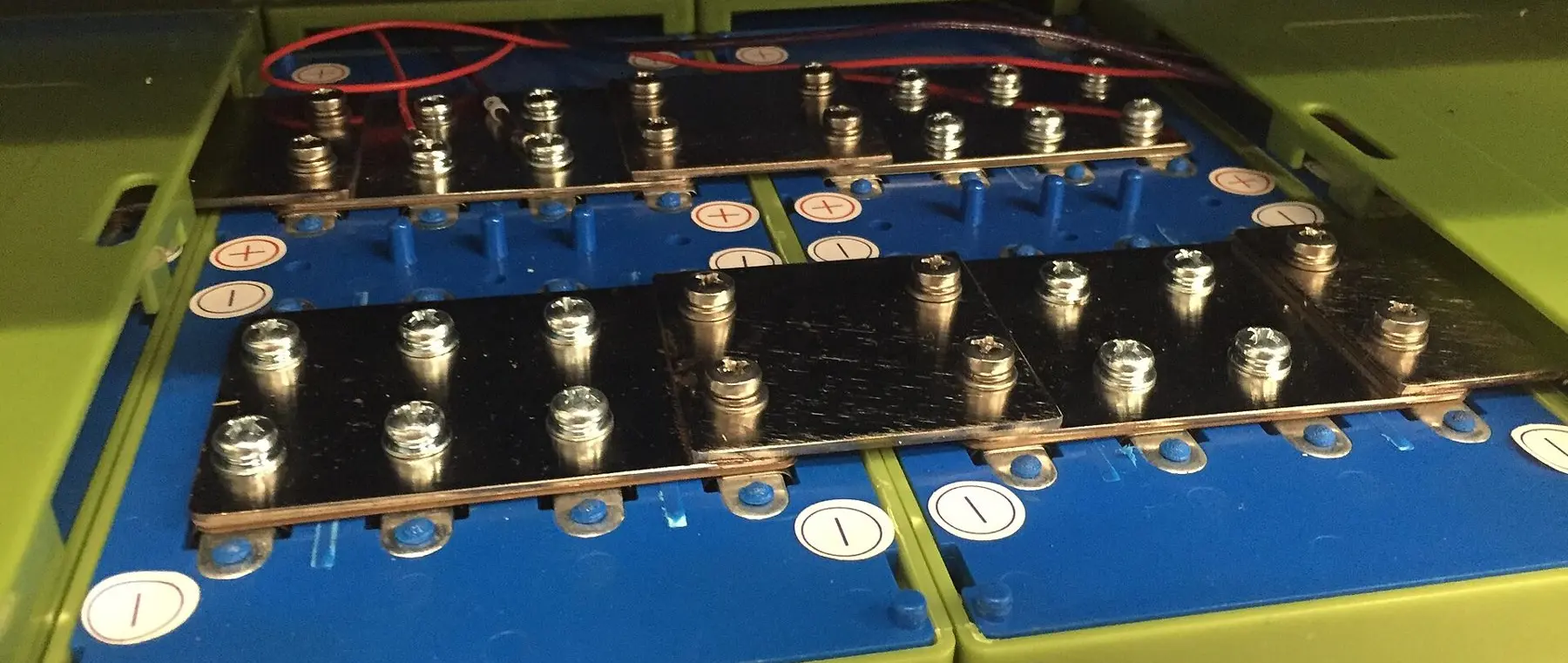
Official source: America's Boating Club registration and programme; event calendar. Illustrative image: Lithium iron phosphate cells by Yo-Co-Man, CC BY-SA 4.0, resized without cropping; not a marine installation featured in the webinar.
