
A new electronic-navigation course will use the app
American Sailing is developing an Electronic Navigation Course that will use Savvy Navvy as a primary digital navigation tool. The organisation says the change reflects how students increasingly use phones and tablets alongside traditional paper-chart skills.
Bringing the software into formal training can help new boaters understand both what digital routing does well and where judgement is still required. That is especially important on small leisure boats, where a mobile device may be the principal navigation screen.
Instructors receive professional accounts
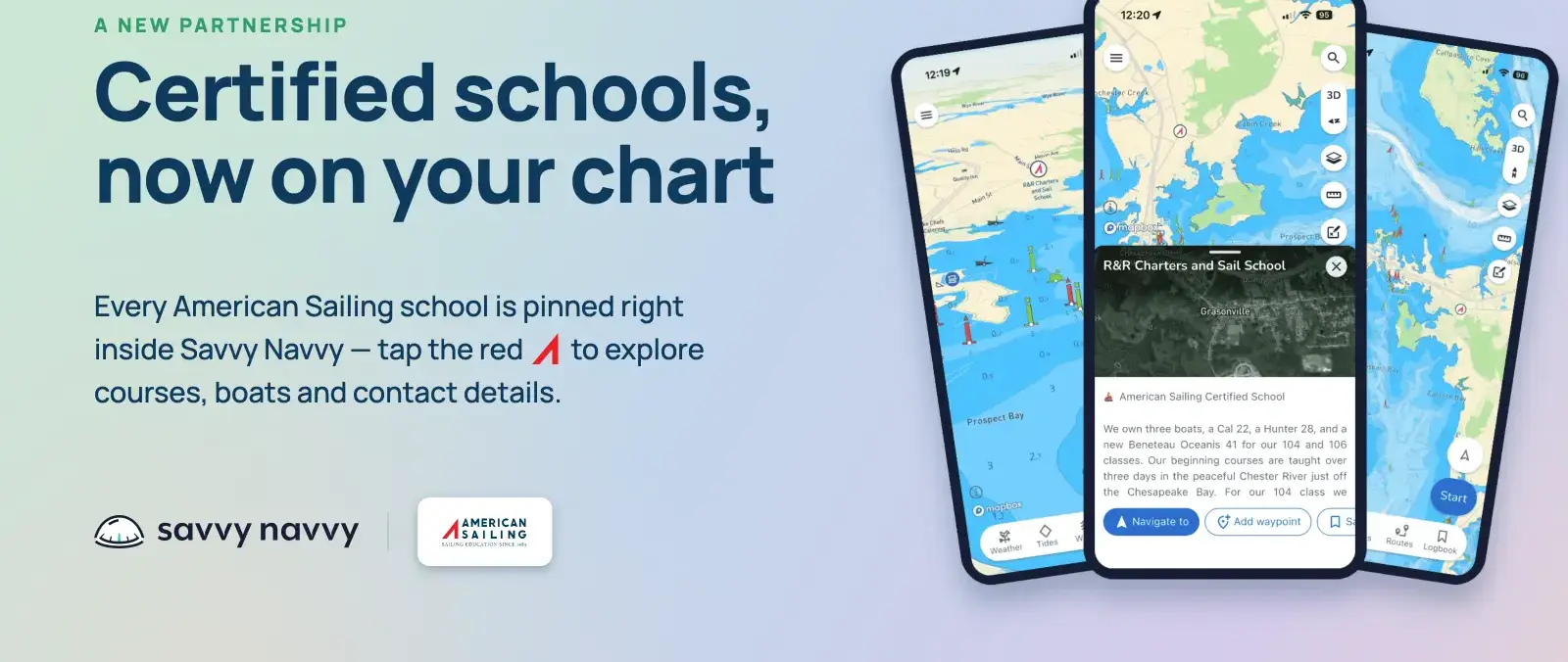
American Sailing and American Boating instructors are being offered professional Savvy Navvy accounts, while students receive member discounts. The partnership also adds the organisation's affiliated schools to the app so boaters can locate accredited training directly from the navigation platform.
The arrangement links software use with instruction rather than expecting beginners to learn by trial and error. Good training should cover route checking, weather, tides, depth, local rules and the limits of automatic routing as well as the controls inside the app.
The network covers more than 400 schools
American Sailing says its network includes more than 400 affiliated schools and that the organisation has certified more than 600,000 sailors and boaters since 1983. Savvy Navvy says more than 5,000 marine professionals already use its tools in training.
That scale gives the partnership the potential to influence how recreational boaters learn navigation in the United States. The goal is not to replace traditional skills but to make the digital systems people already use part of the formal education process.
Smart routing combines several planning inputs
Savvy Navvy's routing system draws on chart information, weather, tides, waves, boat specifications and local rules to calculate routes and dynamic arrival estimates. The company presents that integration as a way to reduce the number of separate tools a boater has to consult.
Students should still be taught to question a suggested route and compare it with the real conditions in front of them. Electronic navigation is most useful when it supports an informed skipper rather than becoming an unquestioned instruction.
Official sources: www.savvy-navvy.com.