
A small-boat equipment specialist marks a milestone
Allen Brothers is preparing to attend METSTRADE 2026 in Amsterdam with a collection of new and developing hardware for small sailing craft. The British company’s own show announcement highlights its seventieth anniversary and a transition to the third generation of Allen family ownership. Visitors to stand 01.516 between 17 and 19 November are being promised a look at A-Splicer tools, 15mm blocks, additions to the High Roller range, 60mm Flip Flop Ratchet Blocks and expanding spar fittings. That is more than an anniversary display. It places practical line-handling components, familiar to dinghy sailors, at the centre of the manufacturer’s trade-show programme. The show has not yet taken place, so these should be described as planned previews, not products independently tested by the newsroom.
Why small fittings deserve a large exhibition
Dinghies and compact keelboats use relatively little hardware compared with large yachts, but each component must work under load, in salt water and with hands that may be cold or wet. A badly routed control line can make an otherwise responsive boat difficult to handle. A block that does not match the rope or load can reduce control, increase wear or fail. The new Allen previews are relevant because they address the tiny practical decisions that make a rig work properly. Product dimensions and names are not substitutes for published working-load specifications, compatible rope sizes and an approved installation. The sensible approach is to treat the display as an opportunity to examine hardware and request definitive technical guidance before modifying a boat.
A-Splicer brings small-diameter rope work into focus
The announced A-Splicer range includes pull fids intended for rope diameters from one to five millimetres. The manufacturer describes fixed-handle professional versions and a system with an interchangeable aluminium handle. Splicing small rope can be awkward because the strands and cover leave very little room for a tool. A dedicated pull fid may help a rigger handle the line without damaging fibres, provided the technique is appropriate to the particular rope construction. The announcement does not establish a tested strength advantage for every type of splice. Sailors should use rope-manufacturer instructions, maintain the recommended bury lengths and test non-critical practice pieces before trusting an attachment with safety-critical or highly loaded functions.
The significance of a 15mm block
Allen also intends to show compact 15mm blocks. On a small dinghy, even a short control line can travel over several turning points, and the weight and friction of each fitting may matter. The right small block might be useful for low-load controls or sail adjustment systems where space is limited. It is important not to assume that a physically small sheave can take the load of a larger mainsheet or vang purchase. The company has multiple generations of compact blocks, so buyers should identify the exact new product, attachment arrangement and relevant ratings before substituting one. The METSTRADE preview gives designers and boat repairers a chance to ask those questions directly.
High Roller additions target demanding line paths
The 2026 announcement says that Allen’s High Roller range is expanding with double and triple arrangements and a smaller 45mm version. The firm markets these as premium high-load blocks designed for low friction and servicing. Multiple-sheave configurations can help a designer build mechanical advantage into a compact system, while a smaller diameter may solve layout constraints on some boats. It would nevertheless be wrong to infer identical capacity across the whole family. Side loading, attachment angle, rope diameter and bearing construction affect real performance. A boat owner should seek the load chart for the exact model and consider the complete purchase geometry, not only the number of sheaves.
The new 60mm Flip Flop Ratchet Blocks
Another planned launch is a 60mm Flip Flop Ratchet Block with an aluminium sheave and a housing that can rotate through 180 degrees. Allen says it will offer manual and automatic ratchet versions. Ratchet blocks are familiar to dinghy crews because they can add grip and control in a highly loaded sheet system. A rotating housing may help a block align with changing lead directions, but installation clearance and the designed range of movement must be confirmed. Manual and automatic ratchet mechanisms also create different habits for a crew. The manufacturer has announced the concept; sailors should wait for the actual specifications and operating instructions before drawing conclusions about where it best fits.
More spar fittings for dinghies and small keelboats
Allen says its mast and boom programme is growing and that visitors will see a wider selection of spar fittings. A spar component has to suit the tube section, material, rivet or fastening method, operating loads and class rules. Replacing one fitting with a visually similar product can alter geometry or create an unwelcome concentration of stress. In a one-design class, changes may require measurement approval even when they appear advantageous. The show provides a useful opportunity for sailmakers, riggers and class representatives to ask what is standard, what can be customised and whether a fitting is intended for existing spars. No universal retrofit compatibility has been announced.
Anniversary and family transition
Seventy years in business is a significant marker for a specialist that competes on relatively small components used in many different sailing disciplines. Allen’s 2026 company news also records Richard Allen’s move into the managing-director role as the business entered its third generation of family ownership. That background helps explain the attention being given to the anniversary at METSTRADE. It should not be treated as proof that all products have been unchanged for decades; the company’s current announcement is explicitly about new designs. Continuity in engineering knowledge can help a manufacturer, but every updated fitting still needs testing, documentation and a clear supply chain.
What club sailors might actually need
For a club member preparing a winter refit, the attraction of a new block or cleat is practical. Does it reduce a snag point? Does the rope run more cleanly? Can it be serviced? Will the attachment fit the boat without weakening a deck or spar? Those questions are more useful than a claim that new hardware will automatically make the boat faster. An instructor running a fleet may value durability and the ability to replace identical parts over the lowest possible weight. A racer may care more about friction under frequent trimming. The same new Allen catalogue items can have different relevance to each person. Choosing deliberately is preferable to replacing sound equipment simply because a product is fashionable.
Safety starts with verified loads and line compatibility
Hardware is part of the structure that controls sails under load. Before changing a block or line attachment, identify the working load, maximum permitted load, safety factor and installation orientation specified by the manufacturer. Check rope diameter and construction, the fastening and the supporting deck or spar. Metal surfaces should be examined for corrosion and sharp edges, while composite parts need appropriate inspection. A professional rigger may be needed for demanding systems. No detailed 2026 load data should be invented from a show preview, and the possibility of a lighter or smoother component is not proof of safer operation. Use the final technical documents when they become available.
METSTRADE is a trade exhibition, not a test report
The Amsterdam exhibition brings manufacturers, distributors and boatbuilders together, so its value lies partly in seeing how a product works in person. But a display model cannot reveal long-term fatigue, resistance to grit, service life or suitability for a particular dinghy. Trade visitors should ask which variants are in production, which are prototypes and when full manuals and spare parts will be available. Sailors who cannot attend can wait for the company’s subsequent specifications and dealer listings. The announcement names the planned products, but it does not provide an independent comparison with competing fittings. Leisure Boat Guide will treat engineering claims as manufacturer claims until objective evidence is available.
How owners can prepare for a better equipment choice
A useful pre-show exercise is to photograph the existing rig, sketch the line path and note rope diameters and block markings. Measure clearances with the sail and controls in their actual working positions. If a fitting is causing trouble, record the symptom: friction, chafe, twisting, poor cleating angle or difficult servicing. This gives a manufacturer or dealer enough context to suggest a relevant solution. It also helps the owner avoid buying a new block for a problem actually caused by incorrect line routing. These are general rigging practices rather than specific recommendations for an untested Allen product. The best equipment upgrade begins with understanding the problem it must solve.
What comes next for the 2026 product previews
The confirmed immediate event is METSTRADE, 17–19 November, where Allen expects to display its announced hardware. The release identifies product types and some headline dimensions, but individual prices, certified ratings and market-by-market availability should be checked when released. For boaters under twelve metres, these developments merit attention because they come from a company whose core audience includes dinghy and small-keelboat users. Their value will depend on fit, documentation and actual performance. An anniversary may bring visitors to a stand; whether the new fittings improve an owner’s boat will be determined more quietly at the workbench and on the water.
Sources and photograph credit
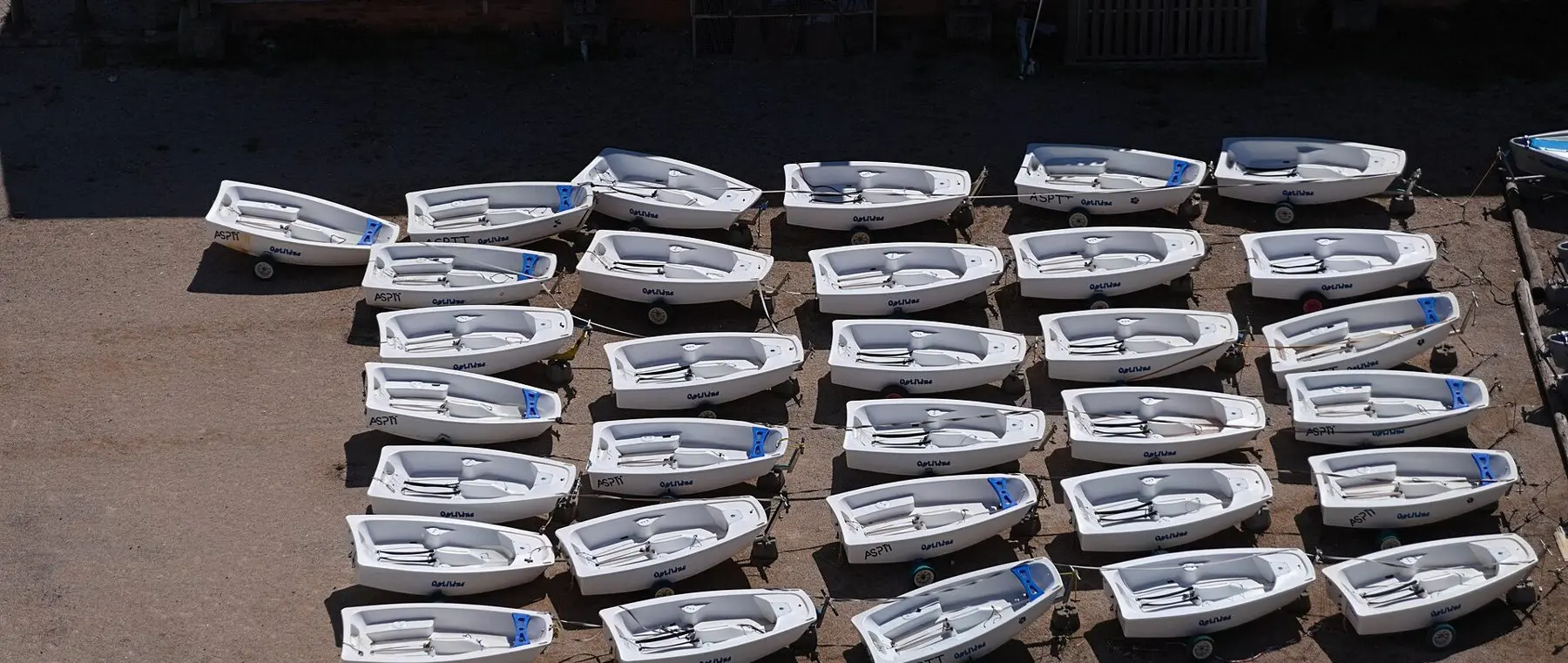
Verified references: Allen Brothers, company-authored METSTRADE announcement; Allen Brothers company product news; METSTRADE exhibitor page. Photograph: Optimist sailing dinghy boats in La Rochelle, France.jpg, Mozzihh, Wikimedia Commons, licensed under CC BY-SA 4.0. The photograph is an illustrative archive view of youth sailing dinghies; it does not depict Allen's newly announced components. The Commons image is resized for web use.
