
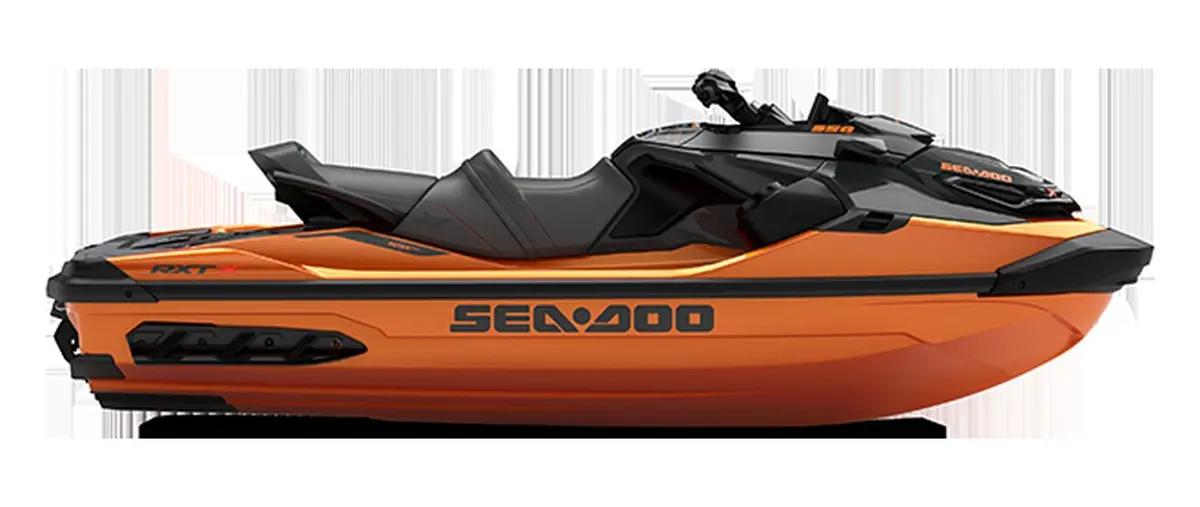
Power aimed at open-water riding
The Sea-Doo RXT-X 350 arrives in the 2027 model range as a three-rider performance PWC built for riders who regularly encounter more open water. BRP specifies the Rotax 1630 ACE engine in a 350-horsepower configuration, combining a substantial increase in thrust potential with a hull and seating arrangement intended to deliver stability at speed. A high horsepower figure does not make rough water harmless; the significance is that Sea-Doo is packaging performance with a relatively large, planted personal-watercraft platform rather than offering the extra output only in a lightweight freestyle machine.
The manufacturer's US model information lists a starting price of $23,599 for the RXT-X 350, excluding transportation and preparation. That represents the entry point for a particular configuration, not a guaranteed final price, and optional accessories or location can change it. The 2027 colour choices include Solar Orange Metallic Premium and Gulfstream Blue Premium, with the model-specific artwork drawing attention to its performance role. Buyers should obtain a written dealer specification that identifies whether any selected trim or electronics differ from the standard package.
The ST3 hull and dimensions
Sea-Doo lists the RXT-X at 135.8 inches in length, approximately 3.45 metres, with a beam of 49.2 inches or 1.25 metres. The dry weight is quoted at 842lb, around 382kg. Its ST3 hull is constructed in fiberglass, and the craft is rated for up to three riders. These numbers distinguish it sharply from the much lighter Spark family. The larger hull and beam can help a machine feel more settled in open water, although handling remains dependent on weather, loading and the rider's skill.
The stated fuel capacity is 18.5 US gallons, equivalent to 70 litres, with total storage space of 26.1 US gallons or 98.9 litres. Those capacities make more ambitious day routes conceivable than would be practical with a very small PWC, but actual safe range must be established from real fuel consumption and a sizeable reserve. Fast jet-propelled riding, repeated acceleration and rough-water conditions can affect fuel use substantially. A route planned from brochure figures without a return margin is not a sound offshore operating practice.
Controls and equipment at the helm
The RXT-X uses a 10.25-inch touchscreen display, according to the manufacturer's specification. That brings key system information to an interface large enough to be read during the pauses between manoeuvres, though riders should not interact with complex menus while travelling at speed. Sea-Doo also highlights a hydraulic steering damper with three adjustment positions to vary steering feel. These features support the idea of a high-performance machine configured for a wider range of conditions and rider preferences.
The seat and footwell arrangement is intended to hold the rider securely when accelerating or crossing chop. The manufacturer describes the Ergolock system and a confidence-oriented hull, and owners should practise using body position to absorb movement rather than relying on the machine to erase wave impacts. Appropriate goggles or eye protection, a secure personal flotation device and suitable exposure protection can matter as much as the screen and steering hardware. A PWC remains an exposed craft, with substantially less weather shelter than a cabin boat.
Real limits for offshore day use
It is tempting to interpret 350hp as a shortcut to cross-water travel, but offshore suitability rests on many factors. The route may include strong currents, commercial shipping lanes, steep wave patterns and limited opportunities to land safely. The rider should know local rules, keep an appropriate distance from other craft and carry communications and navigation equipment suited to the distance from shore. High speed also reduces the time available to notice floating debris, shallow water or a sudden change in sea state. Even experienced riders should establish conservative turn-back limits before leaving a sheltered launch site.
The RXT-X can carry a passenger or two within its stated capacity, but that does not mean maximum performance is sensible with every load. Additional riders shift the centre of gravity, restrict movement and increase the demands on the driver in rough conditions. Anyone using a high-output PWC for day trips should rehearse recovery procedures and agree on safe operating behaviour with passengers. Choosing a route that everyone can enjoy is ultimately more important than using the engine's full potential.
Who the RXT-X 350 is likely to suit
The new RXT-X is most attractive to riders who want a substantial performance machine and who can put its larger hull and storage capacity to use. It is less compelling for someone seeking the cheapest, lightest craft to tow occasionally to a sheltered lake. The distinction is not simply the listed 350hp but a different combination of hull structure, seating, controls and operating weight. BRP lists a two-year limited warranty for the 2027 RXT-X, subject to the relevant policy, and the final ownership calculation should include fuel, maintenance, insurance, trailer handling and personal safety equipment. An informed comparison starts with actual water conditions, not a top-speed aspiration.
Source: Sea-Doo's official 2027 RXT-X performance specifications. Hero image: BRP/Sea-Doo official 2027 RXT-X 350 product photograph. Readers should check current manufacturer specifications, eligibility terms and local regulations before making a purchase.