
Django 7x takes the main trophy in Malta
The 47th Rolex Middle Sea Race concluded with overall IRC victory for Django 7x, the wallyrocket 71 owned by Giovanni Lombardi Stronati. The official Royal Malta Yacht Club results confirm the corrected-time win, a significant achievement for a yacht that faced pressure from experienced offshore rivals around the long circuit of Sicily.
The distinction is important: the winner of the overall race is not necessarily the first boat to return to Valletta. A handicap result seeks to compare yachts of different sizes and designs, so the challenge for crews is to sail their own boat efficiently in the conditions rather than simply keep a faster maxi within sight.
An international fleet started from Grand Harbour on 17 October 2026, beginning the approximately 606-nautical-mile anticlockwise course documented in the 2026 race event listing. The organiser's final account records 107 starters and 92 finishers, a reminder that completing a long offshore race can be a considerable result in itself.
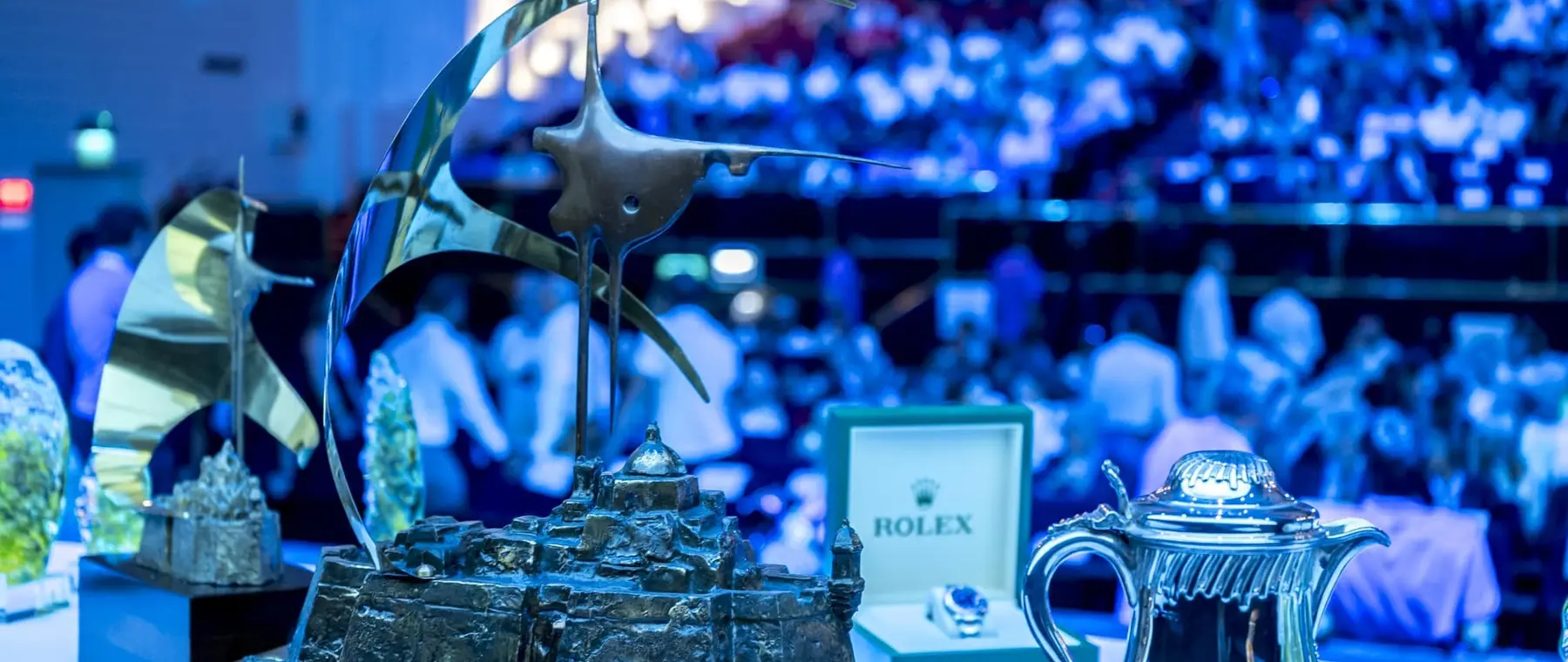
With the prizegiving complete, there is now a clear hierarchy of the principal awards rather than the provisional positions visible on a live tracking screen. Django 7x holds the headline overall IRC award, while other competitors earned their own distinctions in line honours, double-handed sailing and multihull racing.
Black Jack 100 wins the race to the finish
Monohull line honours went to Black Jack 100, the Reichel/Pugh 100 owned by Remon Vos and skippered by Tristan Le Brun. The yacht reached Malta ahead of the remaining monohull fleet, repeating its line-honours success from the previous edition.
The organiser reports an elapsed passage of two days, three hours and 51 minutes for Black Jack 100. That is an exceptional expression of performance and seamanship, but it is an elapsed-time measure and must not be confused with the corrected-time prize won by Django 7x.
Django 7x arrived later and was the second monohull to finish, with defending overall winner Balthasar following in a close contest. According to the race's concluding account, Django 7x and Balthasar exchanged positions during parts of the course before the former built a stronger advantage towards Favignana and down Sicily's western side.
Stronger winds and demanding seas later in the race rewarded power and decisive sail handling, but they also placed an obvious premium on boat management. Success in those conditions comes from routing, sail selection and keeping a fatigued crew effective, not from hull length alone.
A separate set of honours for smaller crews and multihulls
Double-handed honours under IRC were taken by Colombre, a JPK 10.80 sailed by Massimo Juris and Pietro Luciani. A two-person offshore programme compresses many of the responsibilities of a fully crewed yacht into a small team, making watchkeeping, fatigue management and simple, reliable systems especially important.
The main multihull awards belonged to Calamity, listed by the race organiser as an ORC 50 and winner of both multihull line honours and the overall MOCRA category. Multihulls operate under a different handicap system and should not be placed into the monohull IRC ranking as though all results were calculated on the same basis.
Black Jack 100 also secured the Boccale del Mediterraneo ORC trophy, providing a further illustration of how one event can produce distinct performance classifications. When reading race results, owners and casual followers should check whether a headline refers to elapsed time, IRC, ORC, a division or a specialist crew category.
These distinctions do not diminish any individual result. They make the race more meaningful by recognising very different boats and sailing campaigns, from heavily resourced maxi projects to much smaller and more self-sufficient entries.
Why the route around Sicily remains demanding
From Valletta the classic route leads north past Capo Passero and through the Strait of Messina before rounding the volcanic islands and heading towards Sicily's western approaches. It then takes the fleet south by Pantelleria and Lampedusa before the final return towards Malta.
This is far more varied than a single long open-water leg. The course introduces coastal wind shadows, exposed passages, changing seas and difficult choices between staying in pressure and sailing the most direct route, all while crews preserve enough energy for the later stages.
The presence of Stromboli and Etna also gives the event one of the most recognisable geographical settings in offshore sailing. Nevertheless, the dramatic scenery does not reduce the navigational and safety obligations of competitors, whose decisions must be based on current conditions, official race documents and proper seamanship.
The organiser's final review describes substantial waves in the closing stages and very high speeds on some boats. Rather than treating those details as an invitation to imitate race crews on a recreational passage, the lesson for ordinary owners is how preparation, equipment checks and teamwork become more valuable as conditions worsen.
Malta's maritime community at the centre
The Royal Malta Yacht Club has organised the Rolex Middle Sea Race for decades, and the start and finish in Valletta's Grand Harbour give the contest a particularly visible connection with the islands. It is both an international sailing event and an annual expression of Malta's continuing relationship with the sea.
Local knowledge matters without guaranteeing a result. Experienced Maltese sailors and visiting teams must still interpret an unusually varied course, while weather systems across the central Mediterranean can change the opportunities available to different yacht types.
One notable participant this year was Maltese sailor Christian Ripard, whom the official race account credits with a record thirty-sixth participation. His continuing involvement underlines how offshore experience and repeated teamwork matter at least as much to the character of this event as the biggest trophies.
The close of the race is also a chance to recognise the large number of crews who completed the circuit without appearing in an overall winners' list. The race's reputation rests on their determination and the organisers' ability to bring a varied international fleet together for a demanding challenge.
Reading the final results and looking ahead
With Django 7x confirmed as overall winner, Black Jack 100 first monohull home, Colombre the double-handed IRC winner and Calamity the leading multihull, the main 2026 results now have a clear official record. Readers should rely on the organiser's published classification for individual divisional positions rather than infer them from finish order.
An official photograph supplied through the Rolex Middle Sea Race press centre accompanies this report. The picture is genuine race imagery, and the article does not use a generated yacht or claim to identify a particular vessel from an unverified photograph.
The organiser has already announced the next edition's intended start for Saturday 16 October 2027. Owners considering a campaign will need to review the next Notice of Race when issued and check qualification, safety and rating obligations with the Royal Malta Yacht Club.
For cruising sailors and powerboat owners following the race from ashore, the broader value lies in understanding how disciplined preparation and a thoughtful team can convert opportunity into performance. Malta's signature offshore contest has once again demonstrated that the first boat home and the overall winner tell different, equally compelling stories.