
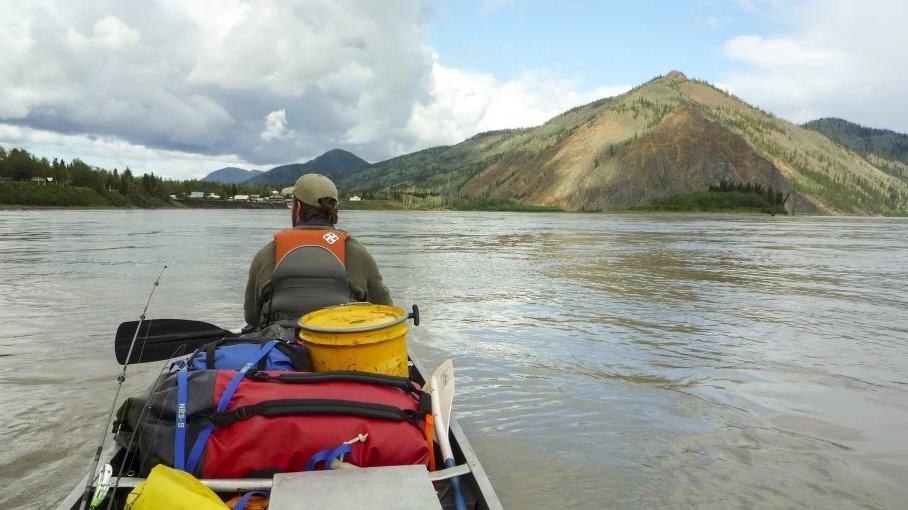
The 158-mile float between Eagle and Circle crosses the Yukon–Charley Rivers wilderness, where river skills, food storage, communication and flexibility matter more than speed.
A remote river with its own timetable
The Yukon River between Eagle and Circle in Alaska offers a classic wilderness journey far removed from a conventional holiday afloat. The National Park Service gives the full route as 158 miles, with about 128 miles flowing through Yukon–Charley Rivers National Preserve.
From the boat, the attraction lies in the enormous river corridor and the relative absence of constructed facilities. Forested hills, bluffs, shifting gravel bars and changing light create a sense of travel in which the landscape sets the pace more decisively than any itinerary.
Many visitors make the journey during the late-May-to-September season, with the National Park Service suggesting about five days for groups covering roughly thirty miles daily. That is an illustration rather than a guaranteed duration; strong winds, stops, weather and individual skill can all lengthen the passage.
Because help may be days away, this is not a sensible first independent paddling trip. A crew should arrive capable of handling loaded canoes or rafts, camping safely, reading river hazards and making conservative decisions without assuming a quick rescue.
From Eagle to Circle
Eagle is reached by the Taylor Highway or by small aircraft, while Circle provides downstream road or air connections. The logistics at both ends need arranging in advance, especially if rented craft must be collected and a vehicle or flight is needed after finishing.
The river's reported average flow of five to eight miles per hour explains how a long distance can be covered, but it should never tempt paddlers to regard the Yukon as effortless. Current, weather, submerged obstacles and awkward landing places demand attention throughout the day.
Motorised and non-motorised craft use this corridor, and the park explains that jet boats are often favoured because an ordinary propeller can be damaged by hidden gravel bars. Personal watercraft such as jet skis are prohibited within the preserve, a rule that belongs in every pre-trip briefing.
Experienced crews should establish a sensible daily distance, a minimum reserve of food and fuel, and realistic options for stopping early. The ambition is to move steadily downstream while retaining enough time and energy to recognise and respond to changes in conditions.
Camping and wildlife in bear country
The National Park Service recommends gravel bars for camps because their open setting can provide relief from mosquitoes and clearer sightlines. Camp placement still requires judgement about river levels, rain, wind exposure and potential rising water overnight.
Food security is particularly important in this landscape. The park supplies bear-resistant food containers and specifies that canoeists use the steel containers, while smaller backpacking barrels are intended for hiking, packrafting and kayaking where the larger models are impractical.
The principal rule is to keep food, refuse and scented items organised and away from sleeping areas. Camps should be left clean, and visitors must follow the preserve's detailed advice on food caches, fish scraps and other attractants rather than relying on improvisation.
Seven public-use cabins are also part of the corridor, offered on a first-come, first-served basis. They are welcome points of shelter, not accommodation a crew can count on, so every party still needs equipment suitable for an independent outdoor night.
Communication and the art of leaving a margin
All paddlers should wear properly fitted personal flotation devices and keep essential emergency items close to hand. The park specifically recommends navigation equipment, first aid, signalling gear, emergency food and reliable communication appropriate to an area where phone coverage may not be available.
A voluntary backcountry trip plan filed with the preserve and a trusted person ashore gives an overdue party a better chance of being located. It should include the proposed route, launch and collection plans, group members, equipment and an agreed time for initiating a welfare check.
Alaska's long daylight can create a false sense that there is always time for another bend. Stopping with energy left to pitch camp, prepare food and assess tomorrow's forecast is more enjoyable and safer than treating the river as a mileage contest.
The Eagle-to-Circle journey rewards those who accept that wilderness travel is governed by conditions rather than appointments. When the logistics, safety margins and group abilities are well matched, a few days on the Yukon can become a powerful lesson in what small-boat independence really means.
Before booking, verify the current preserve guidance, road access, aircraft arrangements and any seasonal notices. The National Park Service material provides a strong starting point, but no written route description substitutes for local assessment immediately before departure.
There is an important difference between a river journey that is technically possible and one that suits a particular crew. Group members should discuss medical needs, confidence in cold water, emergency communication and their willingness to remain in one location when weather deteriorates. A leader cannot sensibly solve those differences halfway between Eagle and Circle, which is why a frank preparation meeting matters as much as a carefully packed canoe.