
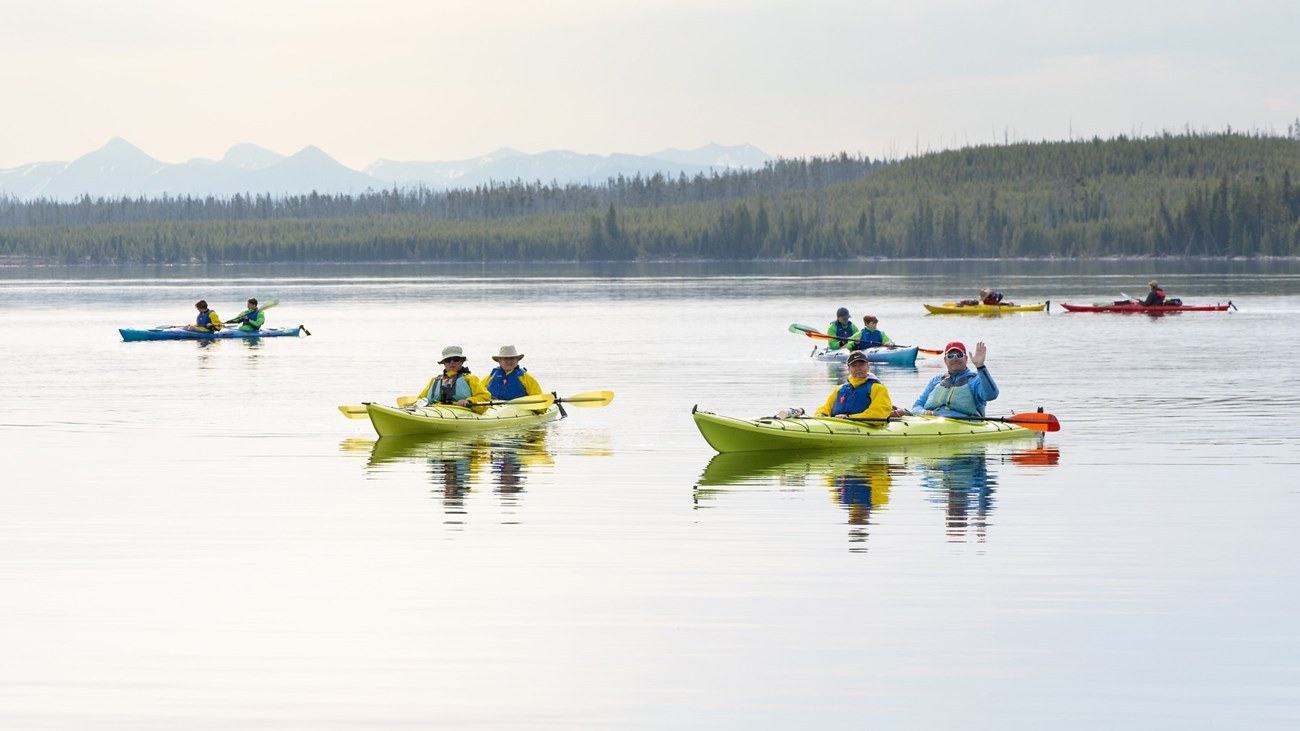
Yellowstone Lake offers an impressive paddling setting, but the park requires aquatic invasive species inspections and boating permits for all watercraft.
A mountain lake unlike an ordinary holiday resort
Yellowstone Lake forms part of one of America's most recognisable national parks, offering a chance to view mountain scenery, forest and the broad open water from a canoe or kayak. The National Park Service permits boating on many park lakes during the designated season, subject to rules designed to protect both visitors and sensitive ecosystems. This is not a destination where someone can simply arrive with a kayak and launch wherever the shoreline looks convenient.
The lake's high-elevation setting and changeable conditions shape the experience. An apparently calm morning may be followed by stronger winds, while cold water presents real risks to people using small craft. A good itinerary balances the pleasure of paddling with the need to observe the park's requirements before reaching the water.
Every boat needs an invasive-species inspection
Yellowstone requires aquatic invasive species inspections for all watercraft before issuing a boating permit. The requirement covers motorboats and non-motorised craft, including canoes, kayaks, angler float tubes and paddleboards. Visitors should not assume that a light inflatable boat or a vessel used only for a short time qualifies for an exemption.
The purpose is to reduce the chance of introducing aquatic organisms that could damage the Greater Yellowstone Ecosystem. Invasive mussels and other organisms can spread on equipment, trailers and water remaining inside compartments. A boat moved between lakes without correct cleaning may carry an ecological risk even when it looks clean to its owner.
Clean, drain and dry before travelling
The Park Service asks boaters to clean, drain and dry their craft and related gear after use and before moving to another waterway. That includes attention to wet compartments, equipment, paddles and any trailer used for transport. Some categories of motorised or sailing craft have longer drying requirements, so visitors need to check the exact current guidance for their own vessel.
A kayak owner should allow enough time for equipment inspection rather than scheduling a launch immediately after arrival. It may be necessary to remove stored gear or open accessible compartments for examination. The process protects the lake and should be treated as part of the visit, not an inconvenient formality to avoid.
Park boating permits and seasonal restrictions
After inspection, the appropriate Yellowstone boating permit must be obtained. The Park Service publishes current prices, duration and operating rules, which may be amended from season to season. Visitors should verify these before departure and confirm where permits are issued. A permit from a different state or another national park does not replace Yellowstone's own requirements.
Boating is confined to designated waters and the official season, with some lake and river areas closed to protect wildlife or public safety. A visitor planning an autumn holiday must pay particular attention to closing dates and local weather rather than assume that a pleasant sunny day means boating is permitted. The current NPS guidance is the final reference.
A cold lake requires suitable equipment
Yellowstone Lake's water temperature can remain low even when surrounding trails feel warm. A person who falls from a kayak can experience cold shock and rapidly lose the ability to paddle or swim. Appropriate protective clothing, a properly fitted flotation device and training in assisted and self-rescue are essential, particularly when a route leaves the immediate vicinity of a safe landing.
The broad surface of the lake also allows wind-driven waves to develop. Small craft should be launched only when the weather is suitable for the paddler's ability, and journeys should allow for an early return. A scenic crossing with distant shorelines should not be attempted by someone who has only paddled sheltered ponds.
Guided trips can provide a better introduction
Yellowstone National Park Lodges offers boating experiences at Bridge Bay Marina, and other authorised companies may provide guided canoeing, kayaking and motorboat services. For a visitor who lacks local knowledge or does not want to transport equipment across the country, a guided outing may be the most practical choice. The operator can explain the permitted route and the safety arrangements included.
Reservations should be checked for the relevant season rather than inferred from a previous year's timetable. An official operator can also advise what clothing and experience are appropriate. Travellers should be clear about whether they are booking a motorboat trip, a guided kayak outing or an independently rented boat, because the demands and responsibilities are not identical.
The landscape is protected for wildlife too
Yellowstone's scenery attracts visitors who hope to observe birds and other wildlife from the water. A quiet kayak can provide a low vantage point, but the animals' needs come first. Boaters should respect closures and maintain adequate separation from wildlife, avoiding behaviour that forces animals to change direction or abandon feeding areas.
The shoreline can also contain fragile habitats where landing is restricted. A small craft's shallow draft does not give the paddler permission to explore every inlet. Visitors should stay within permitted waterways and use authorised launch and landing locations, protecting the place they came to enjoy.
Planning a Yellowstone boating holiday
A sensible plan begins with the Park Service's boating page, followed by checks of inspection and permit arrangements, authorised launch points and the current weather. A short guided paddle or a modest route close to appropriate access may provide a memorable experience without requiring the ambition of a long expedition. Equipment and passenger capability should determine the length of the trip.
The official National Park Service photograph shows actual kayakers on Yellowstone Lake, giving readers a genuine sense of the destination. It is an inviting image but not a guarantee of identical conditions. The lasting value of a Yellowstone paddle is the encounter with the landscape, achieved through respect for park regulations and the realities of mountain water.