
Explore a five-to-six-mile Wiltshire canal canoe route, with rural scenery, the historic Crofton Pumping Station and important Bruce Tunnel safety details.
A stretch of Wiltshire's Kennet and Avon Canal makes an appealing choice for travellers who want to exchange road speed for an unhurried journey through fields, wooded banks and historic waterways. The Canal & River Trust describes a five-to-six-mile canoe route beginning east of Wootton Rivers Bottom Lock and finishing at Crofton Pumping Station, home to a notable steam-powered piece of canal history. It is more than a simple scenic outing: the route passes through Bruce Tunnel, so paddlers must understand specific tunnel safety requirements and current permissions before setting out. A successful visit combines suitable equipment and an appropriate level of experience with the pleasure of arriving at a destination that explains how the canal has operated for generations. This is a considered small-boat trip rather than a race to cover distance.
A journey through rural Wiltshire
The Kennet and Avon Canal is an important historic navigation linking landscapes across southern England. On the Wootton Rivers to Crofton section, its banks create a changing frame of fields, hedges, bridges and occasional built features. The official Trust route describes the scenery as particularly picturesque and positions the paddle as a rural outing. A canoe provides a useful pace for this sort of travel, allowing time to notice changes in the banks or the movement of other boats. The journey should not be treated as an empty, private waterway, however. Narrowboats and other users share the canal, while structures such as locks, bridges and the tunnel may constrain the space available to a small craft. Being attentive is part of enjoying the surroundings.
Starting at Wootton Rivers Bottom Lock
The Trust lists Wootton Rivers, postcode SN8 4NQ, as the starting area and advises putting the canoe into the water east of Wootton Rivers Bottom Lock. That is a specific geographical instruction, not a general permission to launch anywhere near the village. A paddler should inspect current access arrangements and look for any posted notices before unloading equipment. A lock is a working structure that must be approached with care, and a small craft may need to be carried around certain features rather than using them as a powered boat would. There is also the practical question of where a vehicle can be parked legally and how equipment will be recovered at the end of a one-way trip. Sorting out these details in advance makes for a more relaxed day.
Five to six miles at a sensible pace
The official route length is approximately five to six miles, a manageable distance for many experienced recreational paddlers but not automatically appropriate for everyone. Time depends on wind, speed, rest stops, boat handling and the need to deal with structures. A person who is comfortable with a short kayak outing may find an unfamiliar tunnel or a long one-way paddle more demanding. Rather than relying on a rigid finish time, agree a realistic itinerary and allow enough daylight to manage delays. A short family outing can also be planned on an accessible portion of the canal without committing to the entire Trust route. The most enjoyable holiday is the one that leaves everyone with time to take in the scenery rather than worrying about reaching the end.
Bruce Tunnel is the critical route feature
The Trust's description says that the Wootton Rivers–Crofton route passes through Bruce Tunnel and specifically directs paddlers to tunnel safety guidance. The tunnel is not an incidental landmark to enter without preparation. Restricted visibility, narrow space and the possibility of meeting a larger vessel make it different from open canal water. The Trust's published safety advice specifies that permitted tunnel paddling requires a buoyancy aid, a bright white forward-facing light and an alternative means of attracting attention, with an airhorn recommended. It also tells paddlers to follow powered boats at an appropriate distance when entering a tunnel. These instructions should be checked against the current rules for the particular tunnel, and anyone uncertain about safe passage should choose a different outing.
Why an easier alternative may be wiser
Not every paddler wants an enclosed passage through a canal tunnel. Some visitors may enjoy a short stretch of the Kennet and Avon Canal near a suitable launch and return to the starting point. That is a legitimate experience in its own right, especially for a group with young people or first-time paddlers. Others may prefer to join a properly organised outing with experienced local guidance. The decision should be based on actual skills and present access conditions rather than on a desire to complete a published route at all costs. A general travel article does not certify that the tunnel is open to every canoe or that a novice should enter it. A good small-boat holiday offers flexibility when a particular feature is unsuitable.
Sharing the canal with larger vessels
Canal boating is a cooperative activity. The Trust advises paddlers to stay right where possible, to avoid obstructing bridgeholes and to give powered boats ample space. A canoe may be difficult to see from a narrowboat's steering position, particularly around bends or near structures. Travellers should avoid racing to pass a larger vessel through a constricted section and should communicate clearly if another boat is approaching. Courtesy also applies when stopping: landing points and towpaths need to remain usable by walkers, anglers and other boaters. A route that feels peaceful from water level is still part of a working navigation with established rules and responsibilities. Respecting those rules can make the outing more enjoyable for everyone.
The approach to Crofton Pumping Station
The Trust lists Crofton Pumping Station, postcode SN8 3DW, as the end of the route. This is a satisfying destination because it gives the paddle a connection to the canal's engineering history. Built more than 150 years ago to help supply water to the canal summit, Crofton is associated with historic pumping engines and waterside heritage. The Trust describes a tea room and opportunities to learn about one of the world's oldest working steam beam engines. Opening hours, admission and live-steaming days depend on the attraction's own schedule. Visitors should not assume that every facility is open merely because they can arrive by canoe. Combining the paddle with a visit requires checking the pumping station's current information.
Why the pumping station matters
Canal travel depends on maintaining water levels, particularly around locks where each passage uses water. Crofton was built to help pump water toward the summit of the Kennet and Avon navigation, illustrating that an apparently peaceful canal relies on substantial engineering. A visitor arriving after a few hours afloat can appreciate the practical relationship between machinery, water supply and the route they have travelled. The pumping station is not just a photogenic historic building: it helps explain why the canal could function as a transport system. That story is well suited to a leisurely itinerary in which paddling and heritage complement each other. It also encourages respect for lock and water-management operations encountered elsewhere along the canal.
Planning the one-way return
A route from Wootton Rivers to Crofton poses the usual point-to-point problem. The boat and its crew must return to the start or continue onward through an arrangement made in advance. A second vehicle, suitable transport provider or organised group may help, but none should be assumed available without confirmation. Canoes and kayaks can be awkward to move on public transport, and the final destination may not have the services of a large marina. The simplest plan establishes where the boat will be retrieved and how it will be loaded before anyone leaves the starting point. It is also important to account for possible tunnel restrictions or a decision to turn back. A flexible return plan prevents a scenic day becoming a logistical problem.
Licences and legal access
The Canal & River Trust manages its navigation and sets rules for people using canoes, kayaks and paddleboards. A suitable waterways licence or other qualifying permission may be needed. Paddle UK membership can include access arrangements for many canals and navigations, but the individual should check that their membership covers the intended stretch. Hire arrangements may operate differently. Do not assume a craft is authorised solely because another canoe is visible on the water. Current notices may also affect the availability of towpaths, launches and passages through structures. Understanding the applicable requirements is a basic part of preparing to use a shared waterway, not an administrative detail to ignore until arrival.
Clothes and equipment for a canal day
A buoyancy aid that fits correctly should be worn throughout the paddle. The Trust also recommends a waterproof phone case, a whistle, suitable footwear and a dry bag containing spare clothing. Conditions on a canal can change with wind and rain, and an unexpected capsize may be unpleasant even when the water appears sheltered. A visitor planning to use a permitted tunnel must also meet the additional lighting and signalling rules. Boats should be inspected for damage, and loose belongings secured. A simple food-and-water supply can make a long day more comfortable, but packing should not interfere with paddling or stability. For groups, agreeing a plan for keeping together and communicating helps avoid confusion at bridges and stops.
A photograph of the actual destination
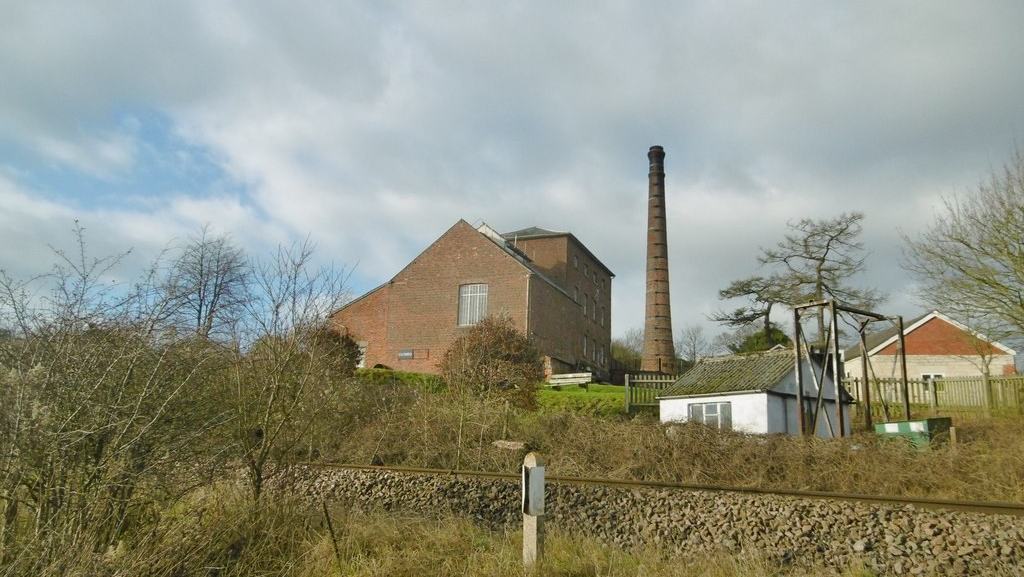
The accompanying lead photograph documents Crofton Pumping Station, the historic destination named in the Canal & River Trust route. It was taken by Mike Faherty and shared through Wikimedia Commons under the Creative Commons Attribution-ShareAlike 2.0 licence. It is not represented as a picture of a specific kayak trip or as evidence that the station is open today. The image is used to illustrate the real setting and heritage component of the itinerary, with the photographer and licence credited. A photograph of the destination can be more informative than a generic paddler on an unrelated canal, provided the caption makes its subject clear and the image rights are respected.
Turning a paddle into a satisfying weekend
The official Wootton Rivers to Crofton trail combines three rewarding elements: manageable countryside distance for a suitable crew, an unusual historic navigation and a distinctive destination at the pumping station. Its main challenge is that Bruce Tunnel and the working canal demand more preparation than an ordinary flat-water picnic. Travellers who check permissions, understand the tunnel rules and plan their transport can enjoy the area at a more deliberate pace. Those who prefer a simpler outing may choose a shorter authorised section and leave the full route for another day. Either way, the canal offers an appealing reminder that a small boat can turn a modest distance through the landscape into a complete travel experience.
Sources and photograph attribution
Official destination and boating guidance: Canal & River Trust — Wootton Rivers to Crofton Canoe Trail. Current access, rules, weather and reservations must be checked independently before travel.
Photo: Mike Faherty , “Crofton Pumping Station - geograph.org.uk - 5250665.jpg”, CC BY-SA 2.0, via Wikimedia Commons. Cropped/resized as needed for editorial use. Source: https://commons.wikimedia.org/wiki/File:Crofton_Pumping_Station_-_geograph.org.uk_-_5250665.jpg. Licence: https://creativecommons.org/licenses/by-sa/2.0. Original rights remain with the credited creator or as specified by the source and licence.
