
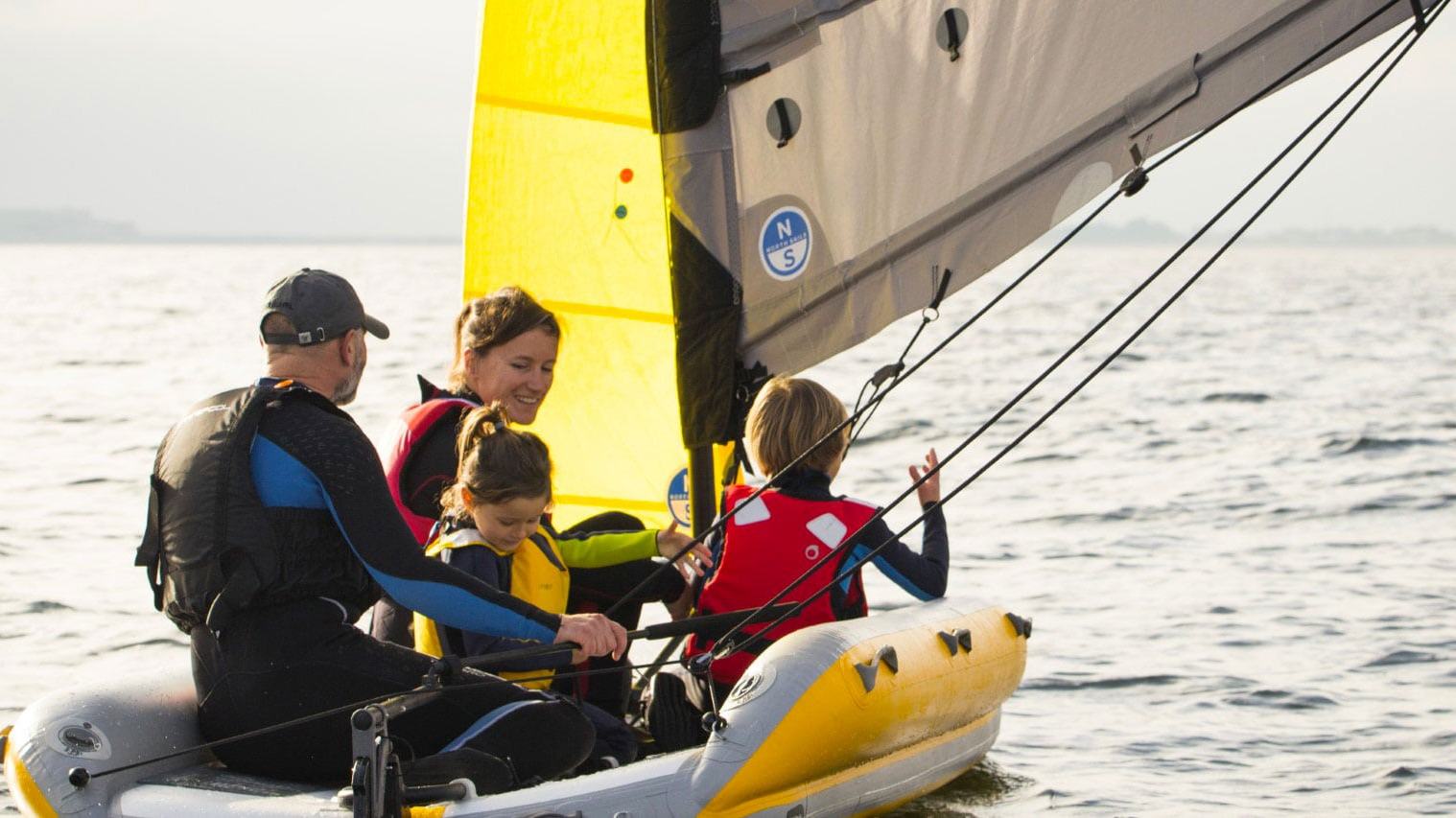
Dinghy sailing keeps the experience close to the wind and water, with simple boats that can teach skills, race hard or provide an easy afternoon afloat.
Dinghy sailing remains one of the most direct forms of boating because the sailor can feel almost every change in wind, trim and balance. There is little distance between an action and its effect, which makes small sailing boats both rewarding for experienced sailors and excellent teaching platforms for newcomers.
The range is enormous, from simple one-person boats to family dinghies, performance skiffs and inflatable designs that can be packed away after use. That variety means people can choose a boat around their water, storage and ambitions rather than adapting their lives around a large yacht.
Small boats teach big skills
Steering, sail trim, balance and awareness of wind direction become obvious when the boat responds immediately. Mistakes are noticeable but usually happen at manageable speeds, allowing sailors to learn through repeated practice.
Those lessons transfer well to larger sailing boats because the underlying principles do not change. A sailor who understands how a dinghy accelerates, stalls and balances often develops a strong instinct for what a larger boat is trying to communicate.
Ownership can remain straightforward
Many dinghies can live on a small trailer, trolley or rack and need little machinery beyond spars, foils, sails and fittings. Maintenance still matters, but the absence of complex engines and onboard systems can keep the emphasis on sailing rather than managing equipment.
Club storage can make ownership even easier where it is available. Launching with other sailors also adds a social element and can provide support when learning a new boat or sailing in unfamiliar conditions.
It can be as relaxed or competitive as you want
Some sailors are happiest exploring a sheltered bay with a picnic while others want close racing every weekend. The same basic type of small craft can support both ends of that spectrum, and many sailors move between them depending on weather, company and mood.
Dinghy sailing therefore remains relevant even as marine technology becomes more sophisticated. It offers something technology cannot replace: a simple boat, moving because the sailor has understood the wind well enough to make it go.