
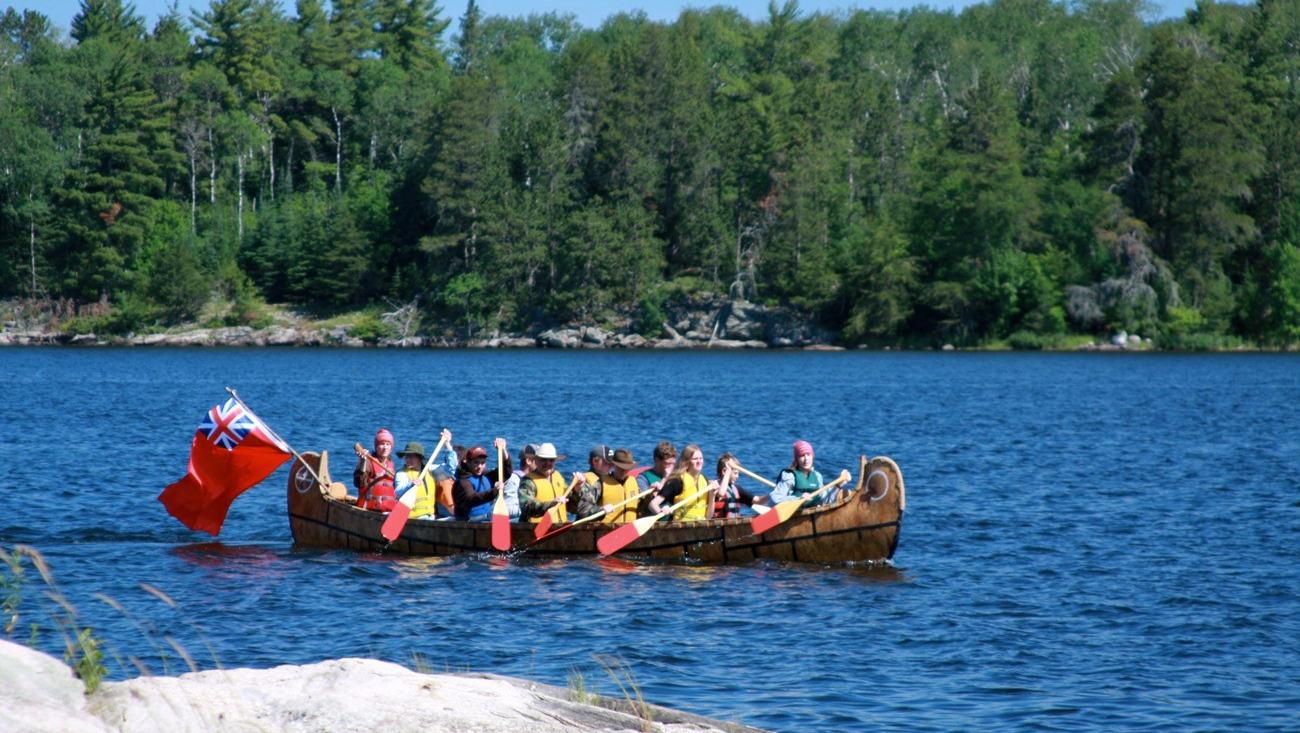
A ranger-led voyage in a 26-foot replica north canoe invites visitors to experience the paddling traditions and history of northern Minnesota's waterways.
A group paddling experience with a historical purpose
Voyageurs National Park in northern Minnesota has a distinctive way of introducing visitors to the relationship between people and its lakes: a ranger-led journey aboard a 26-foot replica north canoe. The North Canoe Voyage programme combines paddling with interpretation of the historic fur-trade routes that shaped travel in the region. Unlike a conventional sightseeing cruise, the participants contribute to the movement of the craft through the water.
At approximately 7.9 metres long, the replica remains well within the small-craft world, although its proportions are very different from an ordinary two-person recreational canoe. The official National Park Service photograph shows a group working together on a forest-edged lake, highlighting the cooperative nature of the experience. It is an opportunity to understand why coordinated paddling mattered long before modern outboard engines became part of inland travel.
Why the north canoe mattered on historic routes
For generations, waterways in what is now northern Minnesota formed travel corridors connecting communities and trading networks. Large canoes allowed substantial cargo to move between rivers, lakes and portages, with paddlers relying on collective effort and familiarity with the environment. The park uses a replica rather than claiming to operate a surviving historic vessel, making the experience educational rather than an exercise in transporting goods.
Understanding that history adds meaning to the act of paddling. A long canoe must respond to the movement of several people, and an individual stroke becomes part of a rhythm shared by the crew. The programme offers a practical contrast to modern boating, where a skipper may normally start an engine and move independently of the passengers.
What participants actually do aboard
The Park Service describes its North Canoe Voyage as an interpretive outing led by rangers, with demonstrations of a paddling salute, songs and stories about the voyageur tradition. Costumed staff help bring the period to life without requiring every visitor to arrive with prior canoeing experience. A group will still need to listen closely and follow instructions when boarding and handling the paddles.
The experience includes approximately one hour on land and half an hour on the water. That balance allows the historical context to be explained before the canoe departs. It also means guests should not expect a long wilderness expedition or independent access to distant islands. The value is a shared experience that combines physical movement with a guided understanding of the past.
Two departure areas and seasonal availability
The NPS programme is offered at Rainy Lake and the Ash River area, with actual dates set by the park's summer and early-autumn schedule. Guided boat activities generally operate from mid-June toward the end of September, so travellers considering the next season should not assume a North Canoe Voyage is available during October. The official calendar and recreation.gov are the appropriate places to check confirmed departures.
The Park Service states that reservations for its seasonal programmes normally open in April, with special interpretive experiences booked separately from larger tour boats. Times, fees and availability may be revised from year to year. Planning early is particularly useful for a family travelling from overseas or arranging accommodation near the park for a specific programme.
Age and physical requirements deserve attention
Children taking part in the North Canoe Voyage must be at least eight years old, reflecting the work and coordination involved in paddling. The Park Service notes that the activity can become strenuous under some conditions, and recommends that participants know how to swim. Visitors should communicate any mobility or health limitations when booking rather than expect the crew to adapt an unfamiliar group arrangement once the boat is leaving.
Suitable flotation equipment is supplied as part of the activity, but participants must still listen to the ranger's safety briefing. A large canoe may seem stable in a photograph yet will respond to sudden movement or inconsistent paddling. Good cooperation helps the whole group enjoy the journey without unnecessary strain.
A gateway to the broader Voyageurs landscape
The park is known for a network of island-studded lakes, forested shores and landscapes where boats are central to getting around. Guided tour vessels operate on Rainy Lake, Kabetogama and other areas during the main visitor season, while private small craft provide additional ways to explore the park. The North Canoe Voyage offers a particularly memorable introduction to the culture associated with those waterways.
Visitors might combine the canoe programme with a shorter ranger talk, a gentle walk or a scenic stop at a visitor centre. A relaxed schedule leaves room to learn about the region's natural and human history rather than hurrying between activities. The wider park also offers its own opportunities for fishing and wildlife observation, subject to the applicable rules.
Conditions on northern lakes are not always gentle
Minnesota's northern lakes can feel calm close to a shoreline yet develop substantial waves when wind crosses open water. Even organised programmes may be cancelled when weather creates unsuitable conditions. The Park Service retains the authority to change schedules, making a flexible itinerary preferable to a holiday built entirely around one activity.
Comfortable outdoor clothing, sunscreen and additional warm layers are reasonable preparations, particularly when a summer day begins cool or wet. Visitors should also understand that a place in a guided canoe programme does not give them permission to explore the same lake independently without suitable navigation knowledge and equipment.
A boat that turns history into a shared memory
The North Canoe Voyage stands apart from many small-craft excursions because the people aboard actively participate in a task that is central to the place's history. The synchronized movement of the paddles, the sound of the water and the ranger's explanations make the historic journey easier to imagine. The authentic NPS image records that activity rather than illustrating it with a promotional montage or a different kind of vessel.
For the next available season, travellers should consult the National Park Service and the authorised booking pages before making plans. There is no guarantee of a particular departure until the programme is scheduled and a reservation confirmed. The reward for careful planning is an unusually personal way to encounter a landscape where paddling has long been part of everyday life.