
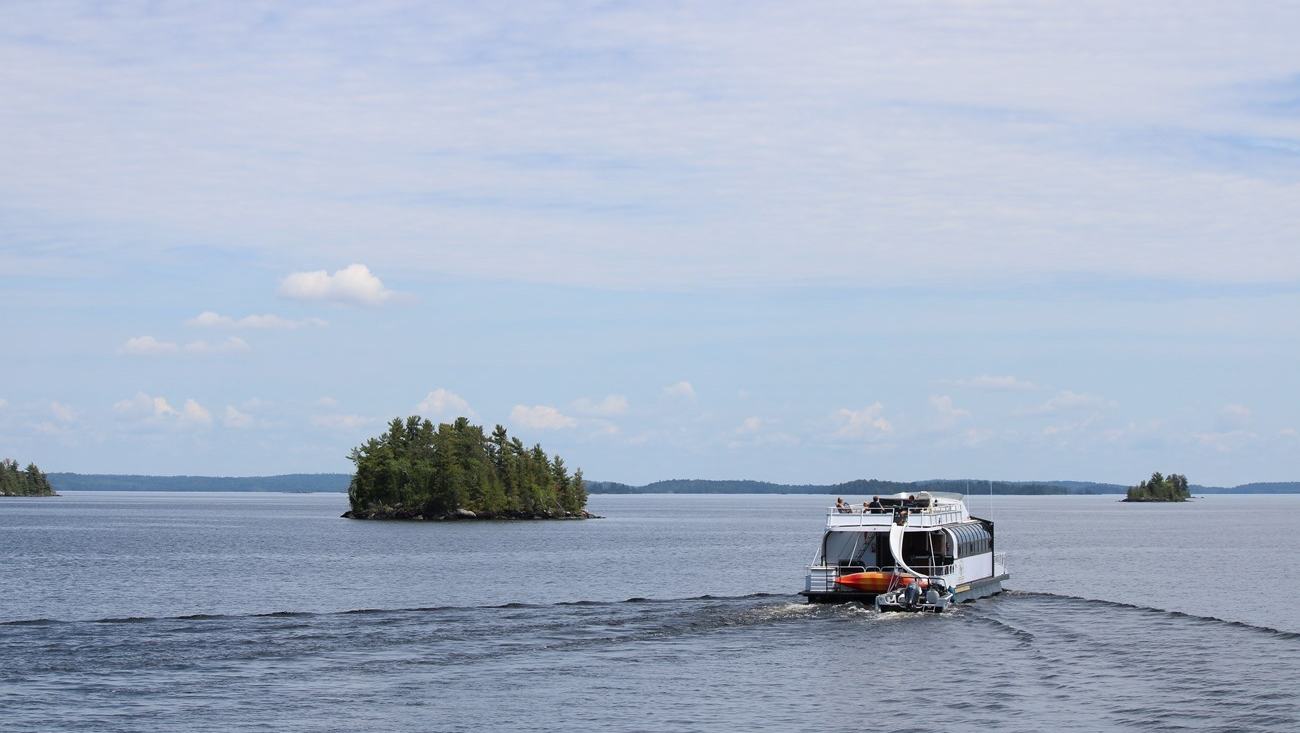
Voyageurs allows visitors to explore interconnected northern lakes from a small floating home, but overnight permits and careful site selection are essential.
A floating home in the northern lake country
Voyageurs National Park in Minnesota is unusually well suited to the slower rhythm of a houseboat holiday. A group can wake beside a forested shore, spend the day exploring an interconnected waterway and settle somewhere quieter for the evening without returning to a conventional hotel. The setting is lakes, islands and wooded passages rather than a coast of bustling marinas. That difference is part of its appeal, but it also changes how a boating holiday should be planned.
The National Park Service describes houseboating as a way to reach distant areas of the park while retaining facilities for sleeping, cooking and sanitation. Commercial houseboat rentals are arranged through operators outside the park boundary, not through the park itself. Prospective visitors should compare vessel sizes, training, fuel policies, route limitations and what is included in the rental before committing to a week on the water.
Understand what counts as a houseboat
The park defines a houseboat by its practical facilities rather than simply by appearance: a registered vessel must have sleeping accommodation, a cooking and food-storage area, and a no-discharge toilet. Cabin cruisers and sailing vessels equipped with those facilities may also qualify to use houseboat sites with the appropriate permit. That can make the opportunity relevant to owners of compact cruisers, not just people renting a large floating cottage.
This distinction matters at the planning stage. A small motorboat with a canopy but no compliant facilities is not necessarily eligible for the same overnight use. Owners should review the current park definition and confirm that their equipment satisfies it. Any onboard toilet should be used and maintained responsibly; releasing untreated waste into the lake is incompatible with the park's protection goals and visitor experience.
Permits are for nights, not a specific cove
The NPS requires a houseboat permit for overnight stays. Its system issues permits for the number of nights a vessel will remain in the park; they do not reserve a particular shoreline site. That is a fundamentally different arrangement from booking a numbered marina slip, so a crew should have more than one prospective destination in mind each evening.
The official guide describes both designated and undesignated houseboat sites, generally available on a first-come basis. Designated sites feature identifying signs and may include mooring posts or rings and fire facilities. An undesignated site must be an undeveloped location at least 200 yards from any developed site or structure. The park limits occupancy to two houseboats per site. These conditions should be read in full and rechecked before departure, since a tempting shore may not satisfy the rules.
Choose a landing for weather and vessel handling
A houseboat's slower handling and greater windage influence where it can stop safely. The most attractive sheltered-looking inlet in a photograph might have difficult underwater approaches, a rocky bank or a poor option for securing the vessel. A sensible skipper should know the boat's draught, understand the operator's mooring instructions and avoid forcing an approach when depth or shelter is uncertain.
The lakes can be affected by strong wind, changing visibility and boat traffic. A route should leave time to reach an alternative site before evening if the first choice is occupied. This becomes particularly important for families and groups unfamiliar with larger rental boats. A thorough handover and a short period practising manoeuvres can make the rest of the holiday calmer.
Build an itinerary around the people aboard
Houseboating gives a mixed group flexibility. Some guests may want to fish, photograph wildlife or take a short shore walk, while others prefer reading on deck. The value of a floating home is that not everyone must undertake the same excursion at the same time. Plan modest cruising legs with time for meals and secure mooring, and establish clear rules about children moving around the deck and use of any auxiliary craft.
There is a temptation to measure a Voyageurs holiday by the number of lakes visited. Yet a short stay near interesting islands can reveal more about the park's character than rushing between distant locations. Wildlife should be watched without pursuit or feeding, and shore visits should avoid fragile vegetation and respect other visitors seeking quiet. The boat itself should become a platform for appreciating the landscape without dominating it.
An evening routine protects the next day
Before nightfall, check the moorings, assess the weather, secure loose equipment and make certain that everyone understands the safe route around the vessel. Manage cooking, drinking water, sanitation and waste according to the operator's instructions and park regulations. A simple evening checklist is especially helpful when a rental crew has not previously lived aboard.
The best houseboat holidays feel unhurried because the essential decisions have been made in advance. Obtain the overnight permit, study the site rules, discuss alternative destinations and keep a realistic weather margin. Voyageurs rewards a crew that values quiet island evenings and patient observation more than long daily mileage. With considerate boating, that memorable sense of privacy need not come at the expense of the park's wild character.
Check the official National Park Service Voyageurs houseboating guidance for current access and safety guidance. Hero photograph: National Park Service, houseboat cruising in Voyageurs National Park.