
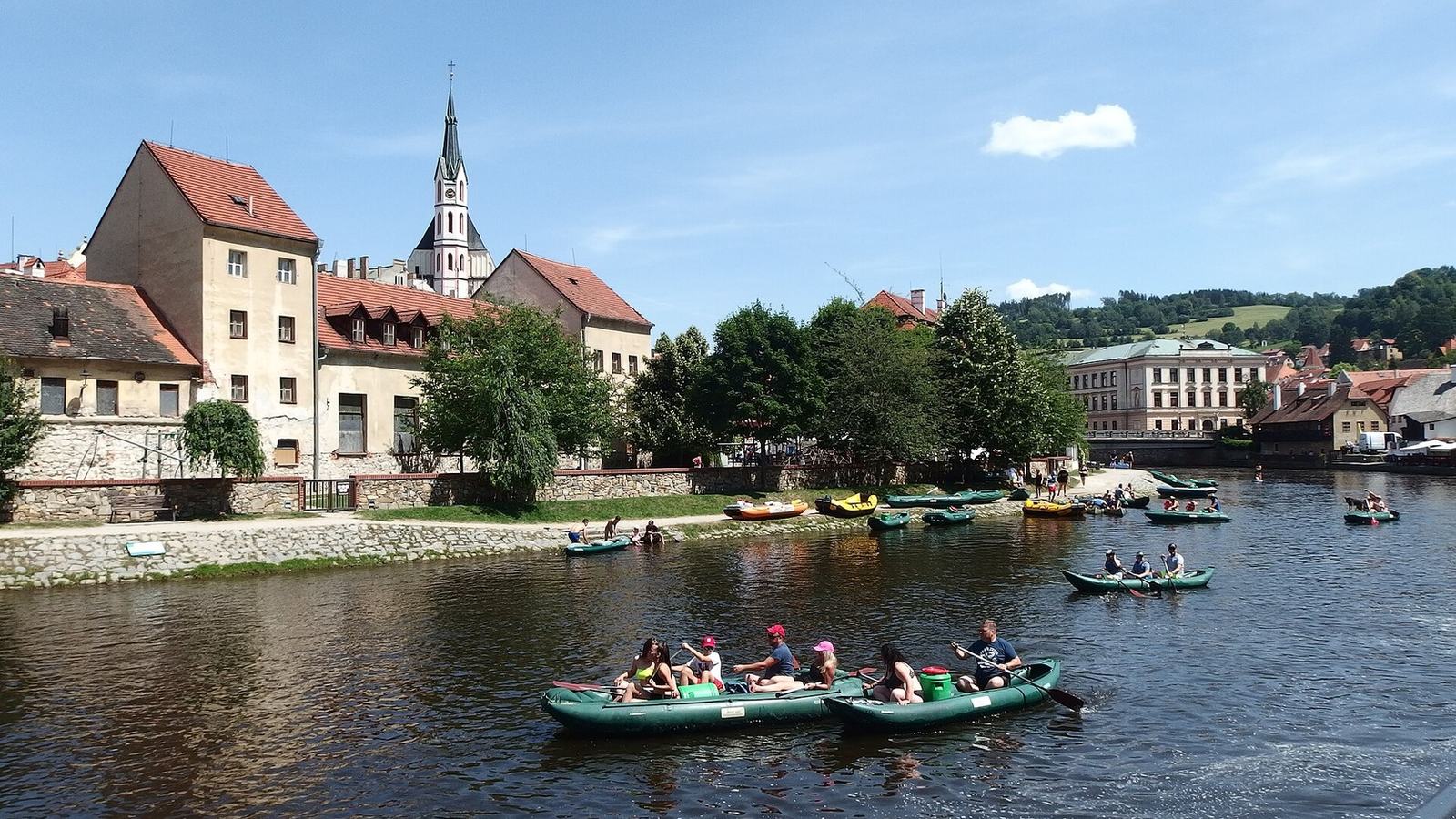
A practical route guide for a Czech canoe holiday on the Vltava, from Vyšší Brod toward Český Krumlov, with water-level, weir and camping advice.
A canoe trip on the Vltava River in South Bohemia brings together flowing water, forested countryside and the remarkable rooftops of Český Krumlov. The river has become a favourite recreation route for Czech families and visitors, many of whom hire canoes or rafts for a few hours or several days. Vyšší Brod's official visitor information office describes its local stretch as particularly welcoming to beginners, with established hire companies and campsites along the river. That description is an invitation to plan carefully, not a guarantee that every part of the water is easy. River levels, weirs and changing conditions remain important for even a relaxed holiday paddle.
Beginning in Vyšší Brod
Vyšší Brod has long served as a practical starting point for trips downstream, with rental operators able to arrange equipment, explain the route and discuss transport. The town sits in a landscape where the river is part of local life rather than merely a sightseeing backdrop. A traveller can spend time ashore before collecting a boat, checking the forecast and working out how the crew will reach the end of the chosen section. The official tourist information office recommends the district for both beginners and families, provided they prepare properly. Starting close to a rental or organised access point also makes it easier to ask about unfamiliar obstacles and river conditions.
Selecting the right length of trip
The town's official guidance identifies several popular sections: Vyšší Brod to Rožmberk nad Vltavou for a shorter outing, Vyšší Brod to Český Krumlov for a widely enjoyed longer stage, and an extended journey toward Zlatá Koruna for those planning more days on the river. These are useful alternatives because not every group wants to paddle for the same amount of time. An inexperienced family might prefer to begin with a manageable stretch and leave time for stops. Trip duration depends on actual flow, river traffic and the decisions made at weirs, so an approximate route should not be turned into a fixed schedule without guidance from a local operator.
The Czech tradition of recreational paddling
For many Czech holidaymakers, a river trip combines outdoor sport with sociable camping, small towns and meals beside the water. Travelling by canoe or raft allows the crew to experience the landscape at a pace different from road travel. The Vltava's appeal is partly that the journey can have a cultural rhythm, with stops that are not exclusively about paddling technique. Yet familiarity and popularity can create a false sense of simplicity. A crowded river requires awareness of other boats, and people new to moving water should learn how to manoeuvre, stop and avoid hazards before joining the main flow. A leisurely mood is compatible with sensible safety precautions.
The passage toward Rožmberk
The section between Vyšší Brod and Rožmberk nad Vltavou is presented by the town's visitor office as a shorter route suitable for less experienced paddlers. It can be attractive as a first excursion because the group need not commit to a more ambitious multi-day itinerary. The surrounding South Bohemian countryside provides the sense of a journey even over a relatively modest distance. Paddlers should check where the rental company expects them to disembark and whether the shuttle is included. They should also ask about weirs and other hazards along the selected route, since a short trip can still contain sections that require a decision to stop and carry the boat.
Approaching Český Krumlov
Český Krumlov offers a striking finale to a paddle, with historic streets and river bends helping to create the town's distinctive appearance. From water level, buildings and bridges look different from the usual pedestrian viewpoints, and the river can feel woven through the settlement rather than simply passing it. The destination can be a welcome place to finish a longer stage and explore on foot. But an arrival in a historic town also brings additional demands: bridges, other recreational boats, current and weirs require attention. The crew should know the agreed landing place before reaching the busiest part of the river instead of choosing a stopping point impulsively.
Why weirs require a decision on shore
The official Vyšší Brod guidance is explicit: paddlers should stop before a weir, inspect it and then decide how to proceed. That advice is more important than any general claim that the river is beginner-friendly. A weir can create dangerous recirculating water, submerged obstructions and unpredictable currents, particularly when water levels differ from those shown in photographs. The correct response may be to portage rather than attempt the descent. Hire operators can explain locally recognised routes and the current condition of structures, but the skipper remains responsible for the final decision. Never treat the sight of another boat using a chute as proof that it is safe for your own craft.
Water level changes the character of the river
A river that feels gentle at one flow can become much faster after rain or changes in upstream discharge. Conversely, low water can expose rocks and make some passages awkward or damaging to equipment. The tourist office advises visitors to check current water conditions, difficulty and possible hazards before departure. That should be done using local operator advice and appropriate official water-level information, not an old holiday video. Paddling times and plans for stops may also change with the current. A flexible itinerary is especially important when travelling with children, whose comfort and experience may be less predictable than those of a practiced adult crew.
Choosing between canoe, kayak and raft
A canoe offers a traditional way to travel as a pair or small group, while a kayak may appeal to someone wanting more direct control of their own craft. Inflatable rafts can be social and forgiving in some circumstances, but the choice should reflect the route, number of people and competence of the paddlers. Different boats also handle current, wind and weirs differently. A hire company should explain the available options, demonstrate essential manoeuvres and provide appropriate safety equipment. The most expensive or largest craft is not necessarily the right one for a beginner. Comfort, safe boarding and the ability to manage the boat together are better starting points.
Fitting a holiday around river stops
One of the pleasures of a Vltava trip is the possibility of combining paddling with relaxed time ashore. A group might choose a shorter stage and then explore a village, while a more experienced crew can arrange several days with planned campsites. The official local guidance notes the established infrastructure of hire operators and camps, which is part of the route's attraction. However, camping is not a free-for-all. The town advises using campsites and official camping areas rather than pitching tents wherever the riverbank looks convenient. Planning night stops and transport in advance also prevents tired paddlers from searching for an unsuitable landing late in the day.
Respect for villages and other river users
A popular canoe route is shared with anglers, walkers, wildlife and local residents. The river's recreational value depends on visitors keeping noise and litter under control and treating banks and access points with care. Vyšší Brod's guidance specifically asks paddlers not to pollute the water or disturb animals and plants. A good group will keep its waste aboard until a suitable disposal point is available and avoid damaging vegetation when getting in or out. Busy areas near weirs or landings may require patience, particularly when inexperienced crews are manoeuvring slowly. The experience improves when everyone treats the river as a shared place rather than a private attraction.
Why lifejackets belong on the trip
The official local advice recommends wearing a paddling buoyancy aid, and that is particularly sensible on a river with weirs and sections of moving current. A lifejacket or buoyancy aid should be correctly sized and fastened, not merely placed at the bottom of the boat. Footwear should protect feet when carrying equipment, while clothing needs to work if it becomes wet. Phones and valuables are best secured in suitable dry containers without preventing the crew from reaching emergency equipment. Newcomers should learn simple rescue and re-entry principles before departure. The objective is not to make a family holiday feel alarming, but to reduce the consequences if something goes wrong.
Alcohol and night paddling are poor combinations
The visitor office specifically advises against paddling while intoxicated and against travelling after dark. Both restrictions are sensible on an unfamiliar river, especially where weirs, bridges and other vessels may be difficult to see. A social holiday can include stops for refreshments without turning the canoe into a late-night means of transport. Groups should agree on realistic finish times and avoid allowing an enjoyable afternoon ashore to consume the daylight needed for a safe return. If a delay occurs, contact the hire company or accommodation provider about alternatives rather than pressing on in fading light. Good judgement is part of the culture of responsible river travel.
Children and first-time paddlers
A family trip can be delightful if adults choose a stage based on the youngest or least confident participant. Children may enjoy the gentle current and the changing views, but they can also become tired or cold when a day extends longer than planned. The boat should be loaded evenly, with suitable flotation and easy access to drinks and weather protection. Adults should explain what to do when approaching a bridge, obstacle or landing without relying on shouted last-second instructions. The entire family needs to understand that a weir is not an amusement feature to be attempted on impulse. A well-chosen short route is preferable to a long stage that ends in exhaustion.
Renting locally reduces some complications
Bringing an unfamiliar canoe from another country can involve transport, parking and uncertainty about the river's current state. Local hire operators can often help with boat choice, launch location and return logistics, while also explaining weirs and recommended sections. That support may be especially valuable to visitors who do not speak Czech and have limited experience of river navigation. It does not transfer responsibility for every decision to the hire company, so ask questions about safety equipment, insurance, transport and rescue arrangements. Check what happens if high water leads to a route change or cancellation. A clear agreement is more useful than assuming everything described in a seasonal advertisement will be available.
Planning the return from Český Krumlov
A paddle to Český Krumlov should be planned as a one-way journey with a defined end point, unless a local provider specifically arranges something different. The current will normally make simply paddling back upstream impractical for a casual hire trip. Transport for the boat and passengers is therefore a central part of the day's organisation. Many visitors will want enough time after landing to see the historic streets and have a meal, so the return journey should not be scheduled too tightly. Confirm the collection point and time in writing and understand where the boat must be left. That small administrative detail can make the difference between a relaxed finale and a stressful one.
A river holiday built around patience
The Vltava from Vyšší Brod toward Český Krumlov rewards paddlers who treat it as a journey through a living landscape rather than a race to a finish line. Its towns, river bends and accessible hire infrastructure make it attractive to people seeking a combination of activity and culture. The official safety guidance also makes clear that water levels, weirs and responsible behaviour must govern the day's decisions. For a small-boat or canoe holiday, choose a manageable stage, talk to local operators, wear suitable flotation and arrange the return before launching. The river's charm is best enjoyed by a crew with time to stop, look around and make safe choices.
Sources and photograph attribution
Official destination and boating guidance: Infocentrum Vyšší Brod — Official Vltava River Paddling Guide. Current access, rules, weather and reservations must be checked independently before travel.
Photograph: Palickap — “Český Krumlov, vodáci na Vltavě.jpg” (CC BY-SA 4.0), via Wikimedia Commons. Resized and converted to JPEG for editorial display. Source: https://commons.wikimedia.org/wiki/File:%C4%8Cesk%C3%BD_Krumlov,_vod%C3%A1ci_na_Vltav%C4%9B.jpg. Licence: https://creativecommons.org/licenses/by-sa/4.0. Original rights remain with the credited creator or as specified by the source and licence.
