
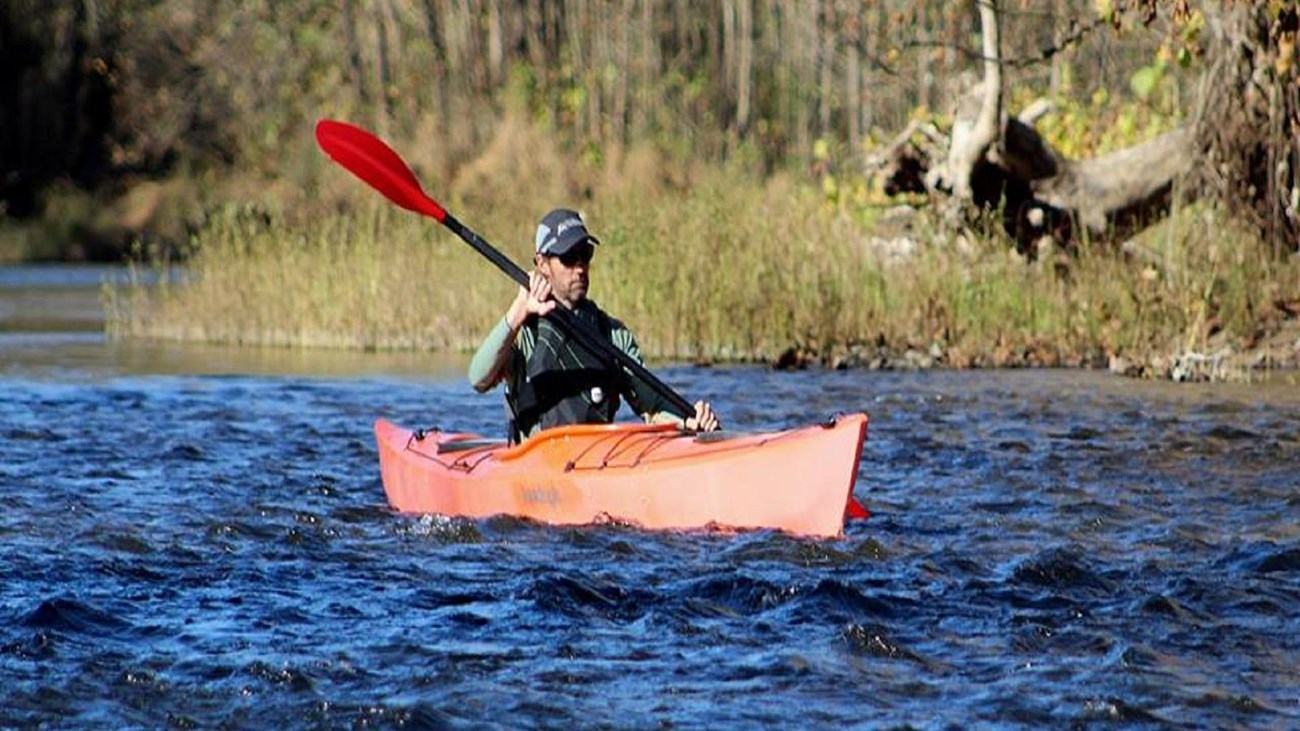
The Upper Current River in Missouri offers spring-fed Ozarks scenery with established canoe sections, but float times and navigability depend on current river levels.
The spring-fed appeal of Missouri's Ozarks
The Current River is one of the defining waterways of Ozark National Scenic Riverways, known for clear water, wooded banks and a network of canoe and kayak routes. The National Park Service identifies more than one hundred miles of the river within park boundaries, although not every stretch is reliably navigable at every water level. For visitors, that variability makes the upper river a destination to plan around conditions rather than a fixed itinerary copied from a travel brochure.
The Upper Current is particularly attractive to paddlers who enjoy winding channels and a sense of gradual progress through forested scenery. Its popularity does not remove ordinary river hazards such as submerged trees, shallow gravel reaches and changes in the pace of the current. A good day begins by selecting a recognised launch and take-out suited to the group, not by deciding to paddle until everyone feels tired.
Start with the official section times
The Park Service publishes useful estimated floating times between common accesses. It suggests roughly five hours from Akers to Pulltite and about four hours from Pulltite to Round Spring, while Round Spring to Two Rivers is a substantially longer undertaking of roughly seven hours. The figures are only estimates and will change with water flow, wind, stops and the style of craft being used.
These times are helpful because they reveal how quickly a supposedly short river trip can occupy most of a day. A family aiming for leisurely swimming and photography should plan for more time than a group paddling steadily with few stops. The most sensible first outing may be a shorter section with a definite take-out and substantial daylight remaining, particularly when travelling with younger passengers.
The Akers and Pulltite decision
Akers and Pulltite are familiar access names for Upper Current trips, but their usefulness depends on current river conditions and the availability of a suitable shuttle. A paddler considering the five-hour Akers-to-Pulltite section should check whether the group is comfortable spending that long in the boat and whether everyone can safely negotiate any obstacles encountered along the route.
Build breaks into the plan rather than treating the park's estimated time as a deadline. A quiet reach may invite a stop for a photograph, while a gravel bar or shallow water can take extra effort to navigate. Identify the agreed take-out before launching and carry a reliable map. A local outfitter can often provide better information about present conditions than an old online account of the same section.
Outfitters can solve the difficult logistics
The Park Service lists authorised outfitters offering canoes, kayaks and other small craft, generally with transport between selected access points. A shuttle is particularly helpful on a one-way river where the starting and finishing places are separated by road. Verify that a provider serves the chosen section, when the last collection occurs and which equipment is included with the rental.
When booking, explain the ages and experience of the paddlers and whether the group expects to stop frequently. A reliable outfitter should be able to suggest an appropriate route and explain conditions that could affect it. The equipment should include properly sized personal flotation devices, and boats should be inspected for obvious damage before departure. It is much easier to resolve these questions on shore than in the current.
River hazards that need respect
Even a scenic, familiar canoe route requires observation. Fallen trees can create dangerous strainers, and shallow water may force paddlers into a different channel from the one that looks most direct. A swift current around an outside bend can move a boat into an obstacle before an inexperienced person has time to react. Do not enter a passage that cannot be assessed safely from upstream.
Cold-water exposure is possible despite a warm day, particularly near spring-fed sections. Clothing, footwear and emergency equipment should be chosen for the water as well as the air temperature. Secure valuables, carry drinking water, and leave the planned route and return time with someone not on the trip. Check weather forecasts and river updates immediately before travelling.
The quieter rewards of the Current
The Upper Current's appeal comes from more than reaching the next access. Forested banks and reflections on clear water can make ordinary bends unexpectedly beautiful, and a slow journey gives visitors time to notice wildlife or changes in the riverbed. A canoe's low viewpoint encourages attention to details often missed from a road or larger boat, which is part of the charm of the Ozarks.
Respect that setting by stopping only where allowed, leaving little trace and carrying out rubbish. Avoid disturbing animals or eroding soft banks with repeated landings, and give other river users sufficient room. A popular floating destination remains a natural place rather than a managed swimming pool, and the river is most enjoyable when everyone uses it thoughtfully.
Turn the route into a realistic day
A comfortable Upper Current outing starts with a manageable section, reliable transport and an honest estimate of the group's energy. Use the National Park Service's published timing as a guide, but add slack for rests, changing conditions and the time needed to load boats at the finish. There is no prize for squeezing two sections into a day if the result is a rushed or unsafe return.
The route information and access names here are based on the National Park Service's official Upper Current River guide, with an NPS canoe photograph. Before setting out, verify current water levels, closures and outfitter operations. Choosing a shorter section when conditions are uncertain is often the best way to make the first Missouri river trip memorable for the right reasons.