
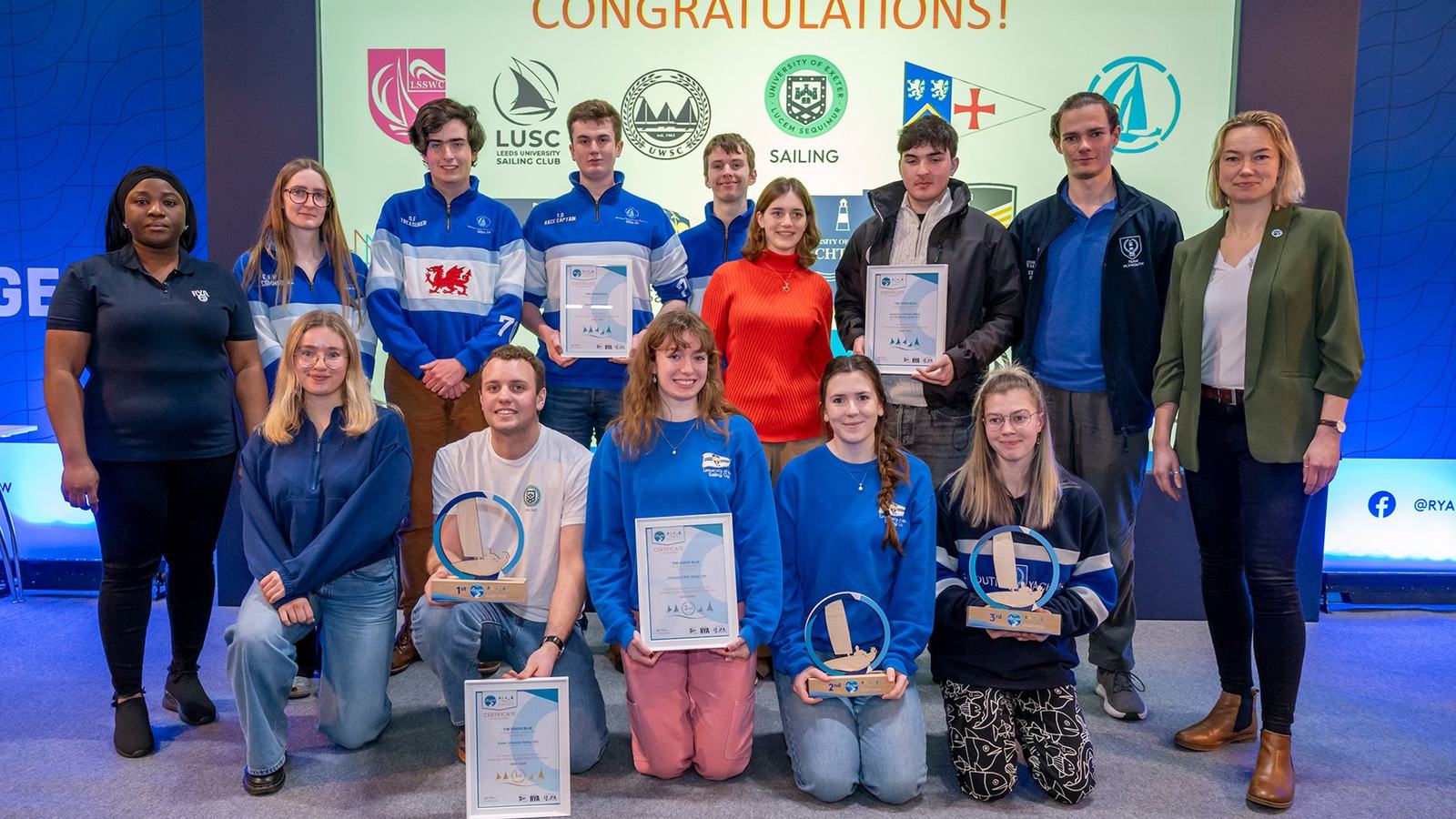
The Green Blue University Sailing Sustainability Challenge returned for the 2025–26 academic year with backing from the Royal Thames Yacht Club. The Royal Yachting Association promoted the initiative as a way for university clubs to improve environmental practice on and off the water, with the programme culminating in recognition during the spring 2026 British Universities Sailing Association championships.
Student sailors are invited to rethink everyday routines
The Green Blue University Sailing Sustainability Challenge returned for the 2025–26 academic year with backing from the Royal Thames Yacht Club. The Royal Yachting Association promoted the initiative as a way for university clubs to improve environmental practice on and off the water, with the programme culminating in recognition during the spring 2026 British Universities Sailing Association championships.
The challenge does not depend on students owning expensive boats or installing experimental technology. Its emphasis is practical action within established clubs, from examining how events are organised to encouraging members to take an interest in the rivers and lakes they use. That approach makes it accessible to teams with limited budgets.
Eight categories encourage broad thinking
The programme identified eight sustainability categories, including better water quality, biodiversity protection, youth engagement, advocacy and more environmentally responsible events. A club might introduce clearer guidance for rubbish handling, organise a local habitat activity or reduce unnecessary single-use material at a regatta.
Many small sailing clubs share facilities with other watersports users, so environmental decisions can affect a broader community. The most useful actions are those that fit the setting: coastal venues, freshwater lakes and urban waterways have different risks. Consultation with local environmental specialists can help prevent well-intentioned projects from creating new problems.
Why the next generation matters
University sailing clubs combine enthusiastic participants with a relatively rapid turnover as students graduate. Good environmental initiatives therefore need documentation and a way for new members to continue the work. Training officers and volunteers can help sustainability become part of the club's normal routines instead of a single publicity exercise.
Participants should also be cautious about claims that one clean-up or recycling change proves an entire sailing programme is sustainable. A credible approach records what was changed, whether it worked and how results are measured. A few realistic commitments maintained over several seasons are more valuable than an ambitious list nobody can deliver.
Ideas that can travel beyond campuses
The RYA notes that even modest changes can have a positive effect when repeated across several clubs. Equipment repair, keeping waterways free from litter and choosing sensible transport arrangements to events are examples of behaviour that can be adopted by non-student boating communities too. What matters is matching action to the actual circumstances.
The 2026 challenge provides a case study in connecting participation with responsibility for the places where sailing happens. It was promoted ahead of that season, so application deadlines from the original invitation are historic. The enduring idea is relevant to any dinghy club: people who enjoy a stretch of water have a reason to help care for it.
Source
Royal Yachting Association