
A detailed small-boat guide to Two Medicine Lake, Glacier National Park, explaining inspections, seasonal access, motorboat limits and a conservative paddle.
Two Medicine Lake on the eastern side of Montana's Glacier National Park makes a memorable setting for a small-boat outing, with a mountain backdrop, forested banks and water that can look almost impossibly clear from shore. The prospect of paddling across an alpine lake is appealing, but the rules for bringing a private craft are stricter than those at many ordinary holiday lakes. Glacier requires aquatic-invasive-species inspections and a free launch permit for watercraft, with additional quarantine rules for many motorboats. The park's 2026 east-side season has already ended, making this a future-trip planning guide rather than advice to launch today. Its most useful lesson is that careful preparation is part of enjoying a protected lake.
A quieter part of Glacier National Park
The Two Medicine district has a distinct character from the busier viewpoints around Lake McDonald and Going-to-the-Sun Road. A visitor approaches through the park's eastern landscape, where mountain scenery surrounds the lake and the pace can feel more deliberate. Choosing a canoe or kayak gives an opportunity to see the shoreline at water level, with the sound of paddles rather than road traffic providing much of the soundtrack. The lake's scenic appearance, however, should not encourage casual assumptions about conditions. Alpine weather can change quickly, and a place that looks sheltered near the landing may have very different wind and wave conditions farther out.
The official launch permit requirement
Glacier National Park's boating guidance states that all watercraft must be inspected for aquatic invasive species before launching and obtain a free permit. That applies to hand-propelled craft as well as powered boats. The inspection must establish that the craft is clean, drained and dry, and paddlers should take a personal flotation device appropriate for each person. The permit should remain with the boater or in the vessel. A canoe carried on a car roof is not exempt merely because it has no motor. Visitors need to plan to reach an open inspection station before reaching the water, not assume they can complete the paperwork after paddling away from shore.
Two Medicine's 2026 boating season has closed
The National Park Service lists 30 May to 26 September 2026 as the broader eastern-side boating season and 30 May to 7 September as the operating dates for the Two Medicine inspection station. Because the November publication date comes after these periods, the lake should be treated as a destination to research for a later season. The exact schedule for 2027 will need to be confirmed when the park publishes it. Road access, inspection staffing and weather may affect practical availability. Publishing dates from one completed season as if they were permanent opening hours would be misleading, particularly for visitors travelling a long distance with their own boat.
Where the inspection takes place
For the 2026 season, the park located the Two Medicine inspection station at a turnout on the north side of Two Medicine Road, around two miles east of the entrance station. The NPS listed daytime inspection hours rather than an all-day service, while the actual hours during future seasons may vary. This matters because a paddler who arrives at the water after the station closes may have no way to receive the required initial inspection and launch permit. An efficient plan is to check the latest station location, carry the necessary equipment and leave enough time for inspection before deciding how much of the day can safely be spent afloat.
Motorboats face a different set of conditions
Two Medicine Lake is among the limited Glacier waters where certain private gas-powered motorboats are allowed, subject to park restrictions. The NPS specifies a 10-horsepower limit here and requires a 30-day quarantine for trailered gas-powered boats following the prescribed inspection and sealing process. The presence of a boat ramp on a map does not mean a private trailer can simply be backed into the lake. In fact, the park's general regulations prohibit using trailers to launch or recover watercraft. Anyone considering powered boating should read the full current rules and discuss the intended vessel with park staff before making transport or rental arrangements.
Hand-carried boats are simpler, not unrestricted
A canoe or kayak that can be carried to the water avoids some of the complex requirements facing a trailered motorboat, and the park describes a same-day inspection route for non-motorized craft. That is an important difference for visitors with compact leisure equipment. Nevertheless, a hand-carried craft still needs inspection and permitting, and any trailer used to transport it remains subject to restrictions. Paddlers should also think carefully about the distance between parking and launching, especially with young children, heavy camping equipment or an awkward hull. A pleasant lake holiday starts more comfortably when the crew can move the craft safely without damaging vegetation or blocking other visitors.
Seeing the lake from water level
The attraction of a canoe on Two Medicine is less about covering a great distance than about noticing how the place changes from one part of the shoreline to another. Mountain reflections can give way to ripples, passing clouds alter the apparent colour of the water and the forest seems very different from the low angle of a small craft. One can plan an out-and-back outing close to the launch rather than commit to an ambitious crossing. These are suggested ways of experiencing the landscape, not mapped routes approved for every condition. Shore access, temporary closures and the crew's ability should determine the actual trip on the day.
The Sinopah boat-tour tradition
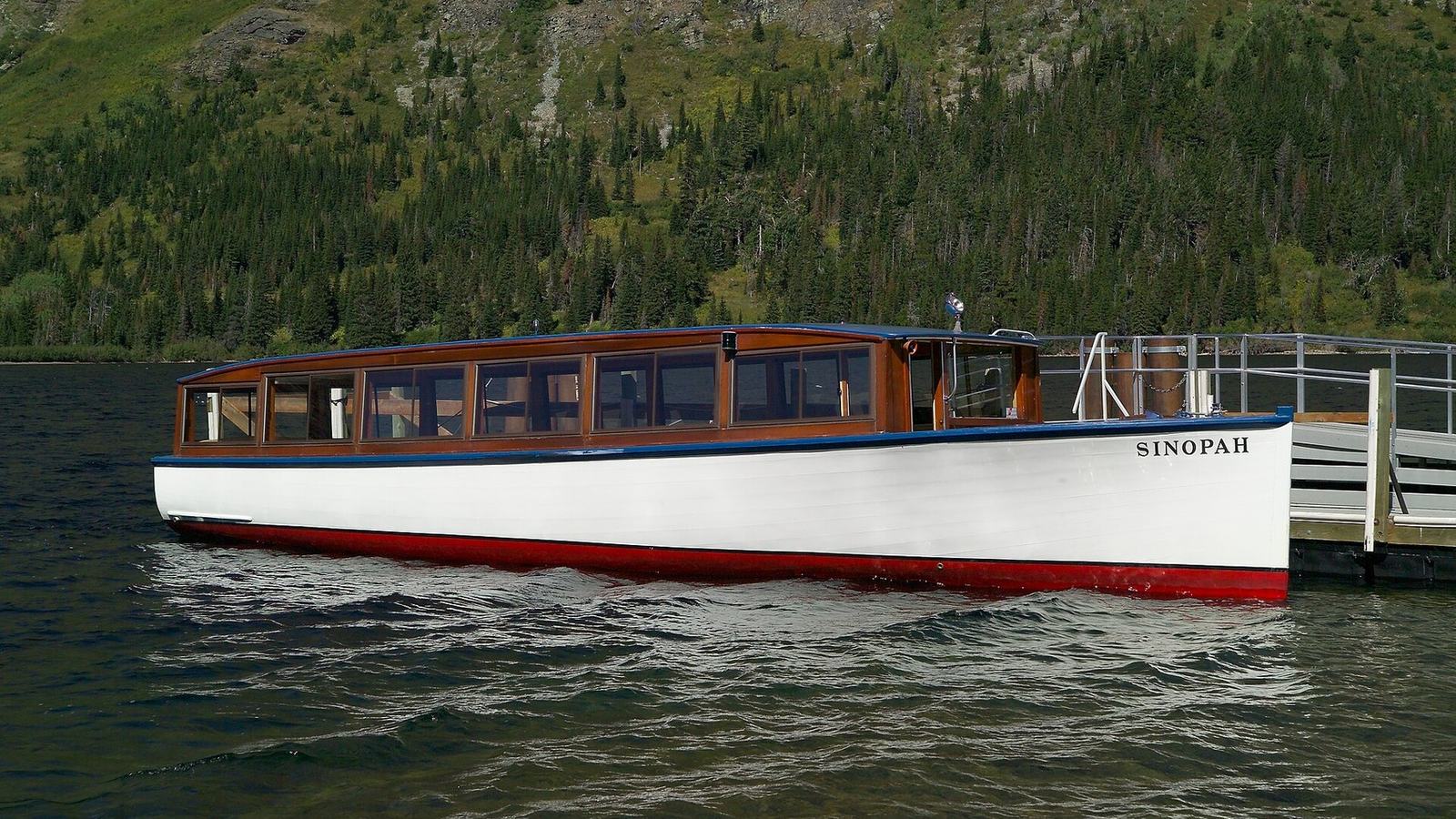
Two Medicine is also associated with the Sinopah, a passenger boat shown in official National Park Service photography on the lake. For visitors who do not want to bring a private craft, a guided boat outing may offer a way to experience some of the scenery without managing the equipment themselves. Commercial service arrangements and operating dates should be confirmed with the current concessioner rather than inferred from an old photograph or previous season's schedule. A tour vessel is not proof that private boats can launch without complying with inspection or quarantine rules. Its place in the landscape is a scenic detail alongside, not instead of, the park's regulations.
Cold water is a serious risk
Glacier's visitor guidance specifically warns that its lakes and rivers remain very cold throughout the year, with hypothermia a danger even in apparently pleasant weather. A capsize into cold water can impair breathing and movement before a paddler has time to make a sensible plan. Wearing a properly fitted personal flotation device, rather than simply carrying one under a seat, is a sensible practice in a canoe or kayak. Suitable clothing, spare dry layers and a realistic rescue plan are more important than how warm the air feels at the shoreline. The crew should know how to recover or reach safety before launching, especially when children or inexperienced paddlers are aboard.
Wind can transform an easy outing
An alpine lake can develop wind waves that make progress difficult for a canoe, particularly when the boat is broadside to gusts. The safest route might be to remain near the launching shore or return early instead of attempting an exposed crossing. A small craft has limited ability to make progress against a fresh headwind, and shoreline features can make conditions uneven. A planned leisurely paddle should always have a conservative turnaround time and an option to abandon the trip. Watch current weather advisories, assess the water on arrival and do not let the distance already travelled pressure the crew into continuing when conditions deteriorate.
Protecting the waters between trips
The inspection system exists because organisms and pathogens can be transported between water bodies on boats, paddle equipment and wet gear. Glacier asks users to clean, drain and dry their craft before arriving, and equipment such as footwear and fishing gear can also carry invasive species. A boater who has recently used a different lake should not rely on a superficial rinse. Preparation should include checking fittings, bags, drains and any places that retain moisture. If visitors leave the park and return with the boat, the NPS rules may require another inspection. Invasive-species prevention can feel administrative, but it protects the very wildlife and water quality that make this location worth visiting.
Staying ashore is part of the experience
Not every part of a Two Medicine holiday needs to be spent paddling. Time near the shore can be used to observe changing light, prepare a picnic in an appropriate developed area or take a walk within whatever trail conditions permit. That offers a useful balance for families with mixed interests or a crew whose energy is limited. The temptation to fill an entire day with boating should be resisted if weather, inspections or other factors reduce safe water time. A successful outing can be one hour of calm paddling followed by an unhurried afternoon on land. Wildlife should be observed at a distance, and park guidance on food storage and behaviour should be followed.
Overnight stays are not simply boat camping
Glacier requires a wilderness camping permit for overnight backcountry camping and says undesignated camping on lakeshores is not allowed. The park also prohibits overnight camping aboard a vessel within park boundaries. These restrictions are particularly relevant to visitors accustomed to camping beside more freely accessible lakes elsewhere. An itinerary involving a canoe and a night under canvas must use the correct authorised campsite or other accommodation, with the appropriate permits secured in advance. Visitors should not treat an attractive small beach as an acceptable campsite just because they can reach it by water. Planning accommodation separately prevents an otherwise pleasant trip from ending in a rules violation.
Families need a realistic launch plan
A family bringing a canoe should think about the full sequence from arrival to return, not just the scenic part of the journey. Allow time for inspection, equipment checks, carrying the hull, fitting personal flotation devices and explaining simple paddling instructions. Inexperienced children may become cold or tired much sooner than adults, and a long crossing can become uncomfortable if the weather changes. Choosing an easy return route and agreeing on a turnaround point can help maintain confidence. Carry water, suitable clothing and a means of obtaining assistance appropriate to the location. A shorter well-managed trip may be far more enjoyable than a route chosen for maximum distance.
The difference between a scenic lake and a boating venue
Photographs of Two Medicine understandably make it look like an inviting place to launch a craft, but a protected national park lake is not operated in the same way as a conventional commercial marina. Rules are designed to safeguard ecological conditions as well as visitors, and the season is short. The most important pre-departure checks are the current NPS boating page, road access, inspection station dates, weather and any lake-specific closures. Owners of electric or gas-powered boats should obtain explicit clarity on restrictions for their individual model. An unlicensed or uninspected attempt to launch would miss the purpose of visiting this carefully managed landscape.
Planning a future Two Medicine paddle
The right way to approach Two Medicine Lake is as a quiet, carefully planned alpine outing, not a spontaneous launch after a long drive. The scenery is the reward, but the essentials are simple: understand the season, secure inspection and a permit, bring appropriate flotation and cold-water equipment, and choose a route that can be shortened. Paddling close enough to shore to appreciate the mountains and forests can deliver a rewarding experience without demanding an ambitious crossing. For leisure boaters under twelve metres, the lake illustrates the appeal of small craft at their best: minimal disturbance, memorable scenery and good judgement about when it is safe to go.
Sources and photograph attribution
Official destination and boating guidance: National Park Service — Glacier National Park Boat Trips and Rentals. Current access, rules, weather and reservations must be checked independently before travel.
Photograph: GlacierNPS — “Two Medicine Lake Boat Tour (5634584865).jpg” (Public domain), via Wikimedia Commons. Resized and converted to JPEG for editorial display. Source: https://commons.wikimedia.org/wiki/File:Two_Medicine_Lake_Boat_Tour_(5634584865).jpg. Licence: https://creativecommons.org/publicdomain/mark/1.0/. Original rights remain with the credited creator or as specified by the source and licence.
