
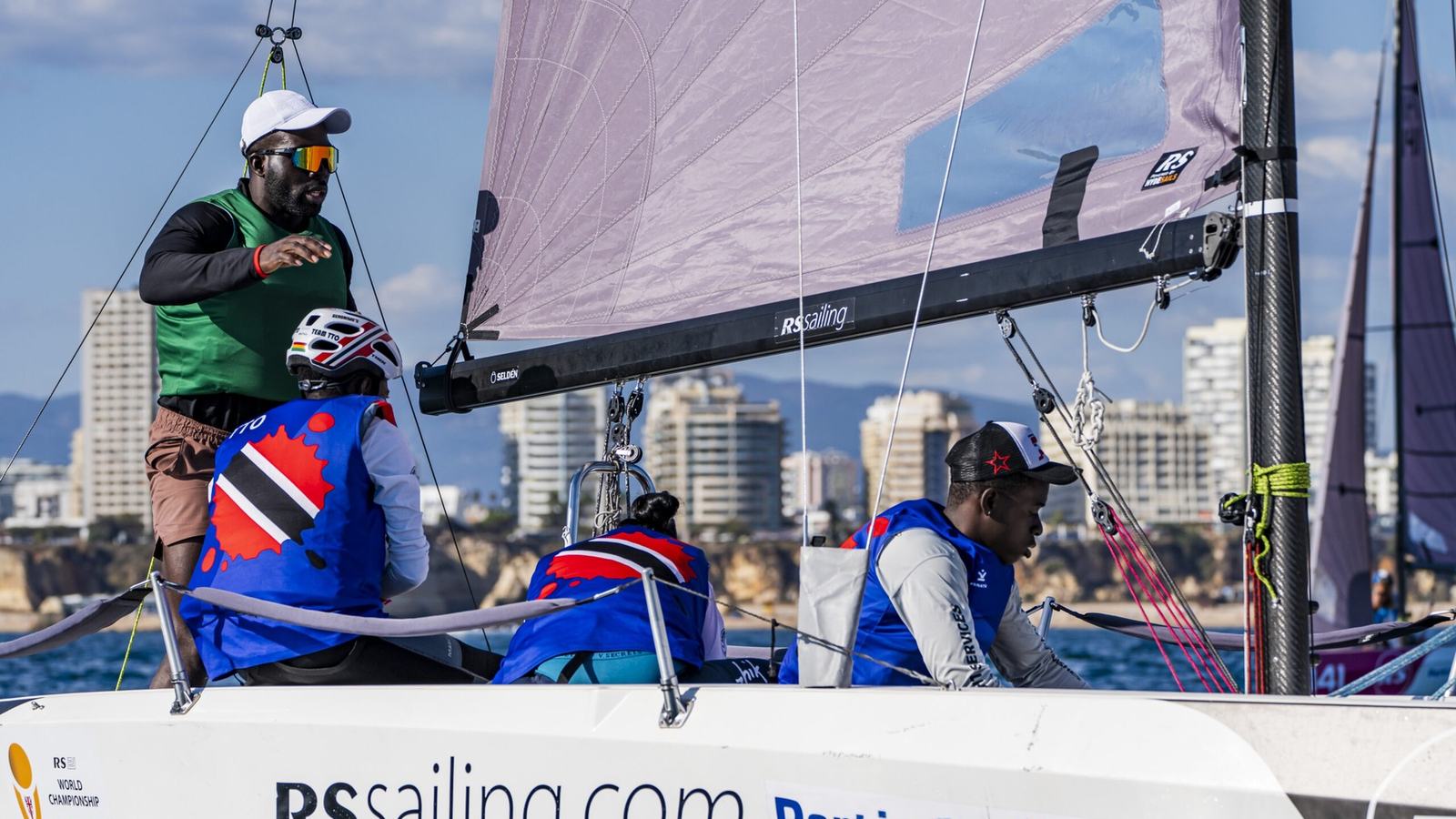
Trinidad and Tobago's Shannon Madar and Jaidon Vincent have made their first World Sailing Inclusion Championships appearance in the vision impairment fleet in Portimão.
A first international event for two sailors
Shannon Madar and Jaidon Vincent represented Trinidad and Tobago at the World Sailing Inclusion Championships in Portimão during October 2026. Both were newcomers to the event's vision impairment fleet, bringing a Caribbean perspective to an international gathering.
World Sailing profiled the sailors on 8 October as competition continued. Their participation demonstrates how an introductory programme can lead to further opportunities for people who previously had little access to organised sailing.
Madar embraces demanding activities
Madar, who has been blind since birth, described a longstanding appetite for adventure. Discovering sailing gave her another activity in which she could test her confidence and develop technical skills.
Vision impairment does not produce the same experience for every sailor, and individual adaptations vary. Good instruction combines communication, accessible information and an understanding of each person's preferences.
Working as part of a racing crew
The vision impairment programme in Portugal involved RS21 sailing boats, with crews depending on teamwork and communication to respond to wind and other competitors. Different team members may contribute navigation observations, handling and tactical decisions.
For first-time sailors, clear verbal descriptions and consistent routines can make manoeuvres easier to anticipate. The aim is to create meaningful participation rather than simply offer an experience from the passenger seat.
The importance of access in the Caribbean
Access to suitable instruction and inclusive sports equipment can determine whether an interested newcomer can try sailing at all. Programmes that connect local sailing organisations with international experience help build knowledge and confidence.
The sailors' arrival in Portimão shows one possible outcome of such opportunities. It does not imply that every Caribbean island currently offers the same training facilities or resources.
What newcomers can learn
The story is a reminder that sailing can be adapted for people with a wide range of abilities. The best first step is to contact a club or organisation that can explain its support and arrange a safe introductory session.
An international regatta is not a prerequisite for enjoying boating. Confidence, community and practical independence are meaningful outcomes at every level.
Communication can be designed into the crew routine
Vision impairment changes the way sailors obtain information, but it does not prevent them from understanding wind, balance and the response of a boat. A crew may use clear spoken descriptions of direction, distance and sail position so that important changes are communicated before action is required. Those descriptions work best when they are consistent rather than invented during a hurried manoeuvre.
The helmsperson and other crew members should agree the words they will use for turning, preparing sails and approaching another boat. An instruction like 'ready to tack' has meaning only when everybody understands the sequence that follows. Practising these exchanges in settled conditions gives participants more opportunity to concentrate on sailing instead of interpreting unfamiliar commands.
Small-boat racing provides feedback
An RS21 crew experiences immediate changes in balance and speed as the sails are adjusted. That physical feedback, alongside clear verbal information, can help a sailor understand the boat's response even when visual landmarks are inaccessible. Racing introduces additional demands because decisions are made with other boats nearby and limited time to reconsider.
During a learning session, instructors can begin with straightforward courses and increase complexity gradually. The aim should be to give sailors a real role in the manoeuvres rather than simply report every decision after it has been made. The crew still needs an effective lookout and proper collision avoidance, responsibilities that must be assigned according to the people and equipment on board.
Accessibility starts on the dock
Getting to the boat, transferring aboard and locating the controls are as much part of the experience as sailing. A participant might need a description of the pontoon layout, information about uneven surfaces or assistance in finding the safest boarding position. Staff can ask about preferences rather than assume that every visually impaired person wants the same kind of help.
Simple organisational measures can be valuable: equipment stored consistently, walkways kept free of loose ropes and instructions given before a noisy start sequence. These changes may help many sailors, including children and people who are simply new to the club. Accessibility is often improved by careful habits as well as by specialist equipment.
Building trust without removing responsibility
An instructor should be willing to explain both what is possible and where safety limitations apply. A new crew may need time to learn the handling of an unfamiliar boat, particularly in fresh wind or a crowded racing area. Honest boundaries allow people to make informed choices without being treated as incapable of learning or improving.
Trust develops through shared practice. When a sailor asks to take on a new task, the team can discuss how it will be introduced and what assistance will remain available. The most useful progression gives participants increasing responsibility as their skills develop. It does not confuse independence with being left without adequate support in a demanding situation.
Creating opportunities beyond one championship
A first international event can inspire local sailors and coaches, but regular access depends on clubs, boats and people who are willing to keep programmes active after the attention fades. Organisations that want to welcome visually impaired participants can seek training, discuss adaptations with experienced providers and involve the sailors themselves in decisions about what would help.
Families and prospective participants should ask what a local club can offer now, rather than assume that an international programme exists in every community. A short, well-organised introduction can lead toward weekly training and perhaps competition. Shannon Madar and Jaidon Vincent's story shows the importance of making that first invitation possible in the first place.
Local organisers can invite participants to describe what they want from sailing before assuming that an introductory course should lead directly to competition. Some people are interested in a peaceful social activity, while others actively seek racing and technical challenges. Taking these preferences seriously helps build programmes that are welcoming without limiting ambition.
Weather choices deserve particularly careful communication. A new sailor should understand why a scheduled session may be postponed when winds strengthen or visibility falls. Explaining that decision is itself a form of seamanship education. Informed participants are better prepared to recognise difficult conditions and take responsibility for their own progression.
An ongoing programme can benefit from regular feedback from the sailors themselves. Asking what information was useful, which tasks felt uncomfortable and what they want to practise next helps coaches refine the activity. It also reinforces the principle that accessible sailing is something designed with participants, not merely arranged for them.
Source
World Sailing