
Visit Point Reyes’ boat-in campsites around Tomales Bay, with planning advice for small sailboats, canoes, motorboats and advance camping permits.
On California's Point Reyes coast, Tomales Bay provides a distinctive overnight adventure for the owners of small sailboats, kayaks, canoes and appropriate motorboats. A traveller can launch at an authorised access point, cross sheltered-looking water and camp on selected west-shore beaches within Point Reyes National Seashore. This is not unrestricted wild camping: the National Park Service requires an advance permit through Recreation.gov, restricts where landings and overnight stays are allowed, and sets rules for sanitation and group size. The bay can also be affected by strong winds, fog and tidal currents. The attraction is the rare combination of a boat journey and a quiet night by the water within reach of the San Francisco Bay Area. The experience works best when the planning is every bit as considered as the choice of boat.
A small-vessel alternative to a conventional campsite
Most camping holidays begin by driving to a designated pitch and unloading beside the vehicle. At Tomales Bay, the more memorable camps require arrival on the water. The National Park Service expressly permits access by kayak, canoe, small motorboat, small sailboat and other suitable small vessels. Personal watercraft such as jet skis are prohibited. That distinction makes the trip relevant to owners of modest leisure boats, not just specialist sea kayakers. A dinghy with appropriate carrying capacity can provide transport to a beach when conditions permit, but the skipper must be able to navigate and land safely. The whole journey should be planned with the loaded vessel and its actual crew in mind, rather than using an empty boat's performance as the standard.
The permit is essential before departure
The park says all boat-in campers need an advance permit obtained through Recreation.gov. It warns that permits are popular and can be reserved three months to the day before the intended trip. Same-day walk-up permits are not available under the park's current arrangements. This means a traveller should never launch expecting to find an unoccupied beach and simply set up camp. The permit determines the lawful basis for the stay, and the camping party needs to carry proof of its reservation. Fees, eligibility, cancellation terms and available permits should be checked through the live reservation system, which is authoritative for a particular date. An article about the destination cannot confirm availability on any specific night.
Three main launch arrangements
The official guide lists Tomales Bay Resort, Miller Boat Launch and Lawson's Landing as locations from which boats can be launched and overnight parking arrangements may be available. They are distinct facilities. The resort on the west shore charges for overnight parking; Miller is a Marin County launch on the east side, with a concrete ramp, pier and designated upper-lot overnight parking; Lawson's Landing at Dillon Beach uses a sand-bottom ramp and may assist boat movements using equipment. These details matter for a boat on a trailer or a kayak carried on a vehicle. Visitors must verify current rules, fees and ramp conditions directly with the relevant operator. No single launch suits every craft or itinerary.
Miller Boat Launch and overnight parking
Miller Boat Launch is a practical point of access for many boat owners because it provides a public ramp, a pier and restrooms. The NPS directs campers to use the upper parking lot for overnight stays and display a printed Recreation.gov confirmation on the vehicle dashboard. A visitor who parks elsewhere may face a problem even with a valid campsite permit. Boat ramps also tend to become busy at predictable times, so it helps to prepare gear and check the craft away from the immediate launching area. Leaving a car for several nights adds a separate administrative step to the trip, and the camping permit does not automatically waive every facility's parking rules.
Lawson's Landing and the northern bay
Lawson's Landing is associated with the northern end of Tomales Bay and a launch at Dillon Beach. The park describes a sand-bottom ramp and the possibility of moving boats with a forklift, while owners using suitable four-wheel-drive vehicles may be able to launch directly under the facility's rules. This is not a public concrete ramp identical to Miller. It is important to contact the operator to confirm which craft can be launched, what assistance is available and how overnight parking works. The NPS also notes that camping or parking arrangements may require the purchase of a Lawson's Landing campsite. Such a starting point can be useful for an itinerary in the northern part of the bay, but tides and local conditions must inform the route.
The west-shore camping beaches
Within Point Reyes National Seashore, overnight boat-in camping is allowed only on specified beaches along the western side of Tomales Bay. The park's current map identifies where boat-in camping is permitted. Marshall Beach and Tomales Beach provide vault toilets, while other beaches may be available under permit conditions and with suitable sanitation equipment. It is tempting to look at an empty cove and assume it offers privacy and an ideal landing. That is not enough: some beaches are closed, some have strong currents, and not every part of the shoreline is public camping land. The group should understand its permit, permitted landing options and intended approach before leaving the ramp.
Sanitation determines some campsite choices
The NPS makes a particularly important distinction based on whether a camping party has a portable toilet. Campers with certain individual or medium-sized group permits who bring the required portable toilet may use permitted beaches shown on the official map, subject to availability on arrival. Those without suitable toilet equipment are required to use Marshall or Tomales Beach, where vault toilets exist. This is a good example of how backcountry camping rules shape the route. Equipment needs to be decided before departure, and waste must be managed according to park instructions. It would be irresponsible to recommend an isolated beach without explaining the sanitation requirements that apply to staying there overnight.
The first-come nature of beach choice
A confirmed permit does not guarantee exclusive occupation of a particular small beach unless the group holds one of the specific named-beach group reservations. The NPS explains that some permitted beaches are available on a first-come basis and may already have campers. A small-boat party should not crowd a tiny beach when another group is settled there. Instead, the boat needs the ability and sufficient time to reach a permitted alternative. This creates a useful reason to avoid arriving near dusk with no reserve plan. Good seamanship on a camping trip includes an understanding of the legal landing options and enough flexibility to move on when the first choice is unsuitable.
Important closures and no-go beaches
The official NPS guide identifies several beaches that are not available for landing or camping. It notes that Avalis Beach and Duck Beach have been closed to boats and camping since 30 May 2023, while Jacks Beach is closed to camping under an earlier order. These restrictions mean that an old map, a travel blog or memories of a previous visit may be inaccurate. A skipper should use the current National Park Service boat-in camping map and relevant superintendent's restrictions. There is also a specific warning about strong tides and currents near Blue Gum Beach. A small sailing boat or canoe should never be used to test whether a restriction is being enforced. Route selection begins with knowing where not to go.
Wind and fog across the bay
Tomales Bay can be deceptively attractive from shore. The NPS describes strong spring winds and notes that summer fog can persist during parts of July, August and September. Autumn may bring clear days, but storms and stronger southerly winds can occur. An overnight plan creates additional exposure because conditions on the return day may differ substantially from those on departure. A prudent group checks the marine forecast for both directions of travel and prepares alternatives if the scheduled return becomes unsafe. A small sailboat may enjoy a fresh breeze in one section yet encounter difficult gusts near another shoreline. The weather is not simply part of the scenery; it is a central operational constraint.
Choosing a vessel for an overnight load
A small motorboat, sailing dinghy, canoe and kayak can all provide access to permitted beaches under the park's rules, but each has different limitations. A loaded kayak needs secure, dry storage; an open canoe may be affected by wind; and a sailboat may need careful consideration of how camping equipment changes trim and handling. The voyage should fit the boat's published limits and the crew's experience. Important gear needs protection from spray or immersion. A suitable personal flotation device, communication method, navigation information and basic emergency equipment should be carried. Nothing about the availability of a campsite makes it acceptable to overload or operate an unsuitable craft.
Camping without a road connection
Part of the appeal is finishing the boating day on a beach with no vehicle immediately beside the tent. The experience may offer unusual quiet, particularly when the group travels lightly and avoids unnecessary disturbance. The same separation increases the importance of carrying food, drinking water, shelter and weather protection. A camper cannot count on shops or road access at every permitted beach. The NPS's low-impact boating guide provides detailed instructions for waste, fires, food and shoreline stewardship. The principle is to arrive with everything necessary and leave the beach without litter or damage. An enjoyable trip should preserve the same atmosphere for visitors who follow.
Restrictions on pets and fires
The park states that pets are no longer allowed on Point Reyes National Seashore beaches along Tomales Bay, following rules effective in May 2023. This is a significant planning detail for families who normally bring a dog aboard. Fire restrictions also vary, and a camping permit should not be interpreted as automatic permission for a beach fire. Any desire to cook or gather around flames must be checked against current rules and conditions. An article cannot assume that a beach fire is legal merely because another visitor has posted photographs of one. The appropriate approach is to carry food and equipment that allow the trip to remain comfortable even when fires are prohibited.
A photograph of the real waterway
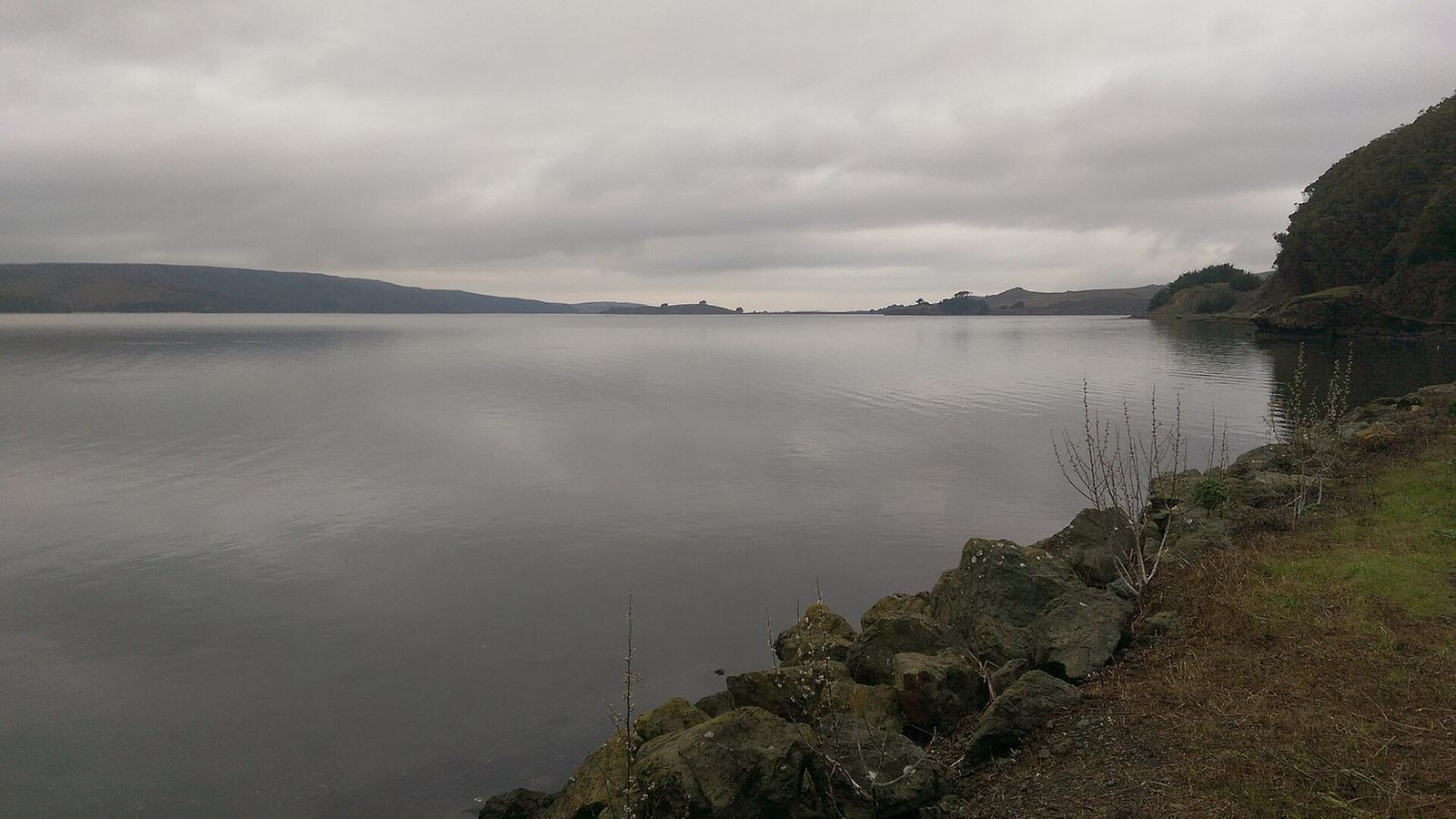
The lead image is an authentic photograph of Tomales Bay looking north from a boat launch near Nick's Cove, made by Jim Heaphy and shared on Wikimedia Commons by Cullen328 under a Creative Commons Attribution-ShareAlike 3.0 licence. It depicts the actual destination rather than a fictional camping vessel or an unrelated stretch of coastline. The photograph's creator and licence are recorded with the article, and it has been resized for editorial use. The camping locations, permit requirements, legal vessel types and launch details come from the National Park Service's current Point Reyes boat-in camping guide. That source should be revisited when making a booking because conditions and restrictions can change.
What makes the trip special
The attraction of Tomales Bay is the transition from an ordinary boat launch to a quiet permitted beach where the group becomes temporarily self-sufficient. It can be a compelling experience in a modest sailboat, canoe, kayak or suitable motorboat. The details cannot be skipped, however. A valid advance permit, the correct launch, lawful camping location, sanitation plan and careful marine forecast are essential. For boaters willing to organise those elements, the bay offers a rare opportunity to combine small-vessel travel and an overnight stay in a protected California landscape. The best holiday is not the most remote beach reached at any cost, but the one enjoyed safely while leaving the place in good condition.
Sources and photograph attribution
Official destination and boating guidance: National Park Service — Point Reyes Boat-In Camping. Current access, rules, weather and reservations must be checked independently before travel.
Photo: Cullen328 — “Tomales Bay looking north.jpg” (CC BY-SA 3.0), via Wikimedia Commons; resized and JPEG-converted for editorial presentation. Source: https://commons.wikimedia.org/wiki/File:Tomales_Bay_looking_north.jpg. Licence: https://creativecommons.org/licenses/by-sa/3.0. Original rights remain with the credited creator or as specified by the source and licence.
