
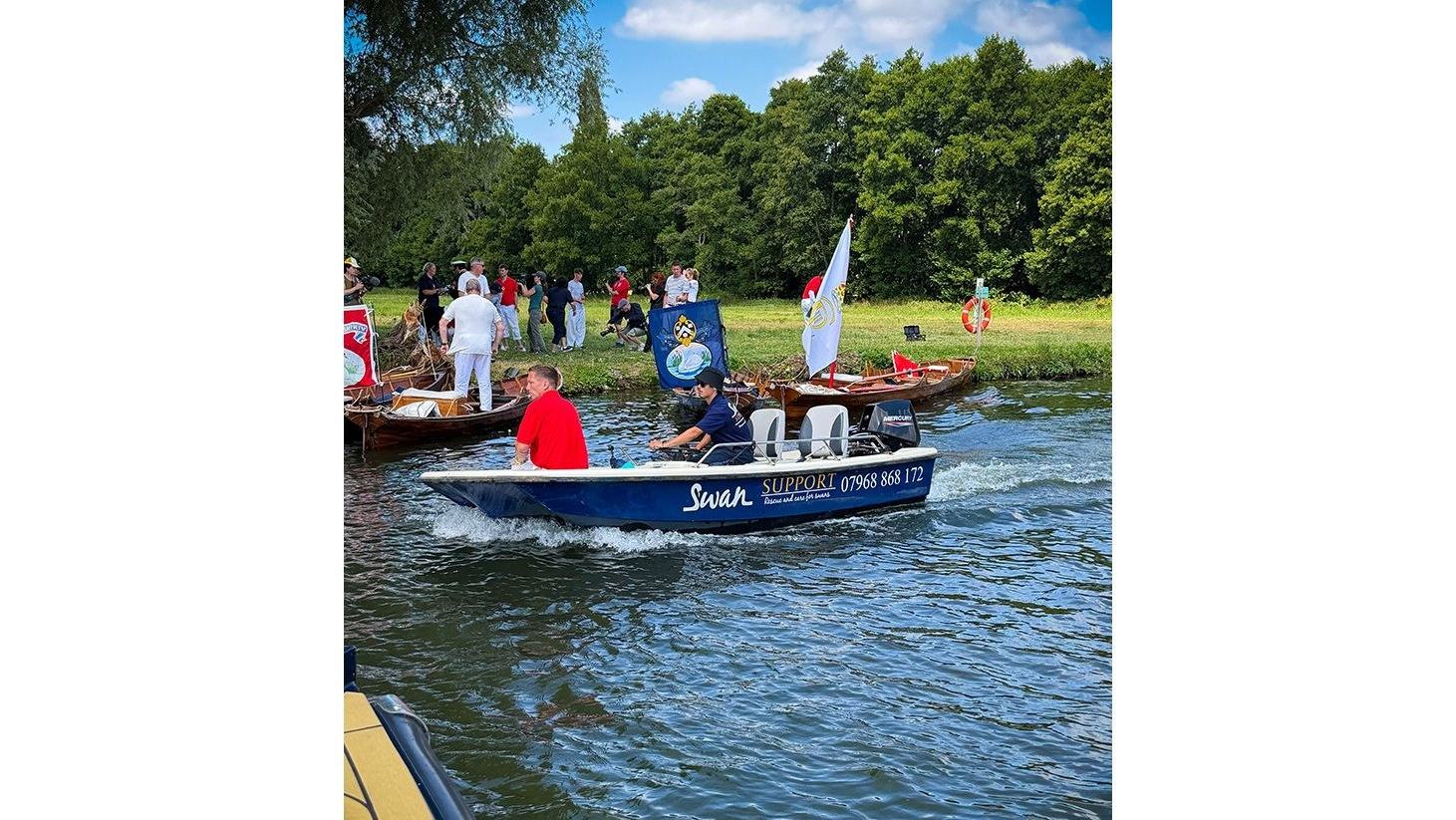
Swan Upping is the traditional census of the River Thames mute swan population, combining a ceremonial journey with practical checks on the birds. The 2026 programme saw teams travel by boat along the river between Sunbury Lock in Middlesex and Abingdon Bridge in Oxfordshire. British Marine's July account highlighted the support provided by engine distributor Barrus.
An annual river journey with centuries of history
Swan Upping is the traditional census of the River Thames mute swan population, combining a ceremonial journey with practical checks on the birds. The 2026 programme saw teams travel by boat along the river between Sunbury Lock in Middlesex and Abingdon Bridge in Oxfordshire. British Marine's July account highlighted the support provided by engine distributor Barrus.
The custom dates back hundreds of years and brings together the King's Swan Marker and the Vintners’ and Dyers’ Companies. Although its origins reflect historic royal privileges, the modern journey focuses strongly on counting, identifying and checking swans and their young. It offers visitors a distinctive glimpse of river life beyond ordinary boating traffic.
Why small boats matter to the survey
The five-day activity requires crews to travel between locks, reach suitable places to examine birds and safely handle equipment. Barrus supplied Mercury outboards comprising two 25-horsepower units and one 15-horsepower unit. Reliable, manoeuvrable small craft are valuable in such work because a team may need to move slowly near wildlife and other river users.
Boat operators need to respect speed limits and the movements of other craft, while the specialist swan-handling activity belongs to experienced personnel. The river's natural environment is shared with leisure boaters, anglers, paddlers and people enjoying the banks. Watching a survey does not authorise a visitor to approach or handle wild birds.
Discovering the river from shore
The route takes in a diverse section of the Thames, where historic towns, riverside paths and locks make the waterway interesting even without a private boat. Families can enjoy observing passing vessels and waterbirds, while keeping a respectful distance from nesting or feeding wildlife. Local access points and transport should be checked for any planned visit.
The dates and working arrangements for Swan Upping change each year. Anyone hoping to watch a future edition should use official announcements rather than assuming the 2026 itinerary will repeat without alteration. Weather, river conditions and operational requirements may influence where the teams can be observed safely.
A connection between boating and conservation
The contemporary event demonstrates that modest powered craft can support valuable monitoring work. It also puts a public spotlight on the relationship between boating activity and healthy waterways. Manufacturers and distributors can contribute useful equipment, but conservation outcomes depend on the skilled teams collecting and acting on the information.
For Leisure Boat Guide readers, Swan Upping is an example of how river traditions remain relevant when adapted to modern wildlife care. The trip was a completed 2026 programme rather than a tourist boat service, but its mixture of heritage, nature and practical seamanship is a distinctive part of Thames life. Watching the working boats pass a lock can create a memorable family experience without requiring specialist boating equipment. Visitors should stay clear of the working crews and avoid disturbing the birds, particularly young cygnets during the summer months.
Source
British Marine