
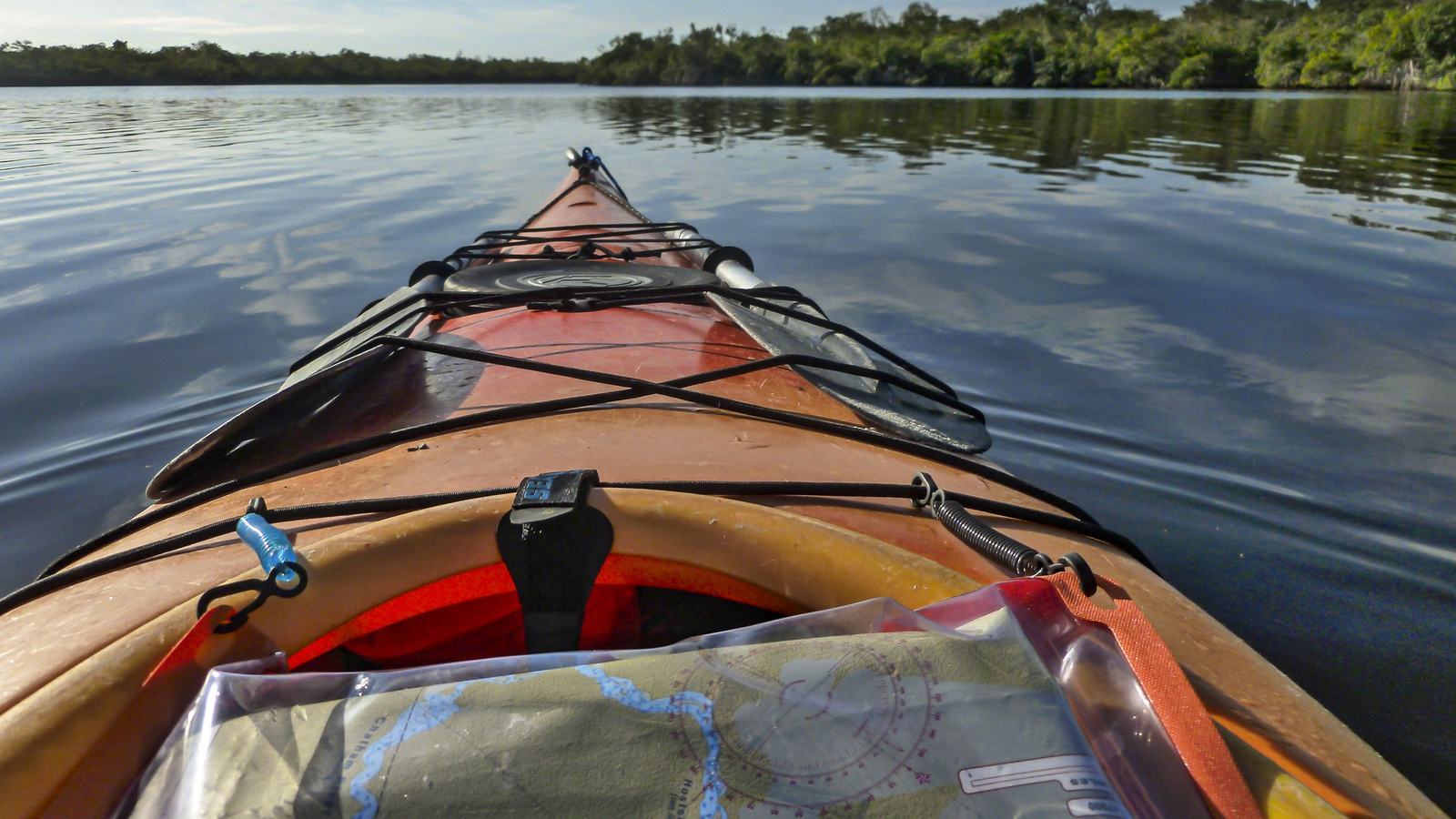
A guided or carefully planned paddle through Everglades National Park's Ten Thousand Islands reveals mangrove corridors, wildlife-rich shallows and a coastal maze that demands real navigation preparation.
A landscape shaped by tide and mangrove
The Ten Thousand Islands are not a conventional archipelago of beaches and village harbours. They form a low, intricate labyrinth of mangrove islands, tidal channels and coastal shallows along the western edge of Everglades National Park. Travelling here in a small craft can feel like entering a different map of Florida, where the defining landmarks are the shapes of trees, patches of open sky and changing water rather than roads or buildings.
That intimate landscape makes kayaking an appealing way to explore, but it also imposes limits. A route that looks short on a phone can involve an unexpectedly difficult search for the correct channel, especially when several openings appear similar. The National Park Service explicitly warns that finding one's way can be difficult and recommends consultation of NOAA charts 11430 and 11432 before boating in the area.
Wildlife gives the islands much of their appeal. Mangrove roots form sheltered nursery habitats for marine life, while birds and other animals use the channels and exposed edges for feeding and resting. The best experience comes from travelling quietly and observing from a respectful distance rather than pushing into sensitive areas to secure a photograph. A well-planned trip values the ecosystem as much as the destination.
Choosing an itinerary that fits the paddler
The park points visitors towards places such as Turner River, Halfway Creek, Sandfly Island and East River as potential areas to explore. These are not interchangeable routes, and conditions, access and skills can vary considerably. For a first visit, an experienced permitted guide is a sensible option, especially when participants are unfamiliar with coastal currents, tidal predictions or paddling in narrow mangrove corridors.
A shorter outing can focus on the changing scenery of a single waterway rather than trying to reach a distant island. The lack of conspicuous landmarks rewards patience: stopping to check a chart, noting a distinctive bend and confirming the return route are all part of the journey. Paddlers should avoid treating the islands as an effortless maze that can be navigated by simply following the most inviting channel.
Longer excursions require a different standard of planning, including realistic paddling times and a clear contingency plan. Tidal range can expose banks or alter which passages are usable, while wind may make open-water crossings considerably harder than sheltered creeks. A group should agree in advance how it will handle separation, fatigue and an unexpected late return; the route should never depend on perfect conditions all day.
Equipment and navigation without shortcuts
NOAA charts provide essential geographic context, but they need to be paired with a reliable sense of position and an understanding of local conditions. A waterproof chart or properly protected navigation device, a compass and a means of communication belong in the kit. Batteries, mobile signals and electronic coverage should not be considered infallible, particularly where vegetation can make the surroundings look nearly identical.
Shallow water is a defining feature of the Ten Thousand Islands and can leave paddlers uncertain about the way ahead. A kayak draws little water, yet that advantage should not become an invitation to disturb seagrass, push through fragile vegetation or attempt channels that have become impractical. Pay attention to the tide and be ready to retrace a known safe route instead of pressing deeper into an unfamiliar passage.
Carry adequate drinking water, sun protection and appropriate personal flotation equipment, and plan for insects and sudden weather changes. On a hot Florida day, slow progress through sheltered waterways can disguise how much water a paddler is losing. A dry bag with essential supplies, suitable footwear for permitted landings and a dependable return-time plan are basic comforts that quickly become safety matters.
How to enjoy the islands responsibly
The attraction of the Ten Thousand Islands is their sense of space, even though the channels can be narrow. Give wildlife room, avoid blocking another boat's passage and keep group noise low near roosting areas. If an island or landing site is restricted, respect that boundary; the absence of a prominent sign at every shore does not mean unrestricted access or permission to disturb nesting habitat.
Small groups should be thoughtful about stopping places and waste. Carry out everything brought onto the water, avoid damaging mangrove roots when tying up and use established or authorised facilities when available. These straightforward practices protect the very qualities that brought people here, while reducing the burden on a delicate landscape that attracts more attention as paddling becomes popular.
The most memorable Ten Thousand Islands trip is unlikely to be the one covering the greatest distance. It may be a slow encounter with reflected mangroves, an unexpected flock of wading birds and a peaceful return along a channel now familiar. Plan conservatively, verify present park guidance and let the conditions determine the day; in this landscape, good judgement is every bit as rewarding as the scenery.