
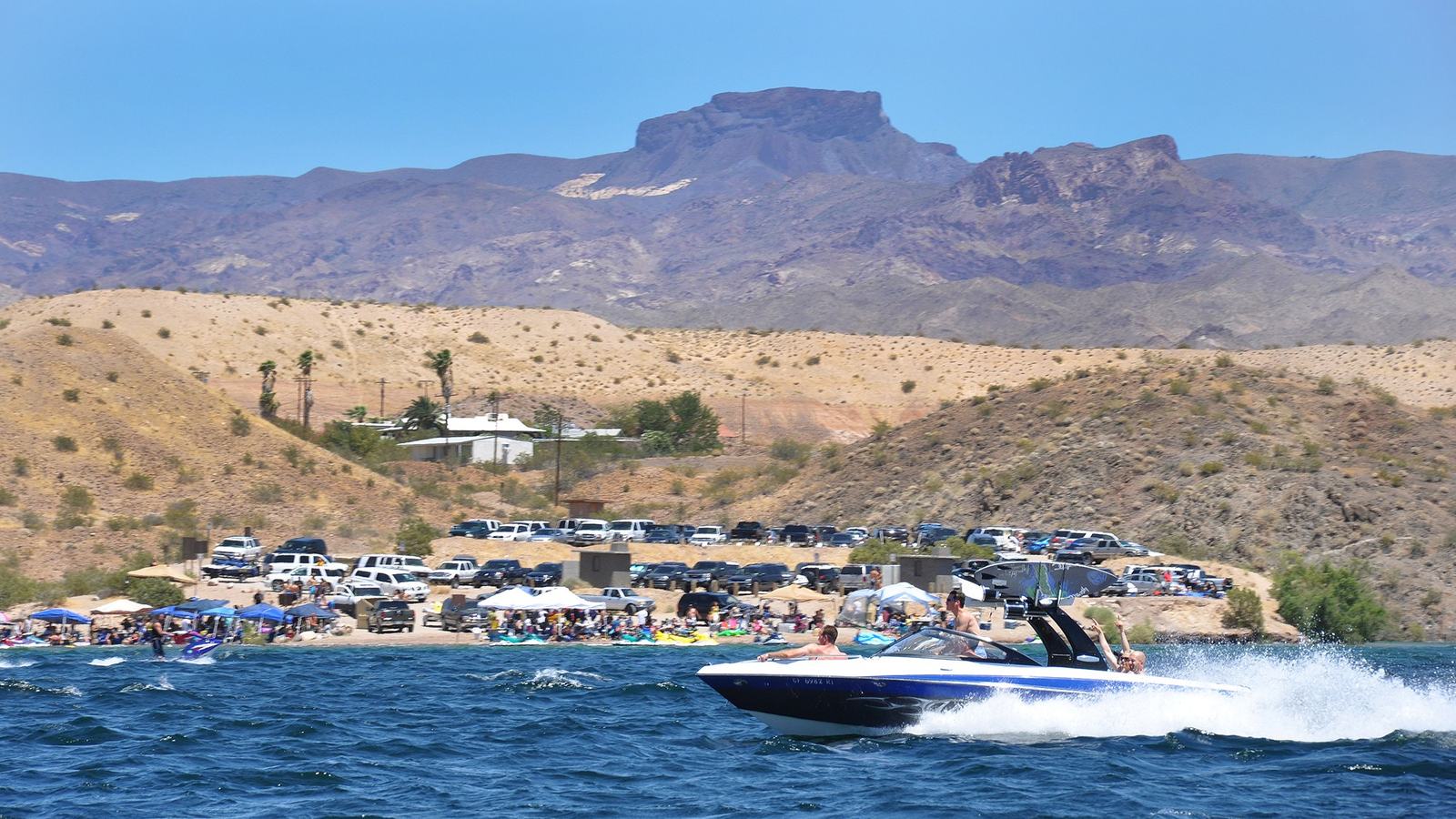
Temple Bar is an eastern Lake Mead base for boating amid Arizona desert cliffs. Changing water levels and ramp arrangements demand a fresh check before each launch.
A marina outpost in Arizona desert scenery
Temple Bar is an eastern access point to Lake Mead National Recreation Area, reached through a landscape of open desert and imposing rock formations. For trailer boaters, its attraction is the combination of lake access, a marina setting and space to explore beyond the busiest approaches near Las Vegas. It is also a place where planning cannot stop at the phrase launch ramp open. The reservoir’s changing level alters the practical shape of the shoreline and the way boats enter the water.
The National Park Service identifies Temple Bar as a developed lakeside area with concession-operated facilities. Depending on season and operation, services may include marina support, fuel and accommodation or supplies. Confirm directly which amenities are available before leaving a town with more predictable facilities. A boat crew crossing an isolated desert road should not assume that every advertised service operates at all times, or that mobile reception will be reliable throughout the journey.
A scenic cruise from Temple Bar can include long views across pale rock slopes and shifting waterlines, but those vistas should not distract from navigation. Modern Lake Mead is a landscape of exposed former lakebed, points and coves whose shapes have changed with water storage. A chart may not reflect every current hazard. Start with an accurate fuel budget, a known route and a return time that accounts for heat, wind and the possibility of a slower trip home.
Check the actual ramp status on the day
The NPS maintains a changing-lake-levels page listing which launch ramps are operating. Its October 2026 guidance identifies Temple Bar as open through a concession-managed mobile mat arrangement, rather than inviting boaters to rely solely on an old concrete-ramp diagram. The mat can be affected by operating decisions and water conditions. Verify the current report and seek local confirmation before towing a boat over a long distance to the site.
A mobile launch mat has operating characteristics that a skipper may not know from a conventional slipway. Ask whether the trailer, vehicle and vessel are suitable, how the approach is controlled and whether staff assistance or specific hours apply. Do not assume a heavy boat can be retrieved at every lake level. The best way to avoid a stressful end to the day is to check the retrieval plan as thoroughly as the launch arrangements.
Changes to reservoir level expose or conceal underwater objects that can damage a propeller, outboard lower unit or hull. The park warns boaters to navigate carefully around unmarked obstacles, particularly in newly exposed or shallow areas. Slow down near shore, use the depth sounder if fitted and resist the temptation to cut between points simply because the water looks clear. Desert visibility does not reveal the depth or condition of submerged terrain.
Respect heat, wind and long-distance logistics
Lake Mead’s desert climate creates distinct risks for crews, including dehydration and exposure to extreme heat. Carry substantially more drinking water than the expected duration suggests, along with shade and sun protection. An engine fault or delayed retrieval can leave passengers exposed for hours. Keep a working means of communication, know local emergency arrangements and tell someone ashore the intended route and return time.
Wind can arrive quickly across broad open water and may push steep waves towards a small craft. Consult the marine and local forecasts before launching, observe the water rather than just the air temperature, and give beginners a generous safety margin. If a route requires a long crossing, check whether the least experienced person aboard can tolerate the conditions. Postponing a trip is easier than trying to recover a struggling vessel far from the marina.
For powerboats, account for the fuel needed for the outward leg, return and a conservative reserve. Visiting side coves or searching for a safe landing can consume more distance than expected. Follow current no-wake areas and avoid damaging newly exposed shorelines. For paddlers, choose a small sheltered route with reliable access rather than a crossing that depends on stable winds. Different craft can share the same scenery, but not necessarily the same safe itinerary.
A dependable departure is the real achievement
Before leaving the launch area, check steering, engine cooling, life jackets and navigation lights if there is any prospect of being out late. Secure loose equipment so it cannot blow overboard as wind increases. Passengers should understand basic emergency procedures and how to operate essential communications. These checks take little time but become decisive when a desert reservoir offers few convenient alternatives to the planned marina return.
A visitor who wants photographs or a short swim should use a legal, stable stopping place and avoid mooring to objects not intended for boats. Water levels may have turned familiar beaches into steep muddy banks, or revealed sharp rocks where charts once showed deep water. Follow park regulations and any concession instructions without improvising on fragile terrain. The most memorable shore stop is one that does not create an unsafe or damaging retrieval.
Temple Bar offers an appealing gateway to Lake Mead’s quieter eastern waters, but its changing shoreline is part of the experience rather than an inconvenience to overlook. Recheck the NPS launch status immediately before travelling, confirm concession arrangements and travel with enough supplies for a delay. With suitable conditions and a conservative route, boaters can enjoy the scale of the desert lake while avoiding the predictable problems of low-water access.
Primary planning source: National Park Service Temple Bar visitor and facility information. Consult the original National Park Service guidance and current notices before departure.