
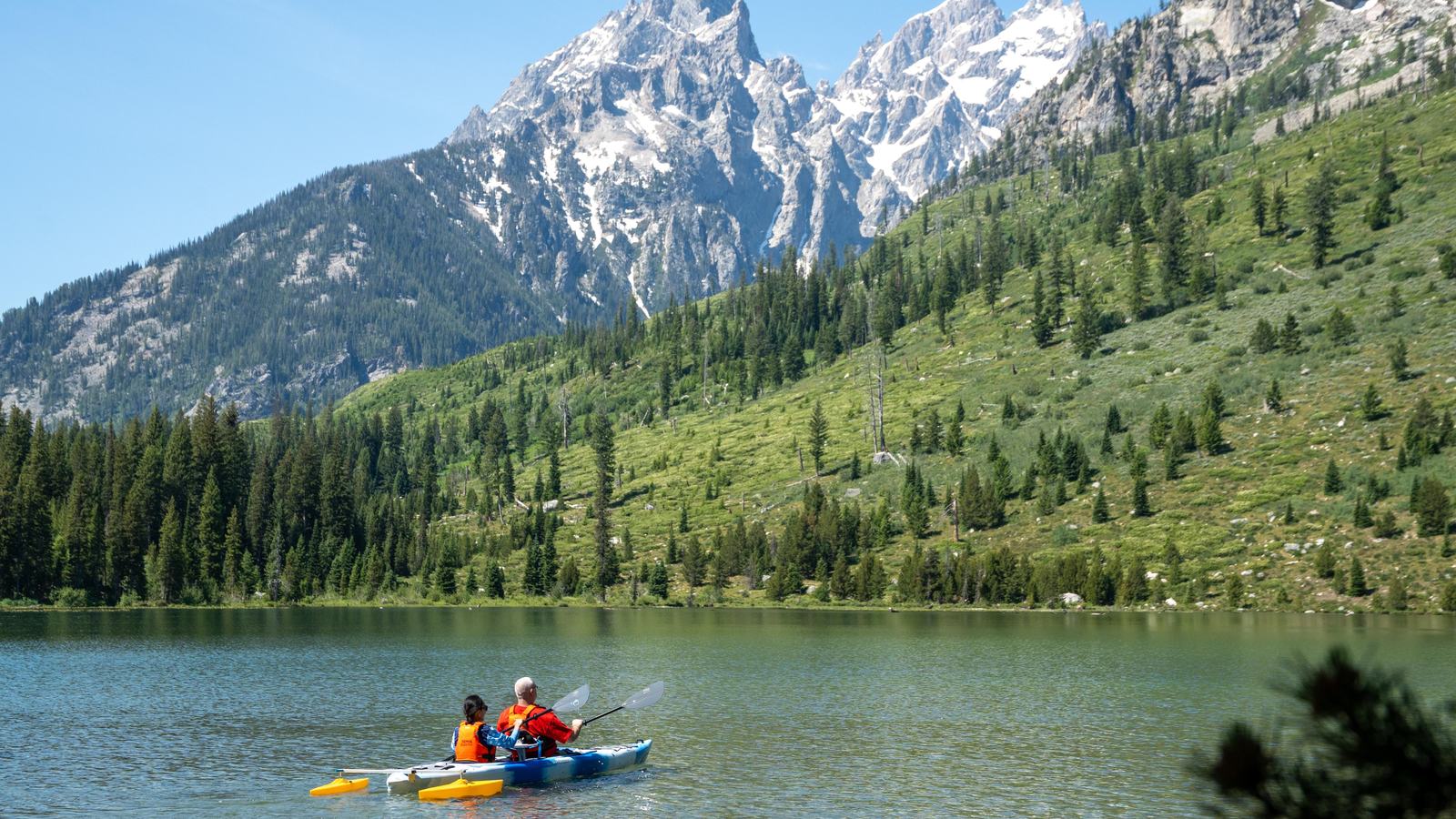
A short paddle on String Lake can become a mountain-lake journey after a portage to roadless Leigh Lake. Permits, weather and careful shore access all matter.
An unusually rewarding two-lake idea
String Lake lies at the foot of the Teton Range in Wyoming, where clear mountain scenery and comparatively shallow water make the shoreline inviting for a gentle paddle. Beyond the familiar picnic and swimming area lies a second possibility: carrying a canoe or kayak from String Lake to Leigh Lake. The National Park Service notes that there is no road to Leigh Lake, so paddling or walking there brings a welcome sense of distance from the developed car parks.
The outing is not a single uninterrupted stretch of water. Visitors put a suitable boat on String Lake, paddle towards the connection and then carry it across a short overland section to launch again. That transfer, often called a portage, is part of the adventure and should influence the choice of craft. A light kayak that can be carried safely by the group is much more practical than a heavy boat loaded with equipment that cannot be moved overland.
Access to String Lake is from Teton Park Road via the North Jenny Lake Junction. The NPS warns that parking is limited, a significant consideration at a very popular summer destination. Arrive with an alternative plan if the car park is full; do not block access or improvise a launch across fragile vegetation. The aim is to start with time to spare, enjoy the water and still have daylight to complete the return carry.
Prepare for a carry, not just a paddle
Before leaving shore, identify the approved portage route and confirm its current condition with the park. A boat needs to come out of the water without damaging the bank, and passengers should be able to lift it without overexertion. Secure loose gear in bags that can be carried separately. Trying to drag a loaded hull across roots and stones risks damage to equipment and the lakeshore, and it can turn an enjoyable outing into an awkward and exhausting struggle.
A compact itinerary starts with a measured paddle around String Lake to get a feel for wind and boat handling. Only proceed towards Leigh Lake if the weather, crew and daylight all support the additional effort. On the second lake the shoreline becomes less road-accessible, so help may be slower to arrive. Agree on a turnaround time before launching and keep a sufficient reserve to reverse the entire journey, including both water sections and the return portage.
The Grand Teton boating programme requires appropriate permits and aquatic invasive species inspections for watercraft, including paddle craft. Confirm the present inspection station and payment arrangements before arrival. Dry, drain and clean the boat and all gear in advance; small organisms can travel in bilges, wet straps or equipment as readily as in a large powerboat. A cross-lake excursion is not exempt from environmental rules simply because it is quiet and human-powered.
Mountain-water safety comes first
Both lakes sit beneath steep terrain where sunshine can give way to wind, rain and falling temperatures. Water that is shallow near a beach may still be dangerously cold, and a capsized paddler can struggle even close to shore. Every passenger should wear an appropriate life jacket and dress for possible immersion. Keep essential supplies dry, including a way to summon help, and avoid an exposed crossing if gusts begin to ruffle the lake.
Paddling groups should leave wildlife ample distance and resist the temptation to drift into quiet coves for close photographs of animals. The NPS advises keeping at least one hundred yards from bears and twenty-five yards from other wildlife. Moose can be unpredictable on narrow trails or near water, so a shore stop may need to be abandoned if animals are using the route. Observe wildlife from a distance without separating an animal from its escape path.
Food management is a practical safety obligation in bear country, even for a picnic. Keep food with the group while eating and use designated bear-resistant storage where available. Never leave a bag of snacks on the shore while swimming or paddling farther away. Dispose of rubbish correctly and avoid carrying strong-smelling waste through a long outing. These are not merely campsite rules; careless food handling can cause lasting problems for park wildlife.
Day trips and overnight ambitions are different
Leigh Lake also has backcountry camping opportunities, but a night in the area requires a separate planning process. Boat-accessed overnight sites may require park backcountry permits, and site availability can be limited. A day visitor should not decide to stay spontaneously because the shoreline looks welcoming. Check the current backcountry map, permit system, food-storage requirements and any closures well before planning a multi-day trip.
For a one-day paddle, the most satisfying plan may simply be to reach a quiet viewpoint on Leigh Lake and return without extending the route. Leave time for wildlife observation, photographs and an unhurried carry between waters. If parking or access conditions make the portage unrealistic, a shorter String Lake outing remains worthwhile. The surrounding mountain views do not depend on proving a distance record, and a conservative turnaround is often the more confident decision.
The appeal of String and Leigh Lakes lies in their contrast. The first lake offers an approachable shore base, while the second feels further removed after only a modest overland effort. The difference is created by the portage, and it should be respected as part of the journey. Bring a boat that can be carried, satisfy inspection and permit rules, and give cold water and wildlife their proper place in the plan.
Primary planning source: National Park Service String and Leigh Lakes visitor and boating guidance. Consult the original National Park Service guidance and current notices before departure.