
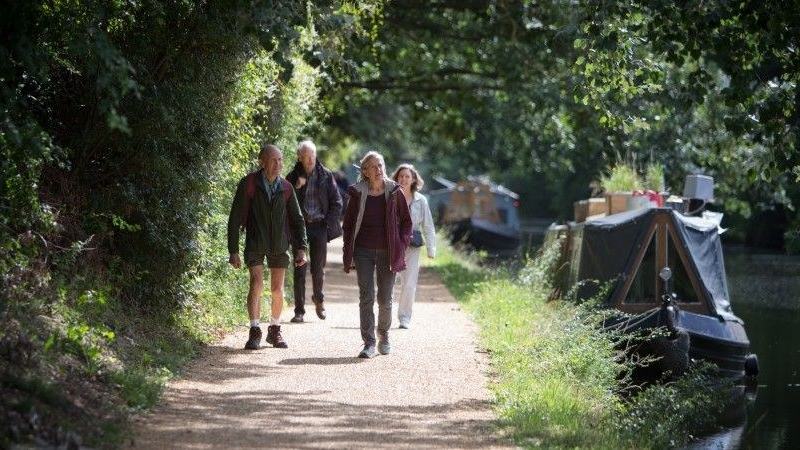
The Canal & River Trust's Canals on Prescription programme has a session scheduled for 26 October 2026 at Stanley Ferry near Wakefield. The event runs from 11am to 1pm, meeting at The Stanley Ferry on Ferry Lane. It forms part of a twelve-week canal activity project intended to encourage time outdoors and stronger community connections.
An outdoor Monday beside a working canal
The Canal & River Trust's Canals on Prescription programme has a session scheduled for 26 October 2026 at Stanley Ferry near Wakefield. The event runs from 11am to 1pm, meeting at The Stanley Ferry on Ferry Lane. It forms part of a twelve-week canal activity project intended to encourage time outdoors and stronger community connections.
The announced activities can include canoeing, sketch walks and mindfulness-style sessions. These are not presented as clinical treatments for specific conditions, but as accessible leisure opportunities in a waterside setting. Participants may find that a shared activity makes it easier to begin spending time outside than arranging a solitary outing.
Different routes into enjoying the water
Canoeing gives participants an active way to experience the canal environment, while a sketch walk invites closer attention to buildings, boats, trees and reflections. A quiet outdoor session can also allow people to notice details they pass every day without seeing. The mixture broadens the programme beyond conventional exercise.
The suitability of any activity depends on the individual and the conditions. Anyone concerned about mobility or getting into a canoe should ask organisers what support and alternatives are available. Suitable footwear, weatherproof clothing and sensible planning can make a late-October morning considerably more comfortable.
A familiar location with new perspectives
Stanley Ferry is part of an area shaped by the Calder navigation and the history of industrial transport. The waterside environment offers more than scenery; locks, bridges and old commercial routes tell a story of how communities grew around rivers and canals. A leisurely outdoor programme provides an opportunity to look at that heritage without turning every walk into a formal lecture.
Participants do not need to become expert paddlers or artists to enjoy the experience. A successful session might simply be an introduction to the waterways, a conversation with a neighbour or a reason to return on another day. The programme's scheduled recurring format can help turn a one-off outing into a routine.
Joining a session responsibly
The Canal & River Trust asks interested participants to contact the programme team for information. Booking, eligibility, practical support and individual activity choices should be confirmed rather than inferred from a general event listing. Canoeing sessions require the organiser's instructions and appropriate safety arrangements; people should not attempt an unsupervised alternative based on the listing.
For Leisure Boat Guide readers, the programme shows how inland waterways can be enjoyed without owning a boat. A small, organised activity creates contact with the natural and built surroundings of a local canal, while leaving space for participants to progress at their own pace. Participants who prefer to remain ashore can ask about the range of walking and observation activities rather than assuming canoeing is required. This flexibility can make a programme easier to approach for first-time visitors.
Source
British Marine