
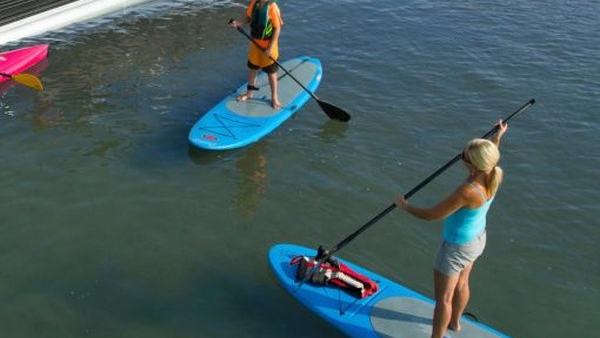
A first paddleboarding outing is better when it begins on sheltered water. Here is how to select equipment, establish balance and plan a safe short route.
Start with a place that allows mistakes
Learning to stand on a paddleboard does not require an empty ocean or elaborate equipment, but the location has a substantial influence on the first experience. A shallow, calm lake or sheltered reach of slow-moving river is ideal for practising balance and making short adjustments without battling waves or traffic. Discover Boating's practical SUP guide recommends starting in protected conditions rather than testing new skills on an exposed coastline.
A beginner should select an easy entry and return point before inflating or carrying the board to the water. The shore should not require climbing over slippery rocks or negotiating a busy launching ramp used by powered craft. Planning a short return loop also avoids the common mistake of travelling comfortably with the wind and discovering that the journey back requires more energy than expected.
Set the board up properly before launching
An inflatable SUP needs to be pumped to the pressure specified by its manufacturer, with particular attention to the valve and any removable fin. Underinflation can make a board feel unusually soft and unstable, while exceeding its pressure limit can damage the construction. The paddle should be assembled securely and adjusted to a useful length rather than left at an awkward setting that forces the rider to lean.
A well-fitted personal flotation device is important, with local regulations determining any specific legal requirements. Leash selection deserves particular care: a conventional ankle leash may be suitable in sheltered, non-flowing water but can become hazardous around moving current or entanglement risks. People paddling rivers or tidal areas should obtain specialist advice about quick-release equipment and route suitability.
Build balance from the knees
Discover Boating suggests beginning in a stable position and progressing gradually toward standing. A first-time paddler can kneel while learning how the board responds to shifts of weight, then rise with the feet approximately shoulder-width apart and knees softly bent. Keeping the gaze forward rather than fixed on the deck often helps with balance.
The objective is not to remain perfectly still. A board will move slightly under the rider, and small, controlled adjustments are more effective than stiffening the legs and holding the paddle as a support pole. Falling is a normal part of learning, so the paddler should practise in water with sufficient clear space and understand how to climb back aboard.
Learn a paddle stroke that conserves energy
The paddle blade is shaped to travel through the water in a particular direction, and beginners frequently hold it backwards. With the blade correctly oriented, a relaxed forward stroke uses the torso and larger muscle groups instead of relying entirely on the arms. Alternating sides every few strokes helps the board maintain a reasonably straight course.
Steering is as important as moving forward. Short strokes toward the stern, turning strokes and the ability to stop give the rider confidence near a shoreline or small obstacle. Rather than trying to cover distance, spend the first outing practising these manoeuvres within easy reach of land, with pauses to observe changes in wind and the behaviour of other water users.
Plan a return you know you can manage
Stand-up paddleboarding is most enjoyable when the destination matches the paddler's current ability. A sheltered cove or short shoreline journey may be enough to provide exercise and a new perspective on the landscape. Bring suitable drinking water, sun protection and a means of calling for help secured in a waterproof case, while telling someone ashore when to expect a return.
Wind and current can affect a board far more than a new paddler anticipates, especially when fatigued. It is sensible to paddle against a gentle breeze at the start so that the return is not the most demanding part of the outing, while avoiding conditions that feel beyond control. The first successful SUP day is one that ends with the rider eager to go again, not an exhausting struggle to reach the launch.