
A raft-up can turn an ordinary small-boat afternoon into a friendly gathering, but boats need sensible positioning, secure lines and clear safety rules.
A social afternoon that needs a little seamanship
Rafting up is the practice of bringing several boats alongside one another and securing them so friends can spend time together on the water. It can create an informal floating gathering in a sheltered cove, especially where small motorboats or pontoons are a familiar part of the local scene. Discover Boating recommends careful anchoring, fenders and a controlled approach before anyone begins moving between boats.
The idea is simple but the movement of separate hulls creates hazards. Even a light wake can cause boats of different size and weight to roll or surge unevenly, bringing their fittings together. A gathering with two or three well-matched craft is often easier to manage than an ambitious floating party, particularly when the participating skippers have not rafted up before.
Anchor the arrangement rather than improvising
The heaviest, most suitable boat commonly forms the centre of a raft-up and anchors before others approach. Its skipper needs to evaluate depth, seabed, holding conditions and the space available for the entire group to swing with wind or current. Boats should approach slowly, with crew ready to manage lines and avoid contact between the hulls.
Anchoring a multi-boat group is not appropriate everywhere, and some waterways restrict rafting or overnight gatherings. The increased windage and combined load can place more strain on an anchor than one small boat would create alone. Skippers should not assume the anchor will remain secure simply because each individual craft normally anchors without difficulty.
Fenders and cleats protect people as well as boats
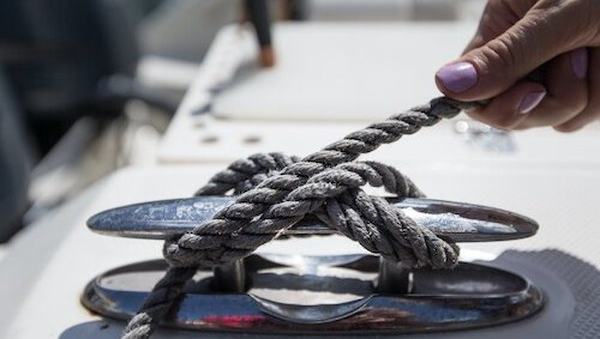
Properly positioned fenders are essential where hulls meet, and additional protection may be needed for boats with different freeboard or rubrail heights. Crew should use suitable bow and stern lines secured to proper cleats, with spring lines to limit movement fore and aft where needed. Handrails and decorative fittings are not reliable substitutes for purpose-built mooring points.
Everybody aboard should be warned to keep fingers, feet and limbs away from the gap between boats, particularly during an approach. A sudden movement can cause a crushing injury. The skippers should coordinate each manoeuvre before the first line is passed, and no passenger should be expected to hold a heavy boat apart by hand.
Arrange the boats for comfortable movement
Similar-sized boats often raft together more comfortably because the freeboard and access points line up. A pontoon or open runabout may sit differently from a high-sided cabin cruiser, so a skipper should not force a difficult arrangement merely to preserve a preferred party layout. Guests should move between boats only when the vessels are steady and the route is safe.
Swimming from a raft-up requires a clear plan. Engines should be shut down before anyone enters the water, with attention to carbon monoxide and the location of exhaust outlets. Skippers must also keep watch for approaching craft and ensure swimmers are visible. The social nature of the outing does not remove the need for a sober, responsible operator for each boat.
Enjoy the gathering without burdening the surroundings
A relaxed raft-up might involve a simple picnic, conversation and a chance to meet other boating families. Sound travels over open water, so music should be kept at a level that respects other visitors and nearby homes. Waste and loose objects must be secured to prevent litter entering the water, and no one should discard food or packaging overboard.
When it is time to leave, the group needs a clear sequence for releasing lines and departing individually. The outer boats usually manoeuvre away in turn while the anchored vessel maintains control. A successful raft-up ends without damage, close calls or disruption to neighbouring users—proof that good preparation contributes directly to the enjoyment.