
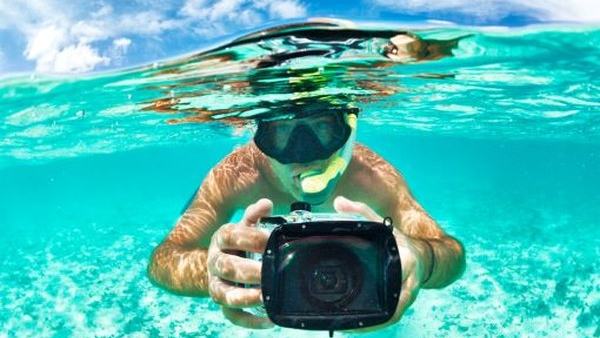
A moving boat creates unique photographic opportunities and challenges. Protecting equipment, choosing the right settings and remaining secure are essential.
A boat changes what a photographer can see
Photographing from a small boat gives a fresh perspective on shorelines, wildlife and other vessels. A low viewpoint can make reflections more interesting, while movement through a channel continually changes the composition. The same movement that creates these opportunities can also cause blurred images, salt damage and unsafe attempts to reach a better angle. Discover Boating's photography guide recommends preparing both camera equipment and the photographer's position before leaving shore.
The first priority remains the boat's safe operation. A photographer should never obstruct the helm, block a skipper's view or shift weight unexpectedly in a small craft. A seated position with reliable support is often both safer and more effective than standing near the side for a dramatic shot.
Choose settings that deal with motion
A moving boat can cause camera shake even when the subject is stationary. Using a reasonably fast shutter speed helps preserve detail in photographs of wildlife or other boats, particularly when there is chop. Discover Boating suggests starting around 1/500 of a second and considering 1/1000 or faster for more demanding situations.
Modern cameras offer continuous autofocus and burst modes that can improve the chances of a sharply focused result. A higher ISO may be appropriate when light is limited, although excessive sensitivity can introduce noise. It is better to understand the relationship among shutter speed, aperture and ISO than rely on one fixed setting for every photograph.
Water and bright light require different techniques
Sunlight reflecting from the water can create glare and high contrast, making both exposure and composition difficult. A circular polarising filter may reduce some reflections, while positioning the camera to avoid direct glare can improve clarity. Early morning and late afternoon often produce softer light and warmer tones than the middle of the day.
A simple horizon level is useful when working from a moving deck. The photographer should also pay attention to the background; a shoreline pole or unrelated boat can distract from the main subject. Including a small detail such as a wake or the bow of the vessel can communicate the experience of being afloat without filling the frame with equipment.
Protect the camera before the first splash
Salt spray and sand can damage lens coatings and moving parts, while a sudden bump may send a camera into the water. A dry bag, secure strap and suitable weather protection are valuable, especially in an open boat. Microfibre cloths can help with moisture, but salt should not be rubbed into a delicate surface without appropriate cleaning.
A phone can produce excellent photographs when it is used carefully. Cleaning the lens, locking exposure and capturing a short burst may be enough for memorable family images. Waterproof cases should be tested before use, and the photographer should avoid leaning beyond a safe seated position simply to hold a phone closer to the water.
Build a story from the whole journey
The most memorable set of pictures may include the preparations at the dock, the crew's reaction to a changing sky, a detail of the shoreline and a quiet moment during the return. Such images explain what the day felt like, rather than merely documenting the largest boat encountered. Ask permission before photographing guests closely, especially children.
Photography should remain a complement to the outing rather than its purpose taking control. When a location or manoeuvre feels unsafe, put the camera away and enjoy the view. Strong photographs often come from patient observation, thoughtful light and a secure position, all of which are available aboard an ordinary small leisure boat.