
Fuel planning for small boats begins with realistic consumption, a generous reserve, a safe refuelling routine and knowing when to shorten a trip rather than press on.
Fuel planning starts before the engine does
On a small motorboat, an enjoyable day out can become complicated when the remaining fuel is uncertain. The quickest improvement is to decide on an outbound destination, an expected return point and a reserve before leaving the berth. That plan should take account of sea state, tides, wind and passengers. The distance on the chart is only part of the story, as return consumption may differ.
A short coastal passage can include slow running near a harbour, an economical cruising section and a longer period pushing into wind or tide. Fuel planning is therefore not simply a matter of dividing the tank capacity by a brochure consumption figure. It is a judgement made with knowledge of the boat, current conditions and a realistic route. If those elements remain uncertain, choose a shorter outing with more options to stop.
Use what your own boat actually consumes
An owner may know the nominal size of the tank without knowing the amount that can be used reliably. Tank gauges are not always perfectly accurate, and movement at sea can make readings difficult to interpret. Recording the engine hours, distance travelled and quantity added at each refill provides a better picture over time. Modern engine instruments can help, but they still need to be understood and checked against actual refuelling figures.
When keeping a simple log, separate slow harbour manoeuvres from normal cruising and any sustained faster running. Note the approximate conditions and number of people aboard. The purpose is not to find a flattering economy figure from one calm day; it is to build an honest working range for the boat as usually loaded. Where reliable consumption data is unavailable, allow extra margin and avoid routes that depend on reaching the last possible mile.
Understand the one-third reserve guideline
The United States Coast Guard teaches a straightforward starting point: plan roughly one third of available fuel for the outward leg, another third for the return and keep a third in reserve. It is a memorable rule because it discourages owners from treating an entire tank as usable trip fuel. It is especially helpful when considering an unfamiliar route or the temptation to extend an enjoyable cruise further from the launch point.
The rule is not a guarantee that the same quantity will be consumed on each leg. An adverse wind, current or a diversion can change the calculation. The reserve must be sufficient for the conditions actually expected, and some passages need a more conservative plan. Check the boatbuilder’s operating advice and calculate with realistically usable fuel, not merely the capacity stamped on the tank.
Let weather and tide control the route
Wind against tide can make a return journey slower and less comfortable than the outward run, especially in a light open boat. Even with no change in engine revolutions, the boat may cover fewer miles over the ground. Check forecasts, sea conditions and tidal information before departure, then reassess on the water. If the route requires fighting strong conditions on the way home, its fuel margin needs to reflect that.
A useful passage plan includes practical turning points and an alternative safe harbour. It should also identify any fuel stops, including opening hours. Do not assume every marina sells the right fuel or accepts a visiting boat at short notice. A plan with alternative landing places is more resilient than one with a single destination and no option to shorten the day.
Refuel without turning it into a hazard
Good fuel planning includes a careful refuelling routine. The Coast Guard advises eliminating smoking and other ignition sources, shutting down engines and relevant electrical appliances, and keeping the filling nozzle in contact with the tank to control static. Spills should be handled promptly using the facilities and procedures at the refuelling location. Operators should follow local marina instructions rather than assuming procedures are identical everywhere.
Portable fuel tanks should be removed and filled ashore as directed in the Coast Guard boating guidance. Enclosed petrol-powered craft need particular attention to vapour ventilation before restarting; where an engine-compartment blower is fitted, follow the manufacturer’s instructions and relevant safety guidance. Never start an engine if fuel vapour is suspected. For small outboard boats, also inspect portable connections, cap seals and hoses after the refill.
Protect the engine from contaminated fuel
Fuel quantity is only one reason to check the fuel system. The Royal Yachting Association advises inspecting hoses, filters and any fitted water separator, and looking for leaks before setting off. Ageing fuel and water contamination can interrupt a trip even when the gauge looks reassuringly full. The exact maintenance schedule depends on engine type and storage conditions, so the manufacturer’s instructions should be the first point of reference.
Check the primer bulb and fuel-line connections on an applicable outboard, and confirm that any portable tank vent is set correctly for operation. A fuel smell, visible leak or damaged hose is a reason to stop and investigate rather than continue. These checks need not be elaborate, but they should be habitual. Preventing an avoidable fuel-system failure is as important as calculating the distance the boat can cover.
Know when to turn back or request help
As the trip develops, compare fuel readings against the passage plan instead of waiting until a low-level warning appears. A longer-than-expected outbound leg, worsening visibility or building seas may justify an early turn. If the amount remaining is doubtful, reduce risk by choosing the nearest appropriate safe haven rather than trying to complete the original itinerary. There is no prize for using every litre in the tank.
If propulsion is lost, first keep everyone safe and assess the surroundings, including traffic, wind and drift. Use the available anchor where conditions allow and the crew can deploy it safely. Contact the coastguard or local emergency service using the correct means if there is danger or assistance is needed. Carry a working communication device and lifejackets, and leave a passage plan with someone ashore.
Make the habit easy to repeat
The best fuel plan is one that can be repeated without turning a leisure trip into a paperwork exercise. Before leaving, confirm a known fuel quantity, check the forecast and define a turnaround point. During the trip, monitor progress and the remaining margin. After returning, record how much fuel was added so that the next estimate is more useful. This is a practical way to replace optimistic guessing with evidence from the boat itself.
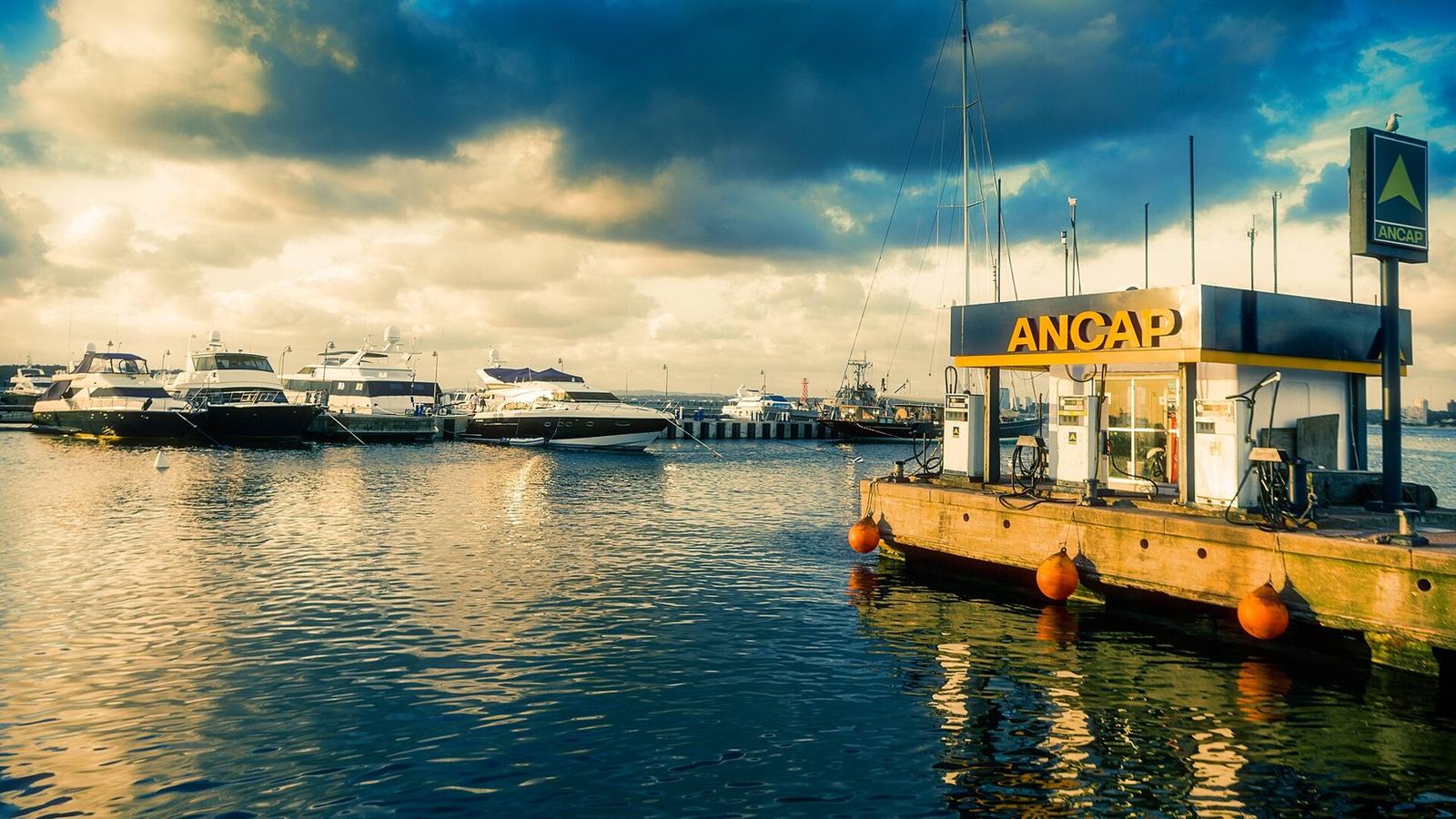
Use the US Coast Guard fuel-management guidance and the RYA engine-check advice as reference points, alongside local rules. Lead photograph: Boat fuel station by Marcelo Campi, sourced from Wikimedia Commons, licensed CC BY-SA 2.0; the image was resized for publication. An actual marina fuel station is shown because the subject is fuel planning, rather than a generic cruising photograph.
Source
US Coast Guard / RYA