
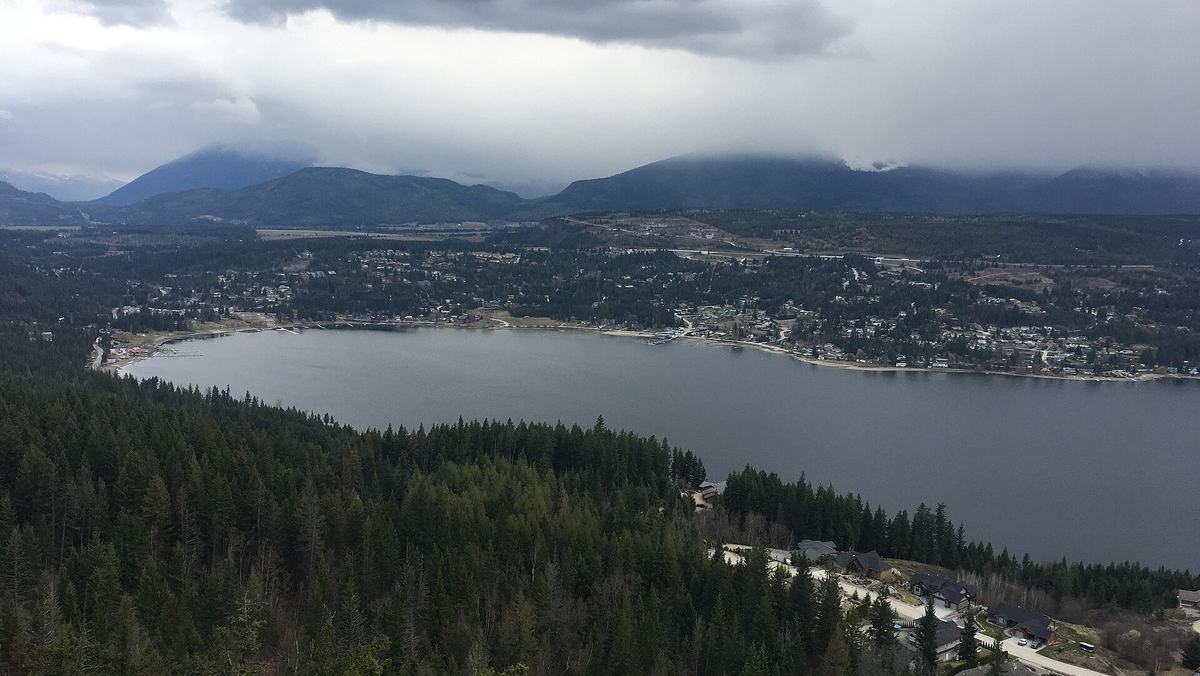
A British Columbia Shuswap Lake paddling guide with Blind Bay kayak rentals, Scotch Creek provincial-park access, marine-park routes and practical watersports safety.
A Canadian lake with choices beyond the marina
Shuswap Lake in British Columbia is notable for its branching shoreline, numerous holiday communities and varied options for getting onto the water. Official Shuswap Tourism information identifies stand-up paddleboarding, kayaking and canoeing as ways to explore the lake, and its local business directory lists established companies with rental equipment. Unlike a small resort pond, Shuswap offers multiple departure areas separated by considerable water distance. For a family, the right starting point matters much more than simply deciding to paddle somewhere on the lake.
The region's tourism organisation names businesses such as Shuswap Marina and Finz Resort & Marina, alongside provincial parks with access to the lakeshore. These listings offer a starting point for identifying genuine services, but they are not confirmation that a particular craft is in stock today. The dates, weather, age limits and rules of the selected operator must be established directly before the journey.
Why geography shapes the boating plan
Shuswap Lake's arms and inlets allow for very different experiences within the same destination. A person near Blind Bay should not assume a rental at an unrelated settlement can be reached on foot or used as a convenient return point. Water routes may be longer and more exposed than land distances suggest, and a trip between arms can be demanding for a beginner.
Choose the part of the lake that best fits the group's accommodation and ability, then identify an appropriate local launch. A simple outing close to a familiar shore can offer the scenery and fresh air people seek without requiring a crossing to a distant provincial park. A route should be measured in terms of expected paddling time, wind exposure and reliable recovery rather than just kilometres on a map.
Blind Bay and an organised rental
Finz Resort & Marina is described by Shuswap Tourism as a waterfront operation in Blind Bay with rentals that can include kayaks, paddleboards, fishing boats and other recreational equipment. This illustrates how a business that offers accommodation and marina services can also support shorter experiences for visitors without their own craft. However, the actual selection and hire conditions are determined by the operator, not by a tourism summary.
Ask where the rental begins, what is included and which section of the lake customers may use. If the party includes beginners or children, establish whether a suitable stable craft is available and whether instruction is provided. A kayak taken from an organised marina should be returned according to its requirements, and a customer should not treat every public-looking landing as an approved alternative drop-off.
Shuswap Marina and the choice of equipment
The regional tourism listings identify Shuswap Marina among businesses renting boats and paddlecraft. Visitors may therefore be able to choose between a short kayak outing and a seated powered excursion, subject to current inventory. The two activities are not interchangeable. A paddleboard requires balance and awareness of wind, while a powered boat adds responsibilities for navigation, speed control, fuel and other users.
A rental conversation should begin with who will operate the vessel, what experience they have and how long the party wants to stay afloat. Ask about current operating rules, included flotation devices and the consequences of poor weather. A family that values a quiet view may prefer a kayak close to shore to a larger boat that encourages a longer, more expensive trip.
Scotch Creek and the provincial park
Shuswap Lake Provincial Park lies near Scotch Creek and offers an important public recreation area. The official Shuswap Tourism description identifies the park's beach, boat launch and nature trail. This provides a practical alternative for visitors bringing their own small craft or wanting to combine time on the water with a family day ashore. Nevertheless, the boat launch should be inspected and current park rules checked before use.
A popular beach is a shared environment. Swimmers, children, paddlers and trailer-boat users may arrive at the same time. Prepare a kayak away from the most congested part of the shore and use authorised entry points. Do not paddle through a designated swimming area or leave equipment blocking a public path. Respect for other visitors helps make a busy provincial park a pleasant place to begin.
The marine park experience
Shuswap Lake Marine Provincial Park is not a single compact picnic ground. The region's official tourism information promotes a network of sites that serve boaters and others exploring the lake's shoreline. For experienced paddlers, this can inspire a longer journey that combines water travel with permitted overnight stops. For a beginner, the same information is better understood as an invitation to research, not an immediate itinerary.
Before planning an extended trip, identify which marine-park sites are accessible to the craft and what camping rules apply. Confirm distances, exposure and the availability of reliable landing places. A night away from a town requires different skills and equipment from a one-hour kayak rental. The crew should not assume that every park site offers drinking water, toilets or a protected mooring.
A first hour on a kayak
A good introductory outing begins at an authorised access in calm conditions. Spend the first few minutes learning to steer and stop, and practice turning before moving farther from shore. If paddling a tandem, agree on communication and pace. A short out-and-back with an obvious turnaround provides the opportunity to enjoy the wooded shoreline without making the return unnecessarily difficult.
The slower person should set the group's effective speed. One participant may be able to cover distance easily, while another becomes tired after a few hundred metres. Children should be supervised and appropriately equipped. A short trip can still feel adventurous when the landscape is unfamiliar and the view of the mountains changes with each bend in the shore.
Choosing a SUP versus a kayak
A stand-up paddleboard allows a visitor to see the water from an upright position and can be enjoyable in a sheltered bay. It also presents a larger profile to the wind and may be difficult for a beginner to control when the breeze strengthens. A seated kayak can feel more secure but requires different technique and may be awkward to remount after a capsize. Neither craft should be used as a substitute for proper weather judgment.
Ask the provider which equipment is suitable for the forecast and the individual paddler. A buoyancy aid and other safety gear should fit correctly, and the group should understand any local guidance about leashes. If the conditions are unsuitable for one craft, the best alternative may be to remain ashore rather than hire something different in the hope that weather will cease to matter.
Wind across the arms of the lake
The water can appear calm at a sheltered marina while an exposed part of Shuswap Lake is affected by stronger wind and waves. Even a moderate headwind can make the return of a small paddlecraft unexpectedly slow. Check the forecast, observe conditions at the launch and ask local staff whether an intended route is sensible. Do not rely upon the day's air temperature as a measure of paddling safety.
A conservative route permits an early return. The crew should remain alert to approaching cloud, changes in water texture and other signs of deteriorating conditions. If the wind strengthens, turn back before fatigue develops. Rental duration should never become an excuse for attempting a passage that the participants are no longer comfortable completing.
Sharing the water with motorboats
Shuswap is a significant destination for recreational motorboats, houseboats and other powered craft. A kayak may encounter wake even when travelling close to the shore, and a paddler can be difficult to see against the reflections of trees and mountains. Make movements predictable and avoid stopping in channels or marina approaches. The slower boat must still maintain a lookout.
Powered-boat operators need to respect navigation rules, local no-wake areas and the vulnerability of smaller craft. A kayak crew should give larger vessels room to manoeuvre and should not assume a houseboat or trailer boat can stop immediately. Courtesy can prevent many uncomfortable encounters in a place where visitors are often using unfamiliar equipment.
The lake from a low vantage point
From a kayak, wooded banks and distant slopes appear much larger than they do from a waterfront road. The experience encourages attention to small details: patterns of light on the water, the shape of a headland and the changing sounds of a quiet shoreline. This can be especially rewarding in early conditions when boat traffic is modest and wind is light.
Photography should be handled safely. Secure a phone or camera, remain seated in a kayak and avoid leaning over the side for an unusual angle. A paddler who stops to look backward should first check that the craft is not drifting toward a dock or another vessel. Enjoying the setting is more important than returning with a technically perfect photograph.
Camping requires additional responsibility
A longer paddle toward a marine-park site may sound simple when described as canoe camping, but the logistics are considerable. The crew must establish a legal place to stay, understand fire restrictions, carry enough water and food and plan for changes in weather. The weight and distribution of camping gear affect the boat's handling, and a lightly experienced paddler may find a fully loaded vessel less predictable.
A prudent introduction could be a day outing followed by a guided overnight excursion with an experienced provider. This allows travellers to learn how the lake behaves before committing to multiple days away from an accessible road. The presence of a marine park does not remove the need for navigation, appropriate safety equipment and an alternative return plan.
Clean equipment and protect the lake
British Columbia asks boaters to take aquatic invasive species prevention seriously. Equipment transported from one lake to another should be cleaned, drained and dried in line with current provincial guidance. That applies to kayaks, fishing boats, paddleboards and trailers, because water or organisms can remain trapped in unexpected places. Rental providers may manage their own fleets, but private owners need to understand their obligations.
Do not disturb vegetation to create an improvised launch and avoid approaching wildlife too closely. Carry litter back, protect sensitive shorelines and follow provincial-park rules. Shuswap's appeal depends on the condition of its water and the opportunity to enjoy natural surroundings, and small-craft visitors share responsibility for preserving those qualities.
A practical family itinerary
For a family staying near Blind Bay, a suitable morning might involve a short rental from an established business, followed by lunch and time ashore. Another group staying near Scotch Creek could use permitted provincial-park facilities and combine a brief paddle with a trail walk. Both can be legitimate Shuswap experiences without a complicated journey between distant arms.
If the chosen rental is fully booked or the wind is unsuitable, keep a shore-based alternative in reserve. Trying a different activity may be more satisfying than insisting on paddling during a poor weather window. The strongest lake holidays are flexible enough to respond to local conditions without disappointing the whole group.
Verify the departure and the season
Official Shuswap Tourism provides the basis for the paddling activities, named rental businesses and provincial-park options described here. Individual operators and BC Parks are responsible for current opening, access and equipment information. November should not be treated as the ordinary summer rental season. Before travelling, confirm the actual service date, intended launch and rules for the chosen boat.
A trip can be planned in advance without pretending its conditions are already known. Keep the route modest, check the weather close to departure and choose equipment suited to the crew's abilities. This approach turns the many choices around a large lake into an advantage rather than a source of uncertainty.
The Shuswap reward
Shuswap Lake's combination of towns, wooded arms and accessible paddlecraft offers a memorable introduction to inland British Columbia. A visitor may prefer a simple kayak from an established marina, a provincial-park shoreline excursion or a guided trip that explores a different part of the lake. The common element is the pleasure of moving slowly across water in a striking landscape.
Good access, a careful route and respect for other users are more important than the size of the vessel or the distance travelled. With those decisions made properly, a modest paddle can become a highlight of a Canadian summer.
Sources and photograph attribution
Official destination and boating guidance: Official Shuswap Tourism — Paddling and Stand-Up Paddleboarding. Current access, rules, weather and reservations must be checked independently before travel.
Photograph: The Interior — “BlindBayBritishColumbia.jpg” (CC BY-SA 4.0), via Wikimedia Commons. Resized to JPEG 1200×800 for editorial display. Source: https://commons.wikimedia.org/wiki/File:BlindBayBritishColumbia.jpg. Licence: https://creativecommons.org/licenses/by-sa/4.0. Original rights remain with the credited creator or as specified by the source and licence.
