
Shackleford Banks combines wild horses, barrier-island scenery and a demanding small-boat approach. Here is how to navigate, land and explore responsibly in Cape Lookout National Seashore.
A Boat-Only Island with a Different Kind of Reward
Shackleford Banks is one of the most compelling small-boat day trips on the North Carolina coast because the experience begins the moment land disappears behind the boat. This low barrier island in Cape Lookout National Seashore has no road connection, and its mix of dunes, beaches, saltwater margins and free-ranging horses rewards travellers who are content to slow down. It is not a destination to rush through between marina appointments.
The National Park Service describes the island as part of a chain of barrier islands facing both Core Sound and the Atlantic Ocean. That geography creates a striking contrast between the relatively sheltered sound side and the exposed outer beach. The direction of the wind, the state of the tide and the capability of the boat determine how the day should unfold.
Visitors can arrive by passenger ferry from the mainland or make their own passage in an appropriately equipped private craft. The most important distinction is that a ferry ticket includes a managed transport service whereas a privately operated boat requires the skipper to make every navigation, weather, landing and return decision. Both approaches can create a memorable day, but they carry different responsibilities.
Reading the Water Before Choosing a Landing
Cape Lookout is not a place to navigate casually by following a line on a phone screen. The National Park Service boating guidance warns of shallow sounds, moving shoals and channels in which a tide change can transform a comfortable depth into a grounding risk. A prudent skipper consults current NOAA charts and notices, checks local forecasts and uses the vessel's measured draft rather than assumptions based on other nearby passages.
Approach decisions also depend on the water at the time of arrival. Wind can pile chop into otherwise attractive stretches of the sound, and surf on the ocean-facing shore may make a beach landing inappropriate. Boats should not attempt to use ferry infrastructure as though it were an unrestricted private marina, and the choice of an anchoring area deserves the same care as the passage.
The park states that private motorboats at designated public docks generally have short loading-and-unloading access, with specific protected areas where mooring or anchoring is prohibited. At Shackleford's west-end dock, buoyed restrictions are particularly important. Read the current boating guide and posted signs before approaching, and be prepared to choose a different landing strategy or postpone the visit if conditions are unsuitable.
The Horses Are Wildlife, Not a Tourist Attraction to Approach
Shackleford's horses provide the island's most recognisable encounter, but the pleasure comes from watching their behaviour without changing it. They move through dunes and grasses on their own terms, sometimes appearing in places where visitors least expect them. The National Park Service asks guests to stay at least 50 feet from the animals and to give them additional space whenever a horse changes direction or shows signs of unease.
Bringing food or attempting a close photograph can undermine the very experience people have come to enjoy. A long lens is more respectful than an outstretched hand, and a quiet group is less intrusive than a crowd forming around a grazing horse. Children should remain with adults, and pets must be kept on a leash in accordance with park rules.
Wildlife photography is best approached with patience and restraint. A useful composition might include the horse within its dune landscape rather than filling the entire frame with an animal pressed into a corner by observers. The result says more about Shackleford Banks as a living place and less about a brief human encounter.
Shelling, Sand and a Shoreline That Is Always Moving
Beyond the horses, Shackleford is a fine place for a thoughtful walk along a barrier-island beach. Shells, tide lines and changes in sand texture reveal the island's relationship with currents and storms. The park has specific limits on the collection of empty shells, and visitors should check them before treating a beachcombing find as something they can automatically take away.
The island's fragility is easy to underestimate because it appears so open. Dunes and vegetation protect a landscape that is continually reshaped by wind and water, while a single careless shortcut can damage sensitive areas. Stay on appropriate routes, avoid disturbing nesting wildlife and do not remove living creatures or cultural material.
Travel light but prepare seriously. There is no reliable island-wide supply of drinking water, and facilities are seasonal or limited. Carry enough fresh water for the whole party, sun protection, suitable footwear and a means of managing waste, because every bag and piece of litter must leave with the visitors who brought it.
What a Sensible Small-Boat Plan Looks Like
A good itinerary begins with a clearly defined weather window and a conservative latest-return time. Rather than making a single destination the measure of success, identify several possible options before leaving the dock: the intended crossing, an alternative mainland activity and a simple decision point at which the party turns back. Flexibility is the most effective luxury when conditions are changeable.
Passengers need to know how they will get ashore and back aboard. A small tender or shallow-draft craft may be more suitable for a particular landing than a deeper boat, but every operation must comply with park restrictions and sound seamanship. Crew should brief guests on footwear, lifejackets, the handling of personal belongings, and how they will communicate if plans change.
Once on the island, allow the visit to develop slowly. A measured walk, time spent photographing the landscape from a respectful distance and a simple picnic can be more satisfying than trying to see every part of the shore in one outing. If the wind rises or visibility deteriorates, the skipper's judgement takes priority over the wish to complete an itinerary.
Making the Visit Count
Shackleford Banks should not be confused with the entirety of Cape Lookout National Seashore. Other islands, villages and the lighthouse landscape offer different experiences, and a day spent here is not a substitute for learning about those places. Treat this trip as a distinctive encounter with a boat-only barrier island and the wildlife that inhabits it.
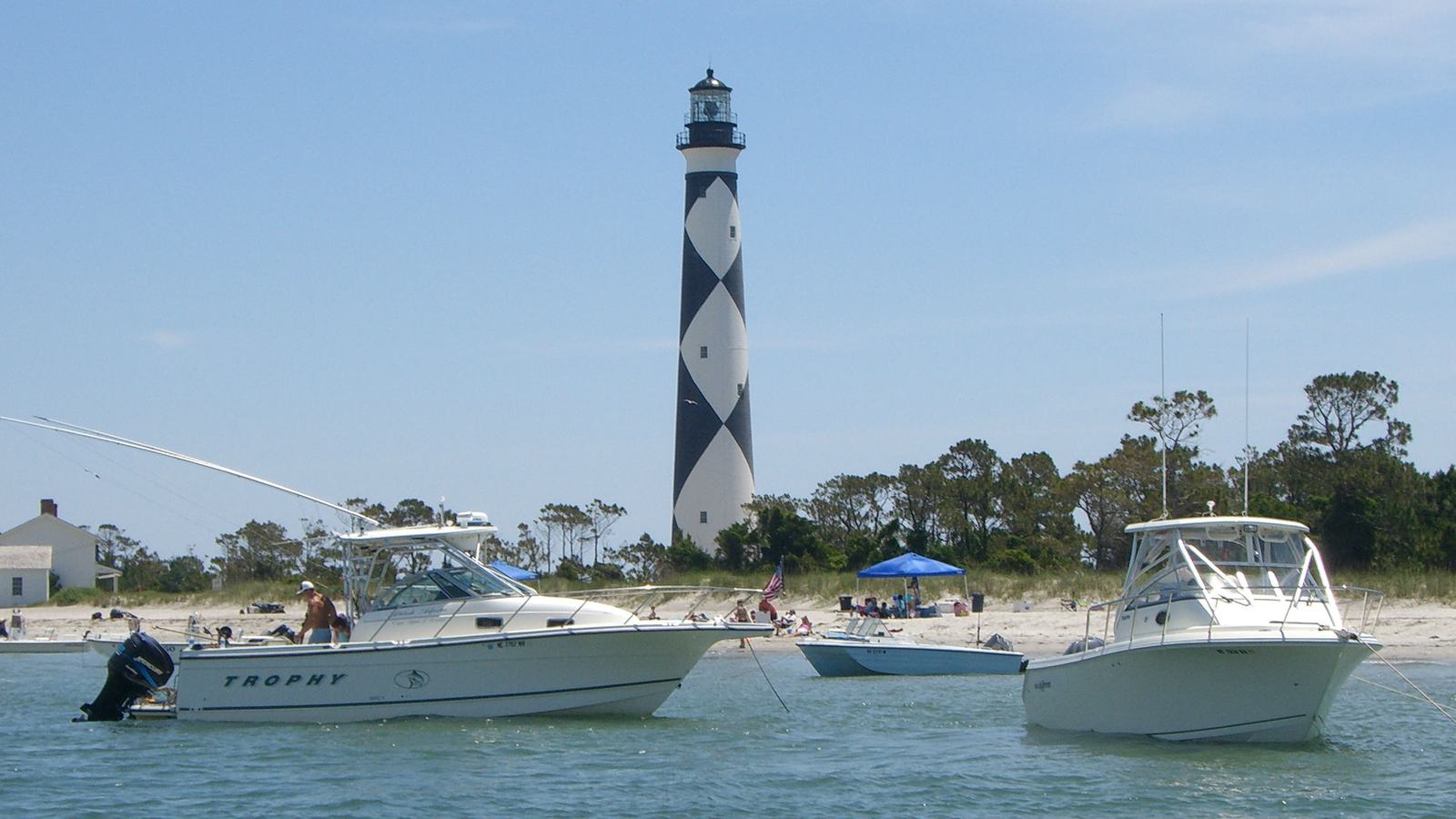
Before departure, review the park's Shackleford Banks information, boating guide and current conditions. The latter is especially important because ferry operations and visitor facilities change with weather and season. This feature uses those official sources and an NPS photograph of boats in Cape Lookout waters, with no generated imagery.
The best memory of Shackleford may be an ordinary one: a light breeze in the grasses, a distant horse moving across the sand, and a quiet return across the sound. It is precisely the lack of commercial infrastructure that gives the island its character. Keeping the visit safe and low-impact helps ensure that the next group arrives to find the same sense of space.