
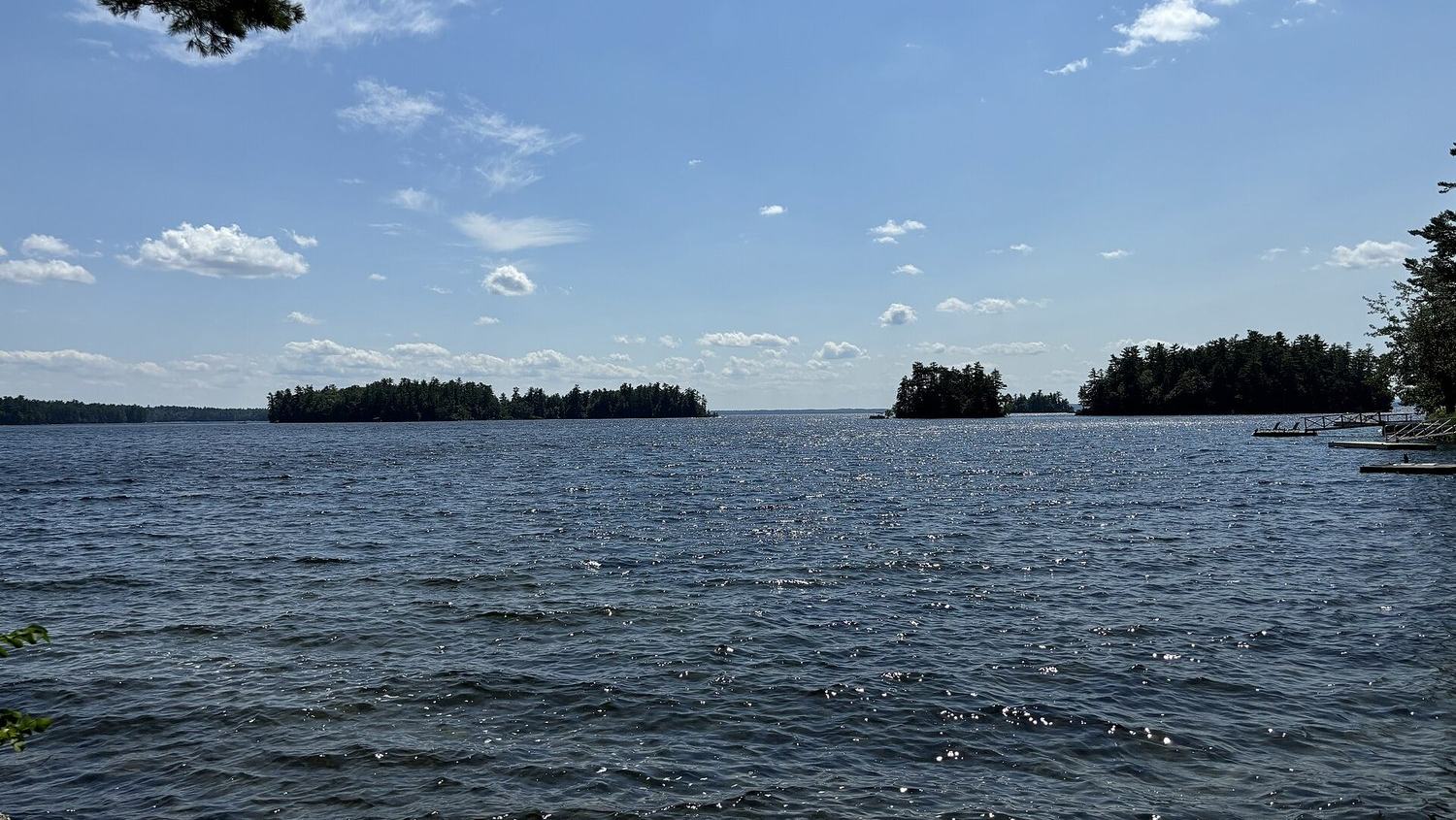
A practical guide to exploring Maine’s vast Sebago Lake by trailer boat, with official launch choices, responsible fishing and a slower family itinerary.
Sebago Lake rewards the owner of a modest trailer boat with a genuinely large freshwater landscape, but it asks for more preparation than a quick look at a map might suggest. Maine's Department of Inland Fisheries and Wildlife lists the lake at 28,771 acres with a maximum depth of 316 feet, while state boat-launch records identify public access at more than one point around its shoreline. Those figures are useful for framing a day: this is open water with varied shorelines, not a sheltered pool where every landing is close.
A lake with more than one starting point
The state fisheries guide identifies trailered-boat access on Route 302, at Sebago Lake State Park, on Route 35 in Standish and through private marinas. The official public-access inventory separately records established ramps in the Casco and Raymond areas. Those entries are a planning starting point, not a promise that every ramp will suit every hull, tow vehicle or season. A visitor should compare location, access arrangements, fees and present conditions before choosing where to leave the trailer.
Starting position changes the character of the journey. A launch convenient for a short outing near a western shoreline is not necessarily the best for exploring a more distant bay. The boat's normal speed, fuel capacity and crew experience should decide the route. Use a current chart or authorised local map to check distances, hazards and any restricted areas. A family arriving after a long drive may find that a shorter protected trip gives them more actual time enjoying the lake than an ambitious circuit.
Understanding the scale of the water
Sebago's substantial depth and size help explain its appeal to boaters and anglers, but neither should be mistaken for a guarantee of uniform conditions. A large body of water gives wind room to build waves, particularly across an exposed reach. Conditions at a calm slipway can be quite different from those beyond a headland. The day should begin with a local forecast and a realistic assessment of whether the particular boat handles wind and chop comfortably, especially when returning with children aboard.
A deep lake can also remain unexpectedly cold. Warm sunshine on a public beach does not establish that immersion will be harmless, and crews should prepare appropriate flotation and spare clothing. Check that everyone can wear a well-fitted lifejacket and that the helm has a workable plan for a person overboard. In a small boat, passengers sitting in the right place and keeping weight low can contribute to comfort and stability. It is easier to prevent a problem than to improvise when the wind strengthens.
The practical pleasures of a trailer boat
A trailer boat offers flexibility: the family can choose a launch according to the day's weather, tow from home without arranging a seasonal mooring and adapt the outing to the crew's energy. But towing also creates a sequence of tasks before the first photograph of the lake. Trailer tyres, lights, wheel bearings, coupling and safety chains deserve attention. At the ramp, secure drain plugs, confirm the outboard's condition and prepare lines without occupying the launch longer than necessary.
The easiest day is usually one in which most equipment is ready before reaching the water. Keep lifejackets accessible, know where the keys and documents are, and agree who will manage the vehicle while another handles the boat. If the ramp is busy, allow others room and do not conduct a long engine repair on the slipway. After recovering the boat, move clear of the launch before securing every last strap and stowing gear. These courtesies make public access work better for everyone.
A choice between activity and quiet exploration
Some visitors come to Sebago to fish, some to swim, and others simply enjoy a slow passage past wooded shorelines. The fisheries department lists landlocked salmon, lake trout and bass among the lake's fisheries, but a family day need not revolve around angling. A short morning cruise and a carefully selected place to pause may be more rewarding than moving constantly. The practical requirement is to respect access rules, private property and other people already using the shore.
The temptation to head for the first attractive cove should be moderated by what the chart and local information show. A beautiful shoreline might have shallow rocks, no public landing or sensitive vegetation. Use recognised facilities and keep clear of marked swimming areas. When several boats are anchored nearby, leave enough distance so a change in breeze does not push hulls together. A low-speed approach is part of the pleasure: an unhurried boat is less disruptive to swimmers, paddlers and lakeside neighbours.
Fishing without losing the family day
Sebago appears in Maine's state guide for both landlocked salmon and lake trout, as well as bass. That makes fishing part of the lake's identity, but regulations may differ by species, season, gear and location. Anyone planning to fish should obtain the current Maine rules and any applicable licence rather than relying on an old online forum. A general boating feature cannot substitute for those requirements, and fishing conditions on a given morning may not resemble a promotional photograph.
A mixed group can still enjoy the experience if expectations are modest. Consider a period of relaxed fishing where it is permitted, then make time for a change of pace, a shore stop or a quiet cruise. Keep hooks and loose tackle out of walkways, and make sure children understand where sharp equipment belongs. If fish are kept, suitable cool storage and responsible handling are essential. The boat's primary purpose should remain the enjoyment and safety of everyone on board, not a particular catch total.
Keeping the lake clean between outings
Moving a trailer boat from one waterway to another can transport unwanted plants and aquatic organisms. Maine's boating and fisheries authorities provide current invasive-species guidance, which should be checked before launching or leaving the lake. Inspect the hull, trailer, propeller and areas where water can remain trapped. Follow local clean, drain and dry requirements rather than treating a quick visual glance as a complete inspection. The responsibility applies even when the vessel has spent only a few hours afloat.
Waste management is similarly straightforward if it is planned. A small bag for wrappers, food scraps and discarded line takes little space but prevents a busy day from leaving debris behind. Refuelling should be done carefully to avoid spills, and oily water or rubbish should never be discharged into a lake. If the boat is equipped with sanitation facilities, use them in compliance with local rules. The lake's appeal depends on clear water and inviting shores, making prevention worth a few extra minutes at the end.
Watching weather and traffic together
Sebago's open reaches bring different craft into the same water: fishing boats, trailer runabouts, paddlecraft and larger recreational vessels. A safe lookout should continue even when a navigation app shows a clear route. The skipper needs to recognise approaching traffic, judge closing speed and avoid throwing excessive wake toward a canoe or a boat close to shore. The presence of a large boat does not remove responsibility from a smaller one, nor does the low speed of a paddler make that person easy to see.
Check the forecast again before the return leg and pay attention to wind direction, not just the predicted maximum speed. A route that felt comfortable with following waves can be tiring into a head sea. Know where to seek shelter without assuming a private dock is available for ordinary convenience. A short passage through an unfamiliar area can become stressful in rain or fading light. Leaving generous time to return to the ramp is one of the simplest ways to preserve a relaxing holiday atmosphere.
A family outing built around small comforts
The difference between a pleasant day and a miserable one is sometimes as simple as dry clothes and a sensible lunch. Pack food that can be served without complicated preparation, drinking water for everyone and a spare warm layer even when the shore forecast is sunny. Keep bags away from bilge drains and footwells, and check that loose objects cannot slide under the helm. Use waterproof storage for phones and navigation papers, while keeping emergency communications accessible rather than buried in a picnic box.
Children can help with low-risk tasks such as checking the lunch list, spotting buoys and keeping rubbish secure. Explain the rules for staying seated during acceleration and waiting for the skipper's instruction before moving near the bow. Swimming or entering the water should happen only after the boat is properly secured and conditions have been assessed. A family trip works best when everyone knows the boundaries but also has space to enjoy the lake at their own pace.
Checking the correct launch information
Maine's state public boat-launch database records facilities by waterbody and municipality, including separate Sebago Lake entries for Casco and Raymond. Those details are valuable because a search engine may direct visitors to a similarly named ramp on a smaller nearby lake. The state fisheries guide provides broader access descriptions, including the Route 302 launch, Sebago Lake State Park and the Standish approach. Check both sources, then confirm any local restrictions, fees, parking capacity and seasonal operating arrangements before travelling.
If a particular site is closed, crowded or unsuitable for the trailer, a preselected alternative can save the day. Keep a copy of the ramp information available offline and resist the urge to launch at an unmarked road end simply because water is visible. The official listing is a starting point for judgement, not a substitute for observing the actual ramp, slope and water depth when you arrive. An orderly launch is the foundation of an enjoyable trip rather than an administrative detail.
Ending the day in good order
Plan to return early enough to recover the boat without hurrying. Allow for traffic, a queue at the ramp and a final weather change. Once ashore, inspect the trailer and engine, remove any plant material in accordance with state guidance, secure the load and leave the ramp area tidy. A short note about the route, fuel used and conditions encountered will make the next visit easier to plan. If the outing was too ambitious, shortening the next route is a useful lesson rather than a failure.
Sebago Lake makes a compelling small-boat destination precisely because it can support different styles of leisure day, from fishing and paddling to an unhurried family cruise. Its scale also deserves careful respect. The most memorable visit may be the one where the boat travels less and its crew has time to enjoy more. Image credit: Farragutful, Sebago Lake 01, Wikimedia Commons, CC BY-SA 4.0.
