
Seabin's Making Nature Count project, recognised in Australia's 2026 Good Design Awards, combines harbour litter collection and a public pollution-data platform.
A wider purpose for a floating litter collector
Floating debris is familiar to anyone who spends time around a busy marina or city waterfront. Bottles, wrappers, fragments of packaging and other material may accumulate where currents meet pontoons and sheltered corners. Collecting that waste is valuable, but the problem is larger than the visible pile in a basket. Understanding when debris arrives, what it consists of and whether conditions are changing requires repeatable observations and records over time.
Australian company Seabin has developed an initiative called Making Nature Count that tries to connect those steps. Recognised in the 2026 Australian Good Design Awards, the project combines physical litter collection with detailed classification and a publicly accessible data platform. The ambition is to make marine pollution visible to marina operators, companies, public authorities and ordinary residents rather than leaving information confined to private reports.
From collection equipment to evidence
The most familiar part of Seabin's operation is hardware installed in water to collect floating litter. In its latest project submission, the company describes an organised collection process supported by an operations team that regularly removes, measures and records the debris. The collected material then enters an annotation process intended to classify individual items, creating a detailed record of what has actually been found in the local water.
This sequence matters because an estimated amount of floating litter is not equivalent to measured debris recovered by a particular device. Accurate reporting depends on how often a collector operates, the conditions of the site, how material is sorted and whether sampling methods remain consistent. Marina owners evaluating such services should ask about maintenance, energy demand, collection frequency and the treatment of items that may not be captured by surface equipment.
Public information is part of the design
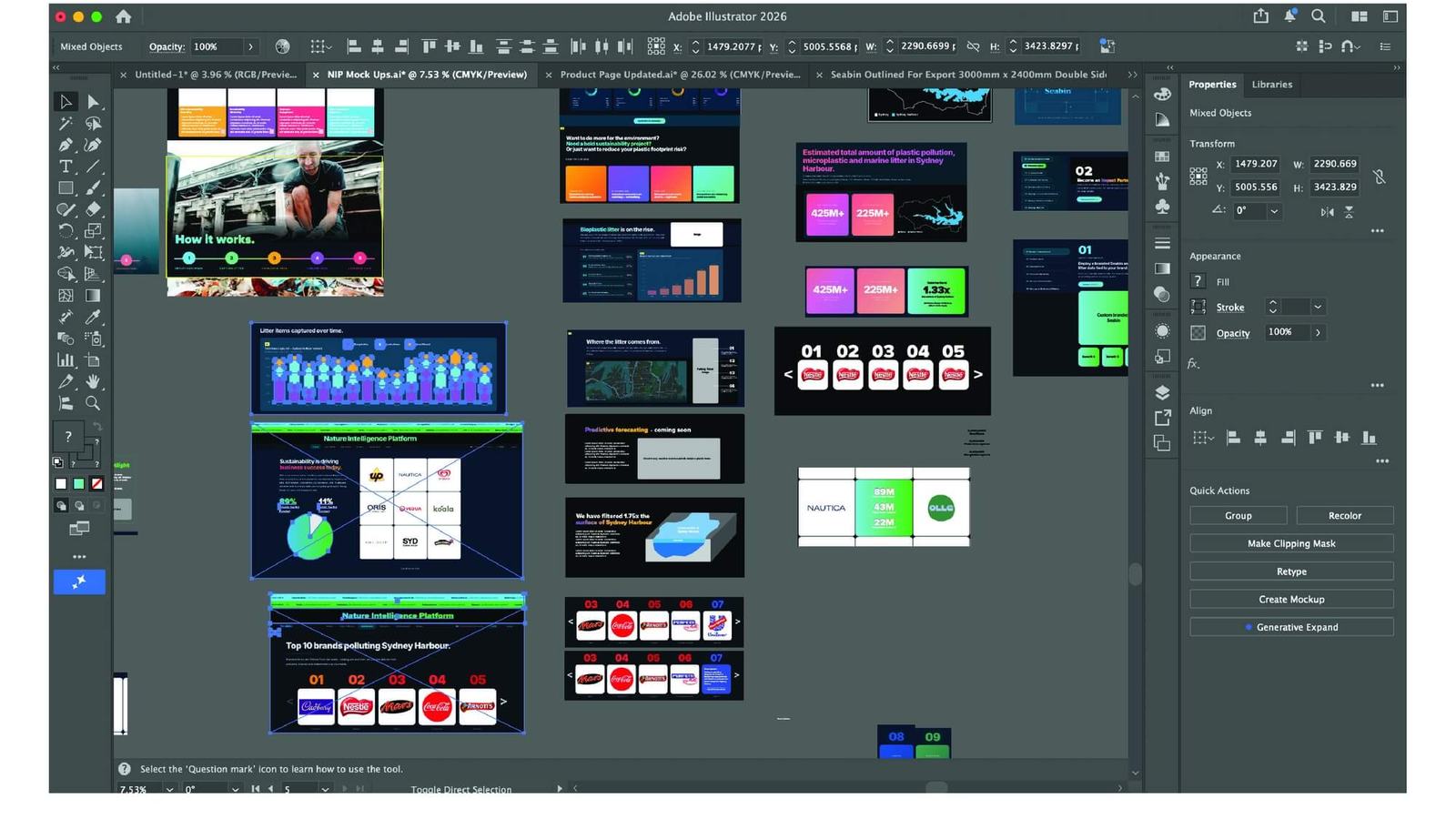
Seabin's service uses the classified information to populate a dashboard intended to be accessible to the public. The Good Design Australia submission describes charts and other interfaces through which users can examine the volume and type of pollution recorded by the operation. An accompanying social-impact version of the project highlights the decision to make headline information open rather than accessible only to paying partners or technical specialists.
For a boating community, a public dashboard may create a useful common starting point for discussing conditions. Residents, yacht clubs, schools and local authorities can potentially refer to the same records, making it harder for everyone to argue from unrelated impressions. Yet an interface is only as trustworthy as the quality of its underlying evidence. Readers should examine definitions, sampling periods and geographic coverage before treating a displayed number as a complete picture of an entire coastline.
How the commercial service is organised
The award submission sets out four connected parts of the business: collection hardware and daily operations, item-level classification, a data layer used for reporting and an arrangement that allows partners to purchase services. Seabin describes custom reports and Impact Certificates for organisations that want evidence of supported collection work. It also proposes data services for governments and event organisers, where recorded information may help quantify specific activities and campaigns.
Such services reflect an emerging interest in measurable environmental performance. Corporate customers increasingly want more than photographs of volunteers holding bags of collected rubbish, while public bodies need information suitable for comparing interventions over time. However, an Impact Certificate should be judged against the underlying methodology, the actual project boundaries and any independent verification provided. Purchasing a report does not by itself demonstrate that a company has eliminated pollution from its own operations.
Why Sydney Harbour is central to the project
Seabin's materials draw heavily on work in Sydney Harbour, where regular collection and classification help build a longer-running dataset. The official award entry reports that the company has removed more than 100 tonnes of marine litter since 2020 across its operations. That total is presented by the entrant and should be understood as a company-reported cumulative figure, not a measurement independently established by the design-award listing itself.
Sydney's mix of ferry movements, recreational boating, waterside commerce and urban runoff provides a complex environment for observing floating debris. The fact that a collection programme can record large quantities does not automatically show whether the pollution is rising or falling. Seasonal weather, the number of installed devices, collection effort and changing practices can all affect the totals. Long-term trends require comparable observations and clear descriptions of those influences.
What harbour and marina managers can take from it
A marina manager faces practical questions that rarely have simple answers: where debris accumulates, whether a collection system creates operational hazards, which areas need more frequent attention and how to explain environmental work to berth holders. A service that integrates collection with reporting may help answer some of these questions, especially when an installation is paired with a consistent maintenance programme and evidence of what it retrieves.
Marine operations still require careful local assessment. A device placed near moving boats, wildlife habitats or areas with strong water flow must be evaluated for safe installation and operation. A marina considering Seabin should ask about mooring arrangements, electrical requirements, wildlife safeguards, servicing and what data it will actually receive. The presence of an environmental label cannot replace ordinary engineering checks or responsible day-to-day management.
Making information understandable without oversimplifying
The social-impact arm of Making Nature Count presents a dashboard designed for people with widely different technical backgrounds, from schoolchildren to policymakers. It includes public pollution indicators and features intended to encourage civic engagement. That emphasis on understandable presentation is useful because the language of environmental reporting can become inaccessible when every chart assumes expert knowledge.
Simplification creates a responsibility to explain limitations. A single pollution score or comparison chart cannot capture every hazard affecting a harbour, and a visual rise in collected debris can reflect improved collection rather than a deterioration in local conditions. The most informative systems provide the underlying dates, definitions and collection details so people can investigate what the data means. It is reasonable to welcome open access while continuing to ask how each figure has been produced.
Accountability and the danger of easy conclusions
Seabin highlights the possibility of identifying branded packaging within collected litter and displaying such information publicly. That can prompt useful questions about product design, waste handling and the routes by which rubbish reaches waterways. The ability to describe specific materials in a collection is also relevant to environmental education and discussions about reducing single-use items before they enter the marine environment.
Attribution requires caution. A branded wrapper recovered from a harbour does not establish which individual discarded it, precisely where it entered the water or how much responsibility should be allocated to a particular company. Currents, drainage systems and patterns of use complicate that story. Transparency is most powerful when it encourages accurate investigation and improvement, not when measurements are presented as proof of conduct that the collection itself cannot establish.
Recognition as a design service, not a universal cure
Good Design Australia lists Seabin's Making Nature Count work in the 2026 programme, including a commercial-services entry that received Best in Discipline recognition. Related entries describe the public platform and its social impact, showing how the same underlying work can be considered through several aspects of design. The project is unusual because the output is not merely a physical product: it includes field operations, data practices and a way to communicate findings.
This should not be read as proof that floating collection devices can clean every marine ecosystem or solve the sources of plastic pollution. Much marine waste is submerged, stranded, fragmented or dispersed beyond the reach of equipment installed in protected water. Reducing unnecessary packaging, maintaining waste infrastructure and preventing litter from entering drains remain essential. Collection at a marina is one part of a wider prevention and management effort.
What boaters can do alongside technical projects
Yacht owners and everyday recreational boaters have a direct role in keeping waterfronts cleaner even when sophisticated equipment is installed nearby. Securing loose items before departure, managing rubbish aboard, using marina disposal facilities correctly and participating in responsible shore-side cleanups can reduce the amount of material available to enter the water. Boat clubs can also make environmental reporting more useful by recording conditions consistently and explaining changes to members.
The official Making Nature Count project entry describes Seabin's integrated service, while the company's own website provides further information about its operations. The broader lesson for leisure boating is not that a clever device removes everyone's responsibilities. It is that measured evidence, transparent reporting and everyday prevention can work together to make harbour care more accountable.