
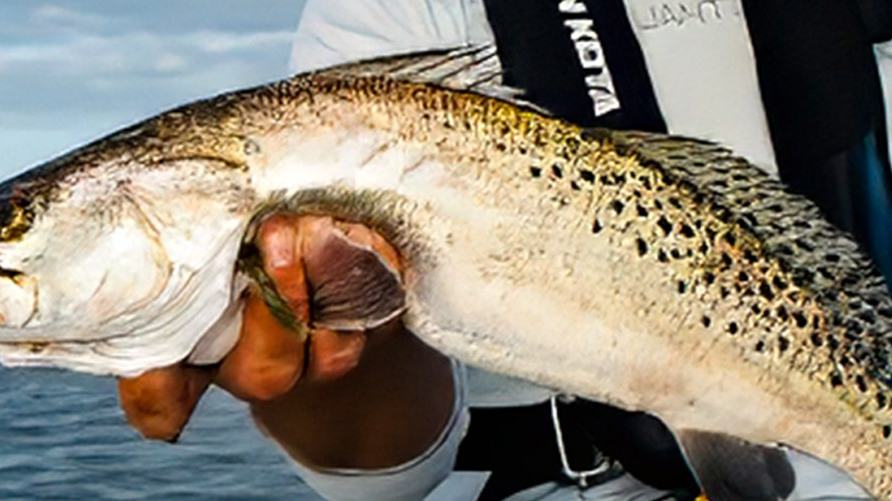
Yamaha Blue Life profiles Capt. Ed Zyak’s sea-trout approach and the value of quiet boat control in shallow inshore water.
What to know
Sea trout are often caught in relatively shallow water where noise and boat movement matter. A careful approach can keep fish feeding instead of pushing them away.
Grass flats, channels and edges all create places for bait to gather. Watching birds, current and surface activity can help narrow a large area quickly.
How to approach it
Light tackle keeps the fishing enjoyable and allows small lures to work naturally. The trade-off is that knots, leaders and drag settings need to be in good condition.
Wind can be used rather than fought when the drift is planned in advance. Starting upwind of the target area lets the boat cover water with less engine use.
Where the practical value lies
Shallow-water anglers also need to respect bottom depth and habitat. Avoiding unnecessary propeller contact protects both the boat and the environment.
Family crews can enjoy this style of fishing because distances are often short and the pace is relaxed. Everyone can cast while the skipper makes only small position changes.
Why it suits LBG readers
For LBG readers, sea-trout fishing is a good example of doing more with less. Small boats and simple tackle are enough when observation and boat control are good.
The technique rewards patience rather than speed. That makes it well suited to the quieter side of leisure boating.
Source
Yamaha Blue Life