
Santa Cruz Island offers memorable sea-kayak scenery, but the Channel Islands' open-ocean winds, cliffs and caves call for guided access and serious rescue preparation.
A dramatic coast best approached with humility
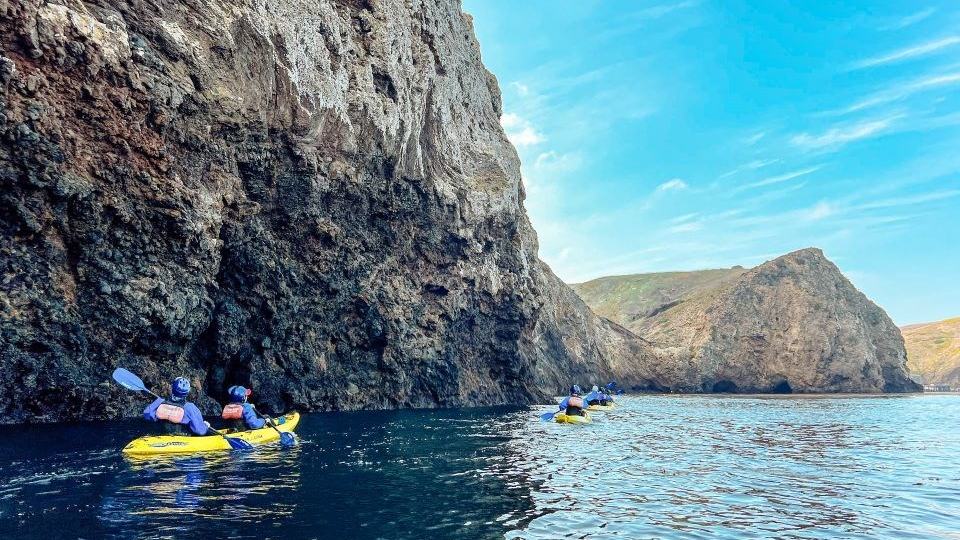
Scorpion Anchorage on the eastern side of Santa Cruz Island is a striking place to begin a sea-kayak excursion. The shoreline combines steep cliffs, clear water and recesses that draw curious paddlers towards the rock. From a low boat, the changing textures of the island appear in a way that a passenger ferry cannot quite deliver. The attraction, however, is inseparable from exposure to the open Pacific. The National Park Service treats sea kayaking around the Channel Islands as a high-risk activity and points to fatalities and near-fatal incidents in its safety guidance.
For a leisure-boat traveller, the first decision is therefore about experience, not the destination photograph. The park strongly recommends using an authorised guide or outfitter. Guided trips may be suitable for a novice under the right circumstances, but independent exploration requires a properly equipped sea kayak, dependable rescue skills and the judgement to abandon a route when the water deteriorates.
Reaching the island is its own voyage
Scorpion Anchorage has scheduled concessionaire boat transport from the mainland, with day-trip and camping possibilities at Santa Cruz Island. The park's official information distinguishes these services from kayak rentals: the authorised kayaking operator at Scorpion provides guided tours, but the park states there are no stand-alone kayak rentals on the island. Visitors bringing their own kayaks may need to arrange transport separately with the appropriate concessionaire.
A crossing by personal sea kayak from the mainland is not a casual substitute. The Santa Barbara Channel contains shipping lanes and conditions that can be dangerous even to strong paddlers, and the NPS does not recommend attempting that passage. A visitor who wants to paddle the shoreline without assuming an expedition-level crossing should make the island transport arrangements first and choose the excursion only after checking conditions at the landing.
Scorpion is popular for good reasons
East Santa Cruz Island combines accessible beach entry, nearby camping and a variety of rocky coastal scenes. A guided outing can reveal kelp habitat, changing cliff colours and sheltered-looking pockets of sea in a concentrated area. The presence of tour infrastructure helps with planning, but it does not make the setting a protected lagoon. Open-ocean currents and wave changes are possible close to shore.
The park advises beginners to remain close to Scorpion Anchorage and asks every group to stay within the ability of its least experienced member. Paddlers should know how to re-enter their boat from the water. If a party has mixed abilities, selecting a shorter trip with time to observe the surroundings is a more responsible way to enjoy the island than a long traverse determined by the strongest member.
Sea caves are beautiful and potentially dangerous
An apparent gap in the cliff can channel or amplify wave energy. Even on an otherwise calm day, wakes from ships may reach a cave and create a sudden surge. The NPS warns that a sea cave can become dangerous without much notice and recommends a helmet when paddling beneath cliffs or exploring cave areas. It also prohibits kayakers from setting foot ashore inside sea caves.
The correct approach is to assess the movement of water before going near an opening, not to enter first and hope there will be room to turn. Artificial light can disturb cave wildlife and should be avoided. No photograph or social-media clip warrants risking a capsize against rock. A skilled guide may decline a cave that looked safe earlier in the morning, and that decision is part of competent seamanship.
Shore access and nature protection are specific
Channel Islands National Park protects nesting seabirds, marine mammals and sensitive rocky habitat. The shore between Arch Point and the eastern boundary of Potato Harbor is closed to landing to help protect seabirds. Offshore rocks and islets are likewise off limits, and some waters are designated marine reserves where taking living or geological resources is prohibited. These boundaries are not always obvious from a passing kayak.
Approach wildlife without crowding or pursuing it. Seals and seabirds may look undisturbed when photographed with a long lens, but a paddler moving directly toward them can alter their behaviour. Guests should learn the current restrictions from island rangers and guides. Observing the island quietly from the water is often both the least intrusive and most rewarding choice.
Forecasts govern the way home
Westerly and northwesterly winds frequently strengthen later in the day, while Santa Ana or easterly winds can develop at other times. Current marine forecasts, wind direction and swell are more important than a simple sunshine icon. A route that is pleasant downwind may require exhausting work on the return. The park warns against choosing a downwind outward leg without allowing for that consequence.
Carry appropriate lifejackets, immersion clothing, a marine VHF radio, navigation equipment, emergency signals and a practical rescue kit. Keep the group together and arrange a shore contact who knows the return time. A well-designed trip returns with energy and daylight in hand. Scorpion's cliff scenery deserves the time to appreciate it, but the ocean decides how much of the coast can safely be explored.
Check the official National Park Service Santa Cruz Island kayaking guidance for current access and safety guidance. Hero photograph: Channel Islands Adventure Company, official operator photography hosted by the National Park Service.