
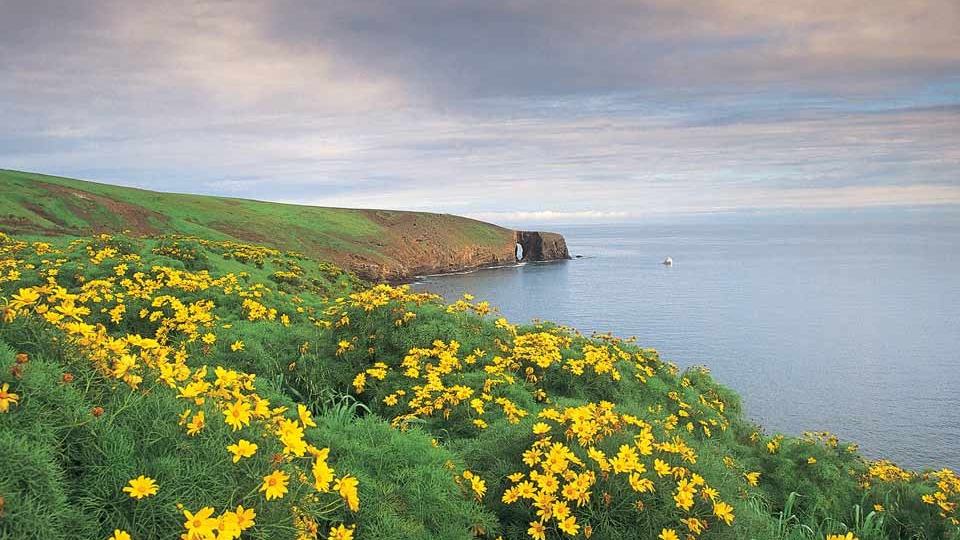
The dock at Santa Barbara Island remains closed after storm damage, changing how visitors can reach the smallest Channel Island. Official guidance restricts landings to the adjacent rocky ledge and warns of difficult access.
A beautiful island with a damaged landing
Santa Barbara Island, the smallest island in California's Channel Islands National Park, remains a challenging destination for boat visitors in 2026. Its usual dock has been damaged by severe winter storms and is closed, according to current National Park Service alerts. Landings are restricted to an adjacent rocky ledge, a material change from the conventional arrival described in some older island guides.
The park also reports that the authorised passenger operator Island Packers is not currently running trips to Santa Barbara Island because of the dock condition. Travellers should not interpret a general seasonal timetable as evidence that a booking is available today. Even when the island is described as open to public access, the practical means of arriving ashore may be unsuitable for many passengers.
The island lies roughly thirty-eight miles from the nearest mainland point, making a visit a substantial offshore undertaking rather than a short harbour crossing. Sea conditions can change during the journey, and a difficult landing is a more serious matter after several hours afloat. Independent boat crews need to review official restrictions and decide whether the trip is appropriate before departing.
What a rocky-ledge landing means
The ordinary Landing Cove arrival involves moving from a vessel to a dock, then climbing a steep route to the island's plateau. With the dock closed, the National Park Service describes an alternative in which passengers transfer to a small skiff and step onto a wet, sloping rocky ledge. This can involve climbing between vessels and onto slippery surfaces, which is not appropriate for everyone.
The published accessibility description makes clear that the climb continues after the landing. Visitors must ascend approximately a quarter of a mile and gain significant elevation to reach the top, using a trail with steps and rougher sections. There is no lift to the plateau, and a visitor with mobility restrictions should not assume that a boat-based arrival avoids the physical demands of the island.
A skipper's willingness to approach shore does not override the landing restriction. The correct choice depends on weather, boat handling, the capability of the passengers and the specific conditions set by park staff. Where the physical requirements cannot be met safely, choosing another destination is preferable to a rushed or improvised transfer.
Seabirds and the island's protected ecology
Santa Barbara Island is much more than a difficult landing. The National Park Service describes a one-square-mile volcanic island with rich seabird colonies and marine-mammal habitat. Western gulls, cormorants, pelicans and Scripps's murrelets are among the species associated with its cliffs and nesting areas. Visitor movement must respect the protection given to these sensitive birds.
The park's vegetation has also been recovering from historic grazing, farming and introduced animals. Native plants such as coreopsis and the endemic Santa Barbara Island live-forever are part of that process. Their recovery demonstrates why visitors must stay on authorised trails instead of looking for shortcuts across exposed ground or entering closed nesting areas.
Elephant seals and sea lions use the shoreline, while nearby kelp forests support marine life. Watching these animals can be a highlight of an island trip, but the proximity of a rookery is not permission to approach or land in other places. The park restricts public access around much of the coast, making the designated Landing Cove area particularly important.
Planning around the actual restrictions
Official guidance says the island has no food shops, drinking-water supply or standard accommodation. Visitors must bring the supplies needed for the entire journey and any longer stay. The absence of services is especially important when transportation is uncertain, because an unexpected weather delay can turn a straightforward day trip into a complicated situation.
The island's primitive campsite and walking trails are attractions for appropriately prepared visitors, but a camping permit does not guarantee a safe boat arrival. The park warns that trips depend on limited transportation and that some trail sections close during seabird nesting periods. Travellers should verify the current dock alert, camping rules and actual concessionaire service before treating the island as an available destination.
Santa Barbara Island remains one of the Channel Islands' most fascinating protected landscapes, but its storm-damaged landing is a decisive practical constraint in 2026. For many visitors, the responsible plan will be to explore another island until normal access arrangements return. The closure also changes the choices available to experienced boaters. A calm day in the channel is not by itself proof that conditions at the rocky landing will be safe, and a successful passage requires a safe return as well as an arrival. Travellers should therefore treat the National Park Service alert as a central part of the itinerary, not a minor note to review after booking. Those who do consider a private-boat approach need accurate current information, suitable experience and a willingness to cancel if conditions are not safe.