
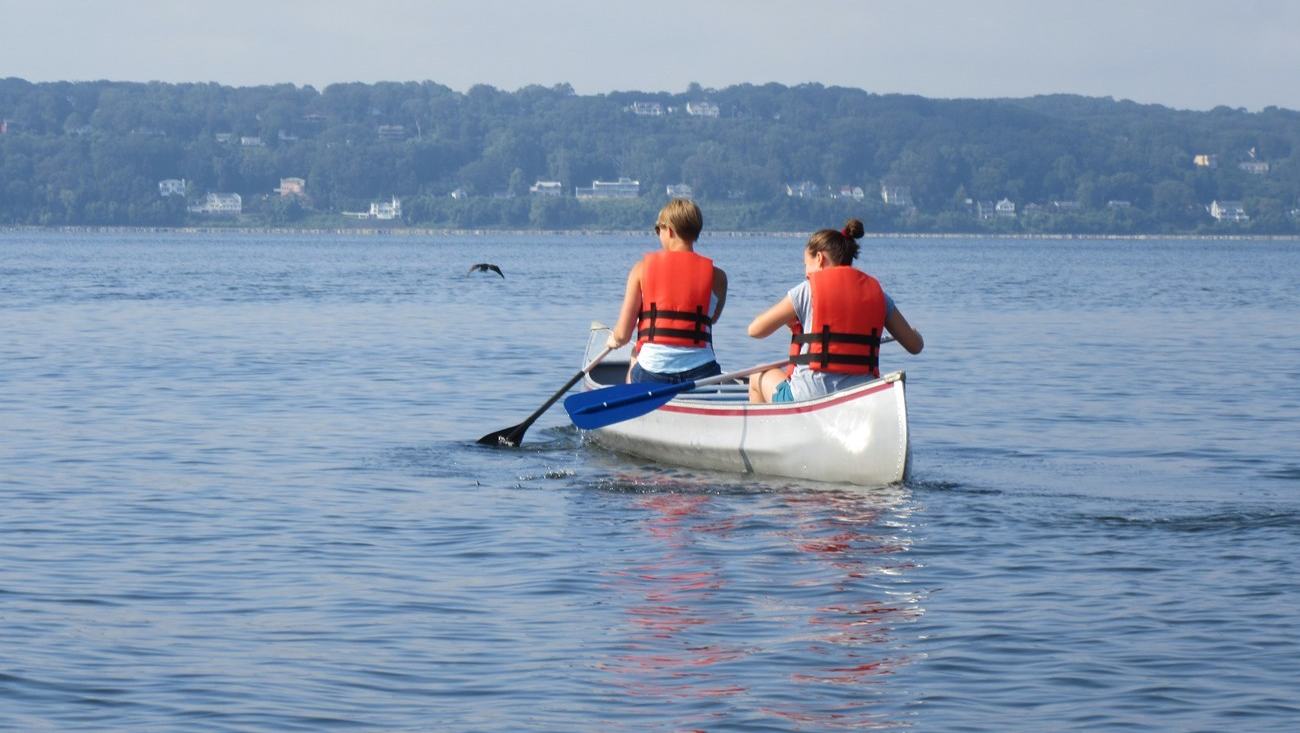
Sandy Hook offers small-craft launches within sight of one of the world's busiest metropolitan waterways. Its sheltered-looking coves still demand attention to tides, traffic and park rules.
A different way to see the harbour coast
On a map, Sandy Hook appears to be a narrow curve of land separating the Atlantic Ocean from Sandy Hook Bay. From a kayak, that geography feels rather more personal: wind, tide and the shape of the shore determine what is pleasant to explore. A short outing here is an encounter with a coastal landscape beside a major city, not an invitation to treat the bay as an enclosed pond.
Gateway National Recreation Area includes Sandy Hook alongside separate waterside places in Brooklyn, Queens and Staten Island. The National Park Service explicitly permits hand-launching privately owned small craft at several designated or established locations. For visitors who do not own a boat, that distinction matters because a public launch is not necessarily a rental or a guided-tour service.
Pick a launch appropriate to the boat
At Sandy Hook, the National Park Service identifies Beach Area C and Horseshoe Cove among the places used for launching canoes, kayaks and rowboats. It also lists other small-boat launch points across the wider Gateway park, such as Floyd Bennett Field and North Channel Bridge. Those are distinct locations; a route planned for Sandy Hook should not casually substitute a Brooklyn launch as if it were next door.
The published park guidance is deliberately a starting point, not a guarantee that every stretch of shoreline is available for putting a boat into the water. Before setting off, look up local access information, parking arrangements and any temporary restrictions. A launch that looks attractive from the road may not be a permitted place to enter the water.
Read the bay before leaving the beach
Sandy Hook Bay may appear sheltered compared with the open Atlantic, but its tidal setting deserves the same preparation as any other saltwater passage. An outgoing tide can change the effort required to make progress, particularly when combined with a contrary wind. Small boats should be managed by people who know how to return in the conditions expected later in the day.
Weather forecasts should be checked for wind speed, direction and the risk of squalls, not merely for sunshine and temperature. Check the tide table for the actual area of departure, consider the time of sunset and allow a generous margin before dark. A comfortable one-way paddle is not evidence that the return leg will be equally easy.
Discover the shoreline at a respectful distance
The pleasure of Sandy Hook comes from looking back at the curving shore, noticing the transition between beach and sheltered water, and moving quietly enough to observe birdlife without pursuing it. The park's coastal setting offers plenty to notice from a stationary kayak. A good itinerary leaves room to drift safely, rest and turn back when changing conditions suggest it is sensible.
Birds and other wildlife need room, especially where they feed or rest. Avoid approaching nesting areas, beach closures and shallow habitat just to obtain a photograph. Carry binoculars or a camera with a suitable lens and accept that the best observations often come from keeping a predictable distance.
Understand Gateway’s firm boundaries
Gateway prohibits entering salt marshes and landing on islands within Jamaica Bay, a separate part of the recreation area. It also prohibits landing a motorized boat on beaches and using jet skis in the park, including Jamaica Bay. These restrictions illustrate why an entire national recreation area cannot be treated as unrestricted navigable water simply because a chart shows it as blue.
The National Park Service lists two marinas for larger boats elsewhere in Gateway and a boat ramp at Great Kills Park where parking permits apply. Those facilities are useful context for boaters, but they do not change the small-craft nature of a Sandy Hook kayak excursion. Match the launch to the vessel rather than borrowing another facility's rules.
Keep the plan modest and enjoyable
For a first visit, a short out-and-back exploration close to the chosen launch is easier to manage than a long coastal crossing. Carry an appropriate personal flotation device, a communication method protected from spray, water and a way to identify the launch if visibility deteriorates. Tell a person ashore the intended route and the time at which to expect you back.
It is worth discussing experience and rescue arrangements with the group before deciding to paddle. A pair of experienced paddlers who can assist one another is better placed to adjust a route than a group that assumes conditions will remain benign. The memorable part of this outing should be the changing harbour light and shore, not a difficult final mile.
Plan the time ashore too, with dry clothing and a simple way of securing the boat before departure. Sandy Hook is a satisfying coastal visit in its own right, and a relaxed stop on land can complete a shorter paddling day without adding unnecessary distance.
Current access details, conditions and regulations should be checked with National Park Service — Gateway boating before a visit. The photograph is credited to National Park Service (NPS Photo), Sandy Hook Bay.