
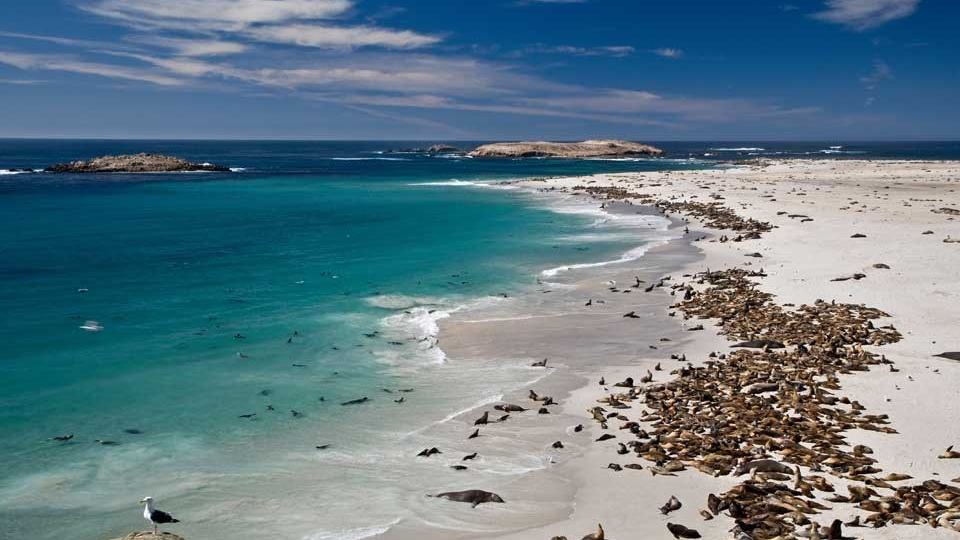
San Miguel Island's exposed coast and National Park Service access rules make a boat landing more complex than a standard beach visit. Cuyler Harbor is the authorised landing point, and permits and ranger arrangements matter.
A remote island with unusual access rules
San Miguel Island is the westernmost and among the most exposed islands of California's Channel Islands National Park. Its windswept shores and extraordinary wildlife make it appealing to experienced small-boat crews, but visiting involves more than choosing a scenic anchorage. The island remains owned by the US Navy and is open for landing only when National Park Service personnel are present, an important restriction for anyone considering an independent passage.
The park specifies that private boaters may land only on the beach at Cuyler Harbor. Overnight anchorages are restricted to Cuyler Harbor and Tyler Bight, and those restrictions should not be confused with guaranteed protection from swell or suitable weather. Mariners require up-to-date charts, careful judgment and an independent passage plan, because conditions along the western Channel Islands can change quickly and a permitted landing area is not automatically a safe one.
Visitors also require a permit, including a liability waiver, and must arrange for any escorted hike with park personnel. The island was formerly used as a bombing range and may still contain unexploded ordnance. These are practical safety limitations that cannot be waived simply because a visitor is arriving by private boat, and attempting an informal landing without confirmation would be a serious mistake.
Cuyler Harbor and the arrival ashore
Cuyler Harbor offers the island's designated beach landing, but the transfer may involve a skiff rather than stepping onto a conventional pier. The National Park Service warns that passengers should prepare to waterproof luggage and may become wet during the landing. A change in sea state can alter whether the transfer is appropriate, particularly for visitors carrying cameras, camping supplies or other equipment that cannot tolerate spray.
Once ashore, the limited range of independently accessible places includes Cuyler Harbor beach, Nidever Canyon, the Cabrillo Monument and the Lester Ranch site. Travellers wishing to venture beyond the ranger station must be accompanied by a ranger, and no off-trail hiking is permitted. These arrangements protect visitors from hidden hazards as well as the fragile plants and archaeological sites scattered across the island.
Private crews are expected to contact the park before leaving the mainland and arrange any ranger escort by email, providing their name, vessel name, contact number and proposed dates. The park can then confirm availability and instructions. A message sent after anchoring is not a substitute for prior coordination, and a fixed return itinerary should allow for the possibility that the desired ranger-guided hike cannot be offered.
Wildlife and the significance of Point Bennett
The island's ecological importance is remarkable. The National Park Service describes thousands of seals and sea lions using its coastline, with Point Bennett supporting concentrations that can exceed thirty thousand animals during certain periods. Visitors should not approach colonies or treat their size as an invitation to enter sensitive areas. Observing from an authorised route offers the opportunity to appreciate the spectacle without adding disturbance.
The guided walk to Point Bennett is a demanding full-day undertaking described by the park as a sixteen-mile round trip. It is not suitable for someone arriving with only a brief stopover, limited provisions or uncertain fitness. Ranger availability, time ashore and current trail conditions should be established before anyone commits to this objective; it cannot be reduced to an ordinary short walk from the beach.
San Miguel is also notable for native plant recovery after a long history of grazing, as well as nesting seabirds and endemic island wildlife. The combination of ecological and cultural resources explains why unrestricted exploration is not permitted. A thoughtful visitor will stay on signed trails, avoid disturbing animals and leave archaeological materials untouched, appreciating that preservation is inseparable from the island experience.
Practical planning for a boat visit
The island is exposed to the weather systems of the North Pacific and has no conventional visitor services comparable to a mainland marina. Crew should carry suitable clothing, drinking water and the provisions needed for a longer-than-expected stay, while understanding that emergency assistance may be slow. Even when the sea appears calm at the mainland departure point, the offshore conditions can be materially different.
Boaters must also distinguish a legitimate park landing from permission to hike anywhere. The Navy ownership and former ordnance use create a level of regulation that is unusual for a scenic island. Travellers should review current National Park Service information as well as any relevant boating notices, and should not rely solely on descriptions written before an access rule changed.
San Miguel offers an exceptional wildlife and landscape experience to those who make appropriate arrangements. It is not a destination where a yacht can simply anchor and send guests ashore without advance planning. A conservative landing decision, confirmed permit and ranger-supported itinerary are what make the visit possible while protecting both people and the island's remarkable resources.