
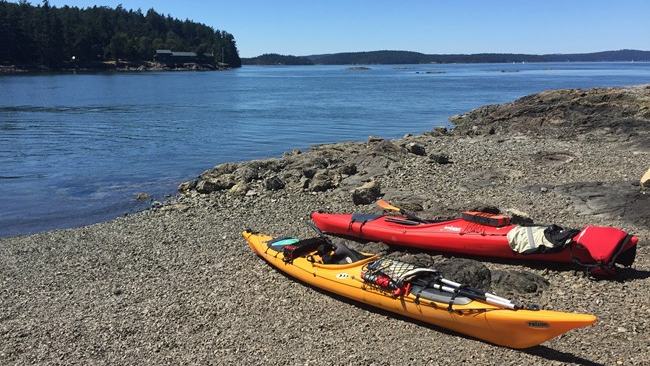
San Juan Island, in Washington's Salish Sea, offers beautiful stretches of coastline where sea kayaks can travel close to beaches, kelp and wooded headlands. The landscape can appear peaceful from shore, but the surrounding straits and passages demand respect. Tides, wind and cold water ca
An island shoreline made for careful exploration
San Juan Island, in Washington's Salish Sea, offers beautiful stretches of coastline where sea kayaks can travel close to beaches, kelp and wooded headlands. The landscape can appear peaceful from shore, but the surrounding straits and passages demand respect. Tides, wind and cold water can make a seemingly short route much more serious.
The National Park Service describes kayaking opportunities associated with San Juan Island National Historical Park, including areas near American Camp and English Camp. The two sites have different landing and launch restrictions because of sensitive natural and cultural resources. A responsible trip starts by choosing a legal access point rather than just the most attractive beach on a map.
Use a suitable sea kayak
The park advises against using small open boats, canoes, open-cockpit kayaks and paddleboards for travel between the islands. A properly equipped sea kayak is the recommended paddling craft. It is designed for more exposed water but still requires a competent paddler, appropriate clothing and rescue skills.
Useful equipment includes a fitted life jacket, whistle, suitable immersion protection, spray skirt, paddle float, bilge pump and marine VHF radio. These are not decorations for an adventurous photograph. They address practical problems that arise when waves, tide and a capsize meet cold water.
Know where launching is permitted
At American Camp, the park identifies Fourth of July Beach and South Beach as kayak launch areas. At English Camp, beach launching is prohibited to protect nearby natural and archaeological resources. Published park guidance on launching at the dinghy dock differs between its visitor pages, so paddlers should confirm the current arrangement directly with park staff before travelling. Guss Island is closed to landings.
Access guidance can be updated, so visitors should check the current official park notices before unloading boats. The sheltered appearance of Fourth of July Beach should not create false confidence: currents and conditions outside the immediate landing area can be substantially stronger.
Rescue planning is part of the outing
Cellular reception is unreliable in parts of the Salish Sea, and a rescue response may take a long time. The park urges paddlers to travel with others, practise self-rescue and group-rescue techniques, and leave a float plan with someone ashore.
A route that remains close to shore, can be shortened if the wind rises and allows a comfortable return before dusk is usually more enjoyable than one designed around achieving a distant island. A guided trip with a suitably experienced operator may be the sensible choice for a newcomer.
Watch wildlife without crowding it
The island is a fine place to observe seabirds and marine mammals, but paddlers should remain at a respectful distance and never pursue animals for photographs. Quiet movement, awareness of other vessels and leaving sensitive shoreline habitats undisturbed all contribute to a better experience.
The Salish Sea can reward careful visitors with memorable light, water and wildlife. The essential principle is simple: arrive with the right boat and skills, and let the conditions decide how far the day should go.
Primary source: US National Park Service — San Juan Island Kayaking. Photograph: Bureau of Land Management via National Park Service — kayakers on the Salish Sea. Check current access and safety notices with the park before travelling.