
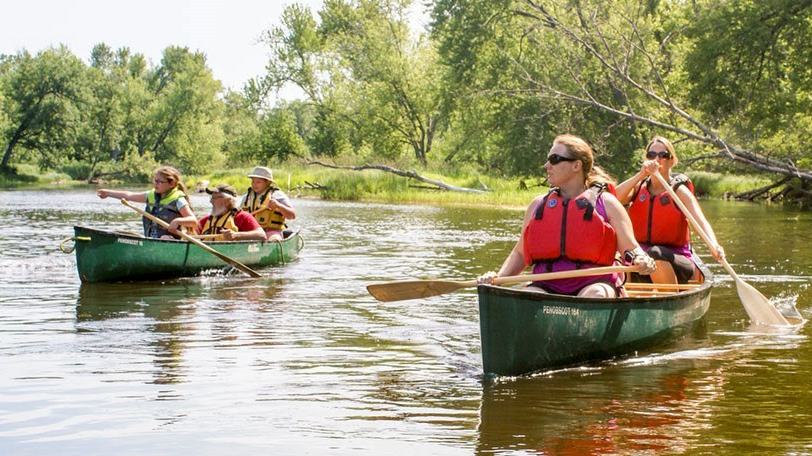
Saint Croix National Scenic Riverway provides a range of paddling experiences, from short family canoe outings to overnight travel along protected rivers.
Two rivers with room for different paddlers
The Saint Croix National Scenic Riverway protects stretches of the St. Croix and Namekagon rivers in the American Midwest, offering a broad choice of outings for visitors with small craft. A family can choose a relaxed afternoon on a suitable reach, while a more experienced group may organise an overnight canoe journey. The National Park Service emphasises this range of possibilities rather than presenting one long itinerary as the only way to experience the landscape.
The riverway offers a quieter alternative to a motorboat-focused summer holiday, allowing people to notice forest, wildlife and the pace of moving water. Its suitability depends on the chosen reach, the season and the passengers. A river that looks calm at one access point can include different challenges farther downstream, so local information matters more than a general picture of a peaceful canoe.
Selecting a reach that suits the crew
The Park Service recommends careful route selection, since some parts of the rivers offer easy paddling and others include challenges. Choosing where to put in and take out determines much of the day. A short section can be more rewarding than a long route if the group includes children or people using canoes for the first time.
A visitor should study current maps and consider river level, distance and time spent stopping along the way. A canoe travelling at a relaxed pace will not cover the same distance as an experienced solo kayaker. When uncertain, speak to a ranger before deciding which stretch of the river to attempt. A realistic trip is easier to enjoy and less likely to end in fatigue.
Local outfitters make travel simpler
Approved outfitters operate along the riverway, offering paddling equipment and shuttle services. Some also transport people who bring their own kayaks or canoes, making it possible to leave a vehicle at the finish rather than worry about paddling against the current. The National Park Service provides information about the services available in different river sections.
It is worth confirming the exact meeting point, parking rules and return arrangements before the morning of a trip. A shuttle service may operate only for particular routes or at certain times of year. Families should also ask about the sizes of personal flotation equipment provided and whether the selected canoe suits the intended group and amount of luggage.
An overnight river journey requires a permit in some areas
The riverway includes opportunities for camping, but rules depend on location. The Park Service notes that a camping permit is needed for an overnight stay between Highway 8 and the High Bridge. A visitor should verify the current regulations for the particular stretch rather than assume that every riverbank is available for tents or campfires.
Overnight gear changes the canoe's load and handling. Food, dry clothing and a shelter should be secured, with heavier objects positioned to preserve suitable trim. A camping plan should also include drinking water, waste arrangements and a backup in case the expected site cannot be used. A first-time family may prefer to begin with an organised day outing.
Small details at the launch matter
Public landing areas can be useful for a private trip, and the park allows vehicles to remain in some riverway parking lots overnight. Visitors are advised to keep valuables out of sight and remember to carry their keys on the journey. Arriving with the boat ready to launch helps avoid blocking the ramp while sorting bags and clothing.
A landing within a state park may require an entrance sticker unless the visitor is using an outfitter under the applicable arrangements. Such fees and access policies are best confirmed before travel. Respecting parking signs and keeping equipment out of the path of others creates a more pleasant start for everybody sharing the water.
Flotation equipment for all passengers
The National Park Service states that each paddler needs an appropriate life jacket, with children under thirteen required to wear one. A properly fitted device is especially important for a child because an adult-size jacket cannot be assumed to provide suitable support. The person responsible for the boat should inspect straps and equipment before leaving shore.
A life jacket alone does not remove river hazards. The crew needs to recognise swift current, fallen trees and areas where landing might be difficult. Children should understand where to remain seated and how to behave if the canoe encounters an obstacle. A gentle supervised introduction can be more valuable than setting off immediately on a longer trip.
An official image of family canoeing
The National Park Service photograph by VanTatenhove shows paddlers in two canoes travelling along the river and observing the surrounding landscape. It illustrates the actual recreational setting rather than a generated graphic or an unrelated tourism photograph. The image also captures why group canoeing can be memorable: passengers participate in the journey and share the small discoveries along the bank.
A photograph cannot communicate the exact water level or current that will be encountered on another day. A visitor should therefore use the picture for inspiration and current park guidance for route planning. That distinction helps preserve the attraction of a scenic holiday without suggesting that the river is always as easy as it appears.
Combining river time with local exploration
A boating holiday here can be organised around a short paddle followed by an evening in a nearby community, or around several days with appropriate authorised camping. Travellers may appreciate having enough time to visit a visitor centre, learn about the protected riverway and experience different sections without rushing.
The St. Croix and Namekagon can suit people who enjoy travelling slowly, but they are also part of a landscape used and valued by local communities. Visitors should keep litter out of the water, avoid disturbing wildlife and respect private property along the banks. The riverway remains rewarding when the crew travels with consideration.
A practical starting point for a future visit
The Park Service provides information through its St. Croix River and Namekagon River visitor centres, and the official paddling guidance is a useful place to find route and outfitter details. Conditions and seasonal services may change, so booking early and confirming current information are worthwhile, particularly for a family travelling from a distance.
A well-selected route, suitable flotation equipment and a reliable return plan can leave the crew free to enjoy the most memorable aspects of the rivers: moving water, wooded banks and the shared rhythm of a canoe. The strength of the destination is the ability to tailor that experience to the people actually aboard.