
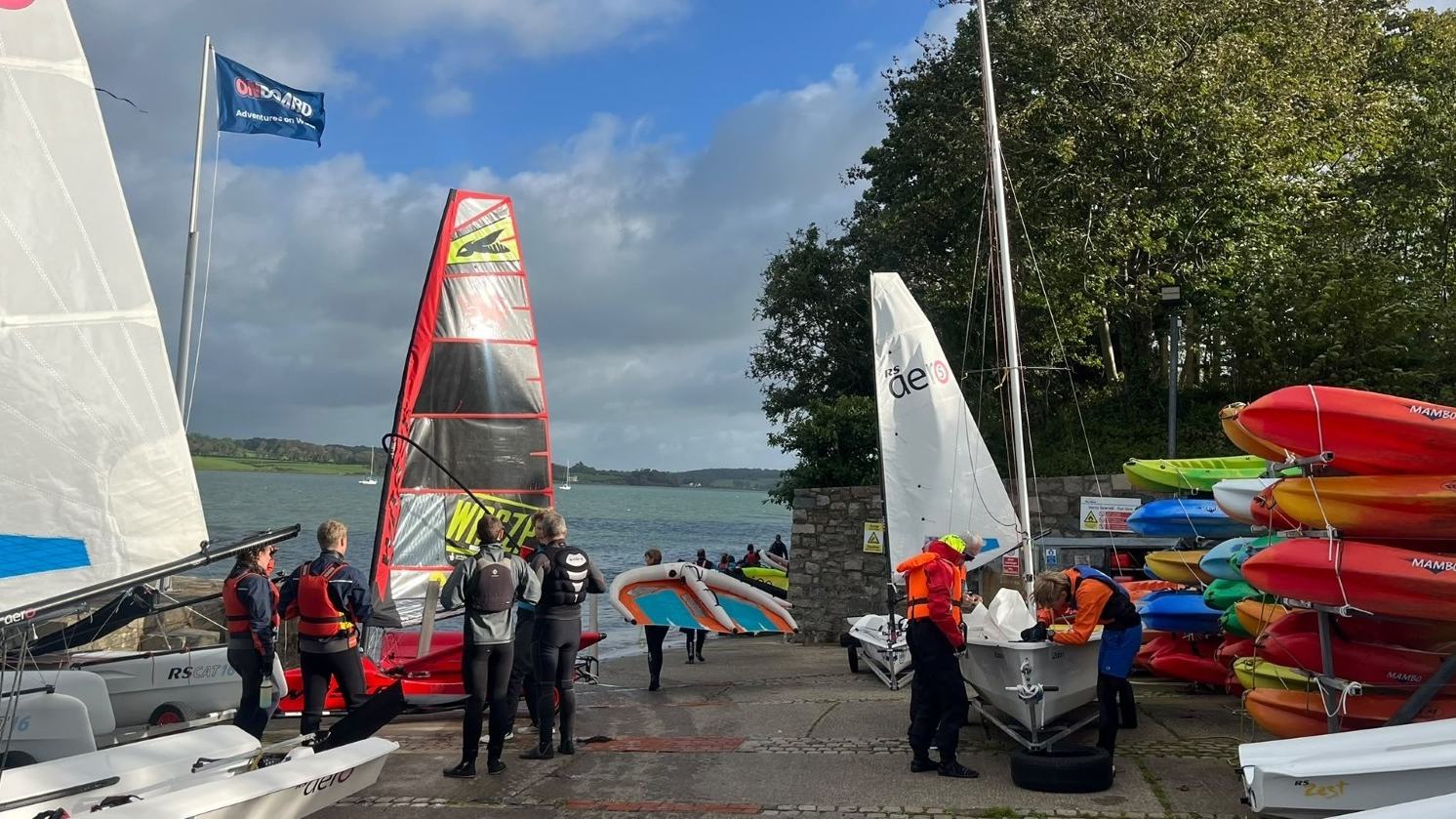
More than 80 participants attended the 2026 Sailia BIG Weekend at Plas Menai in Wales, taking part in powerboat, dinghy, first-aid and watersports training.
A weekend that lets watersports enthusiasts try something new
More than eighty people registered for the 2026 Sailia BIG Weekend at Plas Menai National Outdoor Centre in Wales on 10 and 11 October. Organised by RYA Cymru Wales, the annual event brought together club volunteers, active boaters, trainee instructors and people keen to develop their skills across several disciplines.
The programme was supported by online booking platform Sailia and Swansea Watersports, with experienced instructors, coaches and trainers drawn from across Wales. The RYA reported on the weekend on 14 October, highlighting the range of courses and the opportunities for people to progress in their chosen activities.
For recreational boat owners, the event is an example of how a training weekend can bring practical learning and an enjoyable social atmosphere together. Somebody who normally sails may want to improve their powerboat handling, while an experienced paddler might become curious about dinghy sailing or wind-powered board sports.
Weather did not prevent useful learning
The weekend experienced wind and rain on Saturday, followed by more sunshine and useful breeze on Sunday. The changing conditions gave organisers a reminder of the importance of adaptable training plans, with sessions held both ashore and afloat depending on the activity and the circumstances.
Practical instruction often benefits from a variety of conditions, but a training centre needs to distinguish educational challenge from unnecessary risk. An instructor may decide to move a beginner onto a more sheltered area or concentrate on classroom work rather than pushing ahead with a water session unsuitable for the group.
In everyday leisure boating, the same principle applies. Learning how to interpret a forecast, recognise deteriorating conditions and make the decision not to launch can be more valuable than completing a planned route at any cost.
Powerboat training was particularly popular
The RYA’s post-event report records six newly qualified Safety Boat drivers, two powerboat instructor pre-assessment passes and participants who developed route-planning, navigation and search-and-rescue knowledge. Others concentrated on practical recovery exercises and the handling of boats in situations beyond an ordinary weekend outing.
Safety Boat training can be useful for the volunteers who support club sailing and racing activities, where an efficient rescue response is part of keeping events safe. However, qualification standards and operational roles vary, so course choices should reflect the tasks a participant expects to carry out.
For a private motorboat owner, improving close-quarters handling, passage planning and an understanding of emergency response can build confidence. It is worth asking an accredited centre which course best matches the existing level of experience rather than selecting the most advanced-sounding title.
First aid and instruction provide other routes to participation
Eleven attendees gained an RYA First Aid certificate, while six aspiring dinghy instructors completed their pre-assessment. These results suggest that many people attended with the intention of helping others enjoy the water, rather than only developing their own leisure skills.
Clubs depend on volunteers who can teach, support activities and respond calmly when somebody needs assistance. A first-aid course tailored to the marine environment can help staff and volunteers consider problems such as exposure, injury and the complications of working away from an ambulance or other shore-based help.
Those qualifications should not be confused with being fully prepared for every emergency. Training requires appropriate refresher work and practical judgement, particularly when an incident involves difficult access or specialist medical needs beyond the competence of a leisure-boating volunteer.
From dinghy cruising to spinnaker skills
The programme also included dinghy coastal skills and spinnaker sessions, giving some sailors the chance to develop beyond basic steering and sail trim. More advanced boat handling can make cruising interesting, but it also adds considerations about weather, crew coordination and the physical demands of the equipment.
Learning to use a spinnaker with skilled supervision can be a useful stepping stone for owners who want to make better use of their sails on longer passages. The correct rig and technique will vary with the boat, however, and a training session on one craft cannot automatically be transferred to a different vessel without adaptation.
Coastal dinghy skills are another reminder that small boats can undertake rewarding voyages when they are properly equipped and handled. Participants should still respect their vessel’s limits, understand tides and weather, and plan recovery arrangements appropriate to the chosen route.
Foiling and winging add a modern dimension
Fourteen people tried or advanced their wingsurfing and wingfoiling skills, while twelve sailors participated in dinghy foiling activities. Those figures illustrate how a programme based around established sailing clubs can also introduce newer watersports without treating them as separate worlds.
Foiling craft rise partly clear of the water, creating a different sense of speed and responsiveness. The same characteristics can make balance and control more demanding, so training should begin with appropriate coaching and protective equipment in conditions suited to the participant.
An enthusiast who has spent years in conventional dinghies may enjoy learning the basics of these activities, but there is no need to race towards the most technical discipline. The useful lesson from the weekend is that development can be gradual and enjoyable, whichever activity somebody chooses.
Practical knowledge can be shared across clubs
Organiser Hester Walker, a club development officer with RYA Cymru Wales, emphasised the mix of beginners and more experienced attendees. The association also brought in senior instructors and staff to support sessions connected with teaching standards, professional conduct and safety.
The event included a discussion for commercial skippers, instructors and principals about incidents and prosecutions in the marine industry. That is a reminder that sound boating habits extend from the fun of learning new skills to understanding the responsibilities attached to professional or volunteer roles.
Clubs that do not have the resources to run a large event may still learn from the approach. Working with neighbouring organisations, pooling instructors and choosing a focused selection of workshops could provide worthwhile opportunities without copying the entire schedule.
A route into the next season of boating
The 2026 Sailia BIG Weekend has finished, so readers should not expect to book the particular sessions reported as though the event were still taking place. The useful next step is to explore local training centres and regional sailing organisations for courses suited to the coming season.
Families may find that one member wants formal sailing instruction while another is interested in first aid, powerboat handling or a social introduction to board sports. A good training provider can explain how these interests can be accommodated safely without asking everybody to follow the same programme.
For the Welsh boating community, the weekend shows the value of learning together and sharing knowledge across disciplines. The wider message is simple: even experienced leisure boaters can find something new to try, and strengthening practical skills can make time on the water more rewarding for everyone.
Source
RYA Cymru Wales