
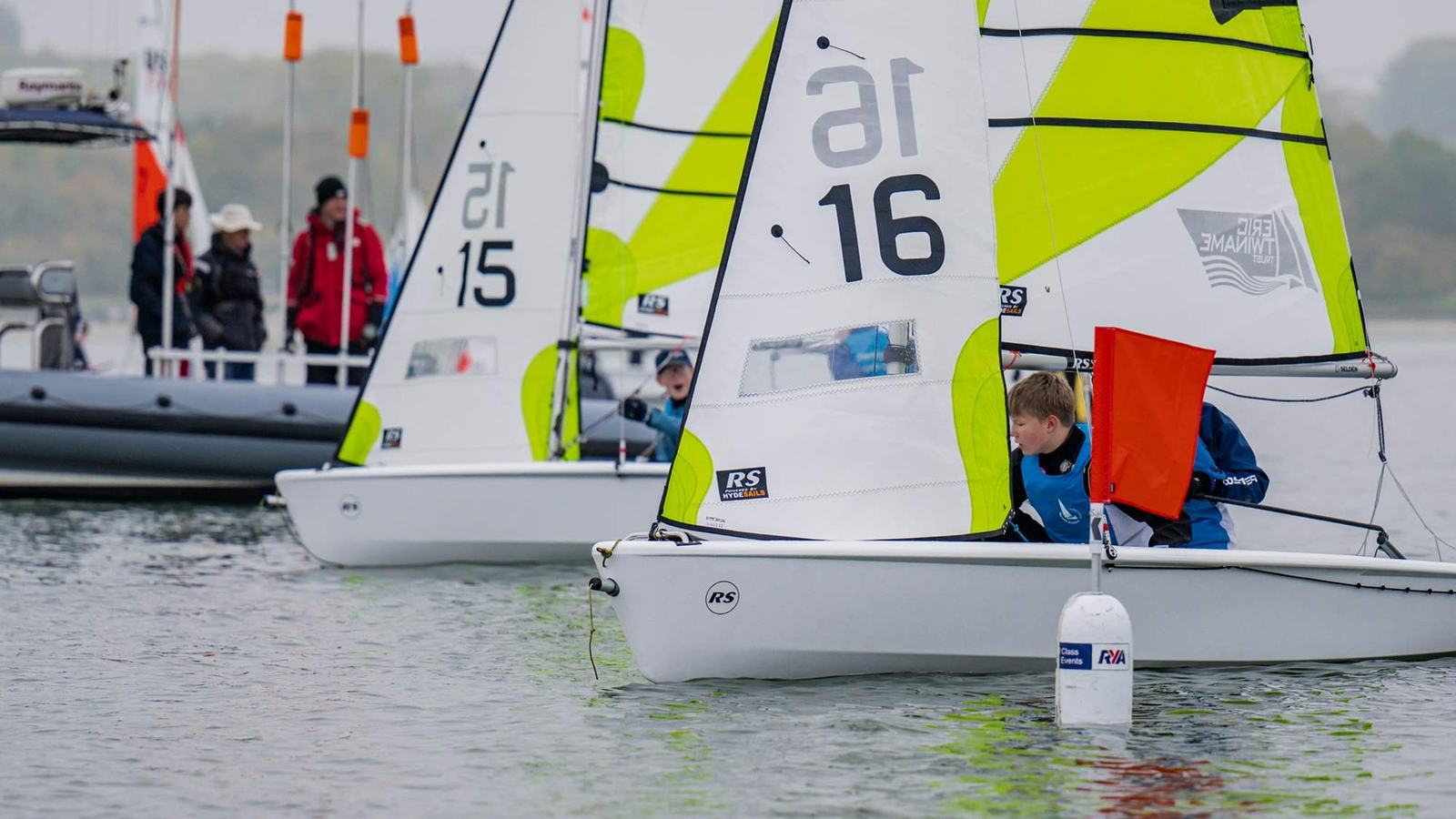
The RYA Eric Twiname Youth and Junior Team Racing Championships are scheduled for 10–11 October 2026, bringing young sailors together for a weekend of short, tactical races. Organised by the RYA with the Eric Twiname Trust, the event differs from a conventional fleet regatta because teams compete through coordinated manoeuvres rather than simply trying to finish individually as high as possible.
Team racing returns on 10 and 11 October
The RYA Eric Twiname Youth and Junior Team Racing Championships are scheduled for 10–11 October 2026, bringing young sailors together for a weekend of short, tactical races. Organised by the RYA with the Eric Twiname Trust, the event differs from a conventional fleet regatta because teams compete through coordinated manoeuvres rather than simply trying to finish individually as high as possible.
The programme uses RS Feva and Firefly dinghies, familiar small sailing boats suited to close-quarters racing. Organisers describe racing sessions that may last about ten minutes, allowing teams to face many different opponents over a weekend. The schedule remains dependent on weather and operational decisions.
Why the format develops cooperation
Team racing places a premium on tactical awareness and communication. Sailors must watch teammates and opponents, anticipate right-of-way situations and understand how their collective finishing positions affect the score. The skills are relevant to ordinary dinghy fleet racing even for participants who never progress to a national-level team event.
Young sailors may also gain confidence from practising with a group rather than being judged solely on one person's finishing position. Each team learns from difficult manoeuvres and gains experience responding to rapidly changing conditions. A supportive coach can help ensure competition remains constructive.
Fast changes and a busy race programme
The RYA describes on-water changeovers between races, with individual teams potentially competing in roughly six to sixteen races. Across the event, approximately 250 races may be scheduled, illustrating how the format relies on efficient organisation. Actual totals will depend on attendance, wind and race management decisions.
Participants should be properly briefed on launch and recovery, boat changeovers and the rules that apply when teams meet near marks. Spectators can find the format entertaining because the outcome may be decided by a few close tactical exchanges rather than a long procession around a course.
A gateway to other sailing disciplines
Team racing can provide a progression route between individual fleet racing and match racing. It encourages sailors to think about boat handling in relation to others, sharpening decision-making that will remain useful in any dinghy class. The event also depends on volunteers, race officials and safety crews who help maintain an effective programme.
For families supporting young sailors, the 10–11 October championships offer a snapshot of organised grassroots competition at a higher level. Entry criteria, spectator arrangements and last-minute notices should be checked directly with the RYA, especially because the event begins immediately after this report's publication. A short race requires intense concentration, and crews often have little time to dwell on a disappointing result before they launch again. The repeated starts can be educational because sailors practise anticipating other boats and making quick, lawful tactical decisions.
Source
Royal Yachting Association