
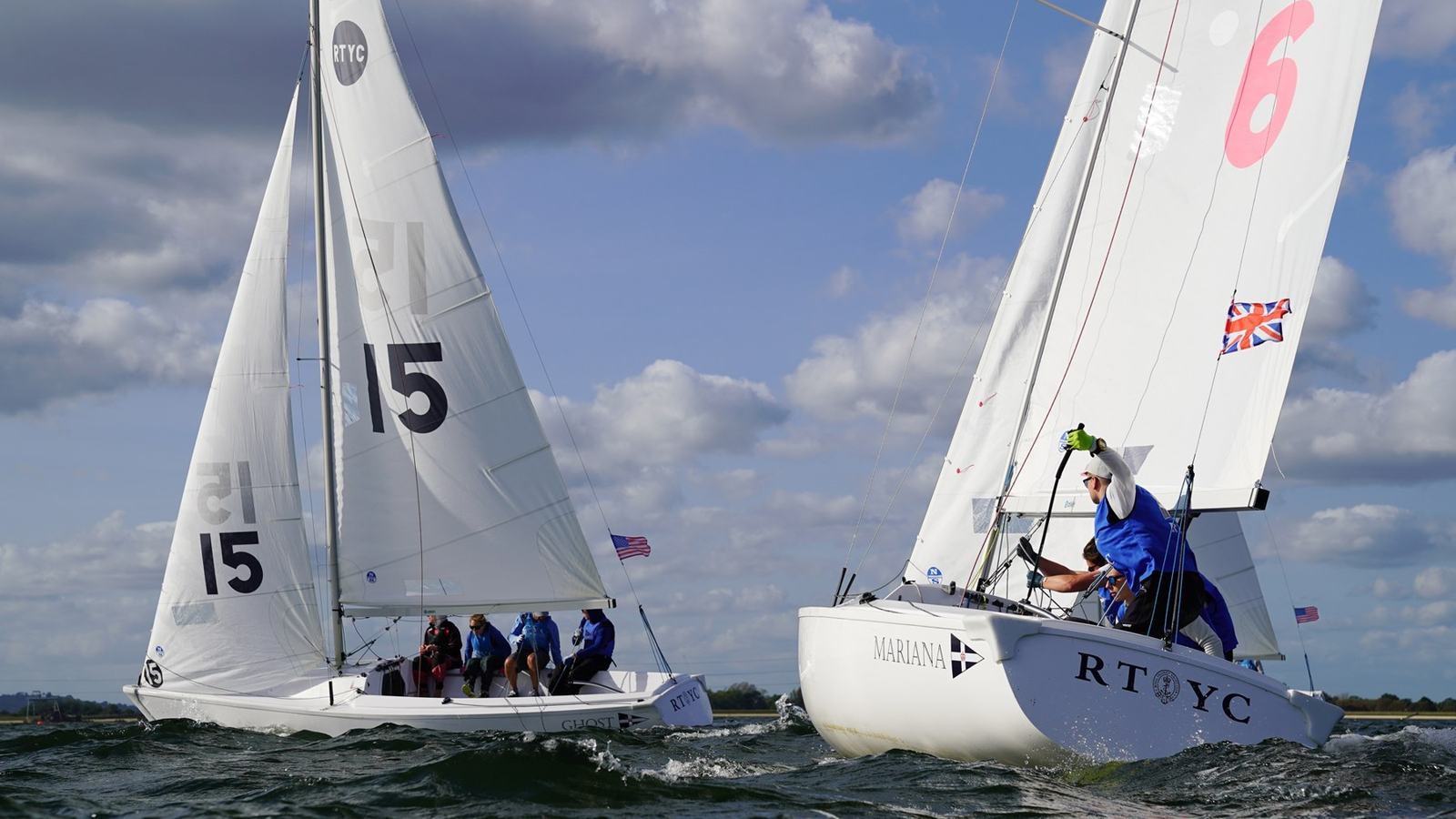
The RYA National Match Racing Championship is scheduled for 16–18 October 2026 at Queen Mary Sailing Club in London. Up to sixteen teams will race in Royal Thames Yacht Club Sonar keelboats, with crews of three or four and a published combined crew-weight limit of 300 kilograms. Entry arrangements and invitations are governed by the notice of race and the organiser's selection process.
One-on-one racing in London
The RYA National Match Racing Championship is scheduled for 16–18 October 2026 at Queen Mary Sailing Club in London. Up to sixteen teams will race in Royal Thames Yacht Club Sonar keelboats, with crews of three or four and a published combined crew-weight limit of 300 kilograms. Entry arrangements and invitations are governed by the notice of race and the organiser's selection process.
Match racing differs from a conventional fleet regatta because two boats compete directly against each other. Tactics often begin before the start, when each skipper tries to establish a favourable position. A race can therefore be captivating even with only a pair of boats on the course. The championship is a competition, not a general public boat-hire opportunity.
Teamwork is visible in every manoeuvre
A successful match-racing crew must combine boat speed with quick communication about wind, rules and the opponent's movements. The helm cannot concentrate solely on steering; teammates need to anticipate changes in pressure and the consequences of tacking or gybing. The one-design Sonar format encourages teams to rely on coordination rather than on expensive custom racing equipment.
For club sailors, the discipline can improve confidence during close encounters at starts and marks. Learning how to manoeuvre precisely in relation to another boat may also improve awareness of right-of-way situations in fleet sailing. The tactical objectives differ, though, and the skills must still be practised responsibly.
An accessible format to watch
A head-to-head duel can be easier for a new spectator to follow than a large fleet, since the question of which boat is leading is usually visible. The most interesting moment may occur before the start signal, when a crew establishes control or forces its opponent into a disadvantageous position. Rule knowledge helps explain these manoeuvres.
The organisers invite interest from sailors inspired by SailGP or America's Cup racing. Yet this championship uses a far smaller and more accessible one-design keelboat, putting the attention on close tactical execution. Families should confirm spectator access and viewing arrangements with Queen Mary Sailing Club before travelling.
The dates and conditions
The event runs from Friday 16 through Sunday 18 October. Conditions, entry numbers and race management decisions will determine the eventual number of races and format completed. The original request-for-place deadline was in July, so new team entries should not be assumed available in October.
For recreational sailors interested in tactical competition, the championship offers a chance to follow highly coordinated racing on craft of manageable size. Its appeal lies in communication, rule awareness and technique rather than the scale or glamour of a boat. The published RYA listing is the primary source for programme details. Training in short, repeated duels can sharpen the judgement of distance and time. The challenge is to understand when an apparently aggressive manoeuvre is strategically useful and when it simply creates a rules problem for the crew.
Source
Royal Yachting Association