
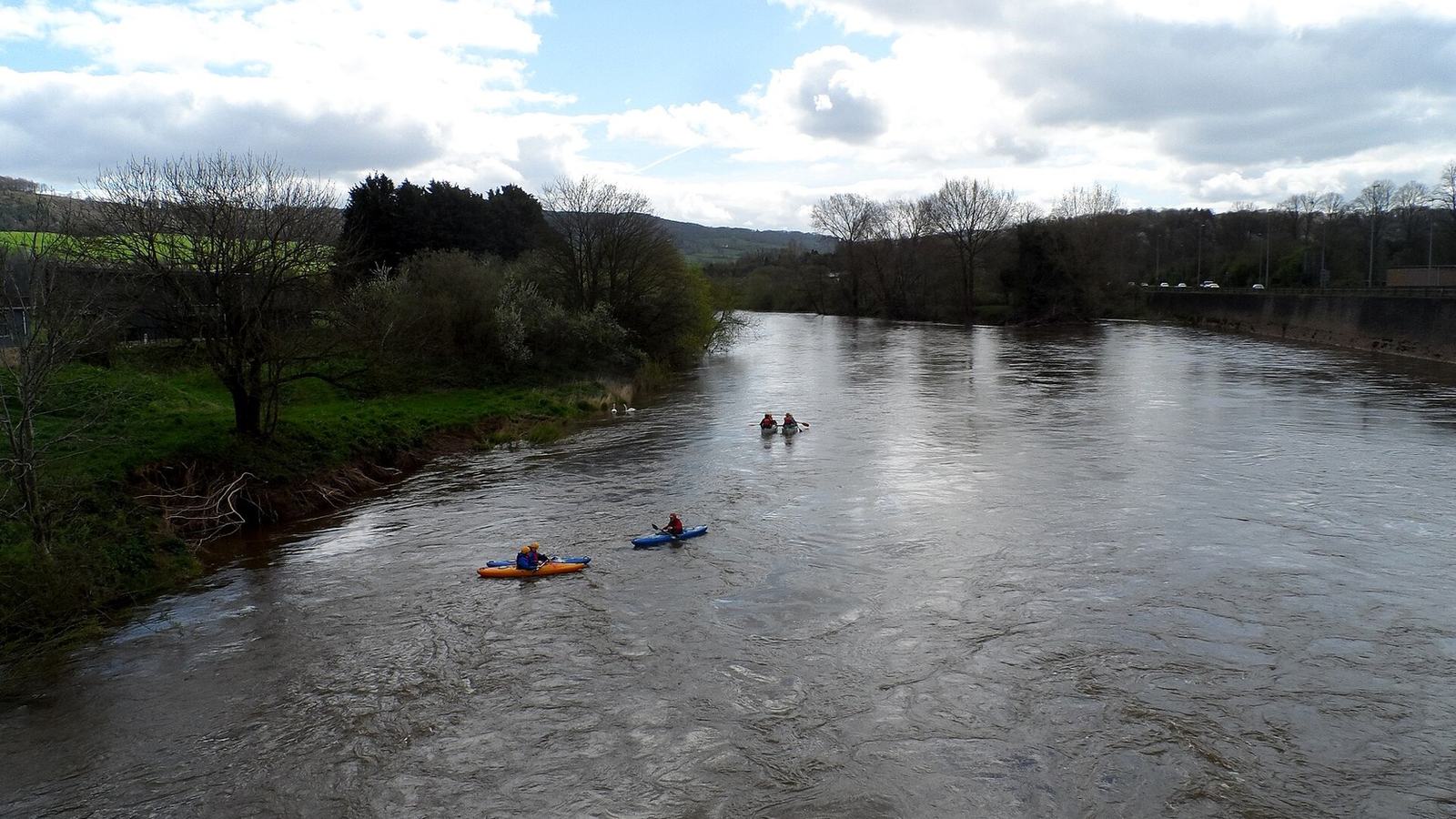
A practical canoeing guide to the River Wye at Hay-on-Wye, explaining Environment Agency navigation, legal landings, changing flow and hire arrangements.
The River Wye winds through Wales and England, connecting small towns, riverside fields and wooded valley scenery that can be especially enjoyable from a canoe. Hay-on-Wye offers a useful starting point for thinking about a paddling holiday, with routes downstream through Herefordshire toward Hereford and beyond. The Environment Agency maintains official information on navigation, access and restrictions for the river, and its guidance is essential reading before setting out. The Wye can be calm and scenic, but it is not an engineered canal with fixed conditions: water levels, current, obstructions and local access rights determine whether any particular outing is suitable. Responsible planning is part of appreciating its landscape.
A river crossing borders and landscapes
The Environment Agency describes the Wye as a river approximately 251 kilometres long, beginning in the uplands of mid-Wales and flowing past Hay-on-Wye, Hereford, Ross-on-Wye and Monmouth before reaching the Severn estuary. That geography explains why one river can offer very different experiences. A short scenic stretch near a market town should not be confused with the challenges of a longer journey downstream or a section affected by tides. For a family or inexperienced paddler, the best first trip is an appropriately chosen stage rather than an attempt to complete a major portion of the river. Local operators can help identify a realistic route for the day's conditions.
Hay-on-Wye as an attractive starting area
Hay-on-Wye is famous for its bookshops and cultural life, making it appealing to visitors who want to combine an outdoor activity with time in a distinctive small town. A canoe trip can begin or end near the town where recognised river access and hire arrangements allow, with an opportunity to explore the streets afterward. The temptation to design an itinerary entirely around sightseeing should be resisted because the river must be safe first. Current conditions, the intended landing and transport arrangements take precedence over a preferred lunch stop. Planning enough time for both paddling and a town visit produces a more enjoyable day.
Official navigation responsibility
The Environment Agency is the navigation authority for the River Wye from Hay to Bigsweir Bridge, while the tidal Wye downstream is overseen by Gloucester Harbour Trustees. This division matters because a small boat can move from one operating environment to another along a long river journey. A casual visitor should not assume that requirements for a short inland canoe stage apply unchanged all the way to the estuary. The Agency's official information provides navigation guidance and links to advice for paddlers. The safest approach is to identify the exact section under consideration, then check the relevant authority's current information rather than relying on a generic river guide.
Navigation is not unlimited bank access
The Environment Agency's River Wye paddle guide explains that the public right of navigation does not automatically grant the right to launch or land anywhere along the bank. Except at recognised public sites, permission from the landowner is required. This is one of the most important details for visitors planning an independent paddle. A grassy riverbank may look convenient for a picnic but could be private or ecologically sensitive. A route should therefore include confirmed starting, finishing and any intermediate stopping points. Hire companies can often explain which landings they use and arrange transport, which may be more practical than attempting to improvise shore access on the day.
Route planning in a flowing river
A river carries the boat downstream even when nobody is paddling, so a small canoe behaves differently from one on a lake. The crew needs to watch ahead for shallows, submerged obstacles, bridges and changes in current. A stretch that looks smooth from the road may still contain hazards difficult to recognise from water level. Before departure, obtain a current route description and ask local paddling providers about known obstructions. The ability to turn and stop the boat is important, as is understanding when to stay away from fallen trees or turbulent water. An attractive route should never be undertaken simply because someone has travelled it successfully in a different season.
River conditions change with rain
Water level is a central safety consideration on the Wye. Heavy rain in its catchment can increase flow and alter the character of familiar reaches, while very low levels may expose gravel and make navigation difficult or environmentally damaging. The Environment Agency publishes information about river conditions and restrictions, which should be checked close to departure. Do not assume that a booked hire means the chosen route will be safe regardless of the weather. Operators may change or cancel journeys when conditions are unsuitable. Flexibility is a positive safety feature, not a failure to deliver the planned adventure.
Why low water also matters
A shallow river might appear less intimidating than high water, but scraping boats over gravel can harm habitats and make progress awkward. The official paddle guidance advises avoiding navigation when levels are so low that the riverbed is being disturbed. Paddlers should not repeatedly drag or force a canoe through a sensitive section simply to complete the itinerary. A local provider can explain whether sufficient water is available and whether an alternative route is appropriate. Protecting the riverbed is part of responsible boating, especially where fish and other aquatic wildlife depend on gravel habitats. A postponed outing is preferable to damaging the environment for a short period of recreation.
Choosing a suitable hire craft
A tandem canoe can be comfortable for two adults or a family when it is correctly loaded, while a kayak may be preferred by someone with more individual paddling experience. The choice should be guided by the section of river, the crew's ability and the operator's advice. An apparently stable canoe may behave differently when loaded with children, picnic equipment and dry bags. A proper handover should cover essential steering strokes, communication between paddlers and how to deal with an unexpected capsize. A first-time group should consider an organised outing with supervision rather than an independent route of uncertain difficulty.
Shuttle transport is central to the plan
Because the Wye generally carries paddlers downstream, returning to the start against the current may be impractical for a recreational hire trip. Many canoe companies therefore organise collection and return transport, with a defined landing area at the end of the stage. Confirm that this service is included, and agree on the exact place and time. A mobile phone signal should not be the only way of finding the landing if the area is unfamiliar. A clear map, operator instructions and an agreed contingency make the final part of the day much easier. The best scenic trip can end badly if the crew reaches the wrong bank without transport or permission to land.
Bridges and their hazards
The river passes beneath bridges in several towns, and these can be appealing features to photograph from water level. However, bridge supports may affect current and create places where drifting debris collects. A boat should not be allowed to turn broadside to an obstruction while the crew concentrates on taking pictures. Ask local operators about recommended lines and any restrictions at structures along the chosen reach. Never assume that a wide-looking gap is appropriate in all water levels. The correct route is the one that can be navigated safely under the actual conditions, even if it is less picturesque than another part of the bridge.
Wearing suitable flotation
A personal flotation device should be properly fitted and worn on a recreational canoe trip. Adults set a good example by wearing theirs as well as requiring children to use appropriate sizes. Footwear should protect feet when getting in and out of the boat, and clothing should be chosen for wet conditions rather than just the forecast air temperature. A waterproof bag can protect important items, but it must not obstruct movement or make the canoe unstable. Carry drinking water and a means of obtaining assistance. The crew should understand what to do if a boat overturns, including when to seek help instead of attempting to retrieve every piece of equipment.
Wildlife and the Wye's conservation value
The river and its banks support wildlife that can be disturbed by careless boating. Paddlers should move quietly, avoid nesting birds and never chase animals for photographs. The Agency's navigation guidance encourages respect for the river environment and other people who use it. Avoid dropping litter or fishing line, and carry all waste to a suitable disposal point. A canoe allows a close view of the river's natural character without needing to land in every quiet-looking place. Binoculars can be more useful than approaching the bank. Protecting wildlife adds to the value of the holiday rather than placing unnecessary limits on it.
Sharing with anglers and other users
The Wye is used by anglers, walkers, canoeists and people who live beside the river. Courtesy and predictable movement help avoid conflict. A paddler should take care when passing fishing activity, avoid disturbing lines where possible and communicate politely if a narrow section is difficult to share. Anglers, in turn, may need time to clear their equipment so a boat can pass safely. A busy riverbank is not a suitable place to block a path while arranging a picnic. The public navigation right and private property interests both deserve attention. An enjoyable journey is easier when visitors recognise that the river is shared rather than exclusively recreational.
Paddling with children
Families can find the Wye a rewarding introduction to river travel when they select a suitable stretch and work with an experienced operator. Young children may become cold or tired more quickly than adults, and a long journey provides fewer opportunities to change plans than a sheltered lake outing. Every passenger needs correctly sized flotation and clear instructions about staying seated and keeping their weight balanced. A shorter stage with an agreed landing is usually preferable to a long outing dependent on ideal current and weather. Parents should ask about the operator's age requirements and conditions, not assume that any child who can swim is ready for a canoe trip.
A stop in Herefordshire
A river journey can be combined with time ashore in Hay-on-Wye, Hereford or other places reached by road or a recognised landing. This gives a trip a cultural dimension without requiring the canoe to reach every town in one day. An itinerary might involve paddling a suitable local section, returning the hired boat and then exploring a market town by foot. That separation is often more practical than trying to arrange multiple unapproved landings. Restaurants and cultural attractions have their own operating times, so leave enough margin for changing river conditions and shuttles. The river should govern the paddling schedule, while the sightseeing remains flexible.
When not to launch
High water, poor visibility, severe weather and uncertain access are all reasons to delay or cancel. Low water that risks damaging the riverbed is another reason to reconsider. The Environment Agency's conditions page and local operator advice provide a better basis for a decision than a general travel article. Experienced paddlers may have different capabilities from novice families, so a route described as easy in one guide is not necessarily suitable for everyone. If conditions change after launching, do not continue simply to meet a sightseeing goal. A responsible decision to return or stop at an authorised location is part of sound river travel.
A journey designed around the river
The Wye rewards small-boat travellers with changing landscapes, riverside settlements and the pleasure of moving slowly through the countryside. Hay-on-Wye provides a compelling cultural base, but the river's navigational rules and water conditions are fundamental to the experience. Choose a recognised access point, understand the planned finish, wear suitable flotation and leave the timing flexible enough for safe decisions. A short, well-managed canoe stage can provide more enjoyment than a long journey that exhausts the crew or causes disturbance. The best way to discover the Wye is to respect both its current and the people and wildlife that share its banks.
Sources and photograph attribution
Official destination and boating guidance: UK Environment Agency — Information to Help Boaters on the River Wye. Current access, rules, weather and reservations must be checked independently before travel.
Photograph: Bikeboy — “Canoes on the River Wye - geograph.org.uk - 3939526.jpg” (CC BY-SA 2.0), via Wikimedia Commons. Resized and converted to JPEG for editorial display. Source: https://commons.wikimedia.org/wiki/File:Canoes_on_the_River_Wye_-_geograph.org.uk_-_3939526.jpg. Licence: https://creativecommons.org/licenses/by-sa/2.0. Original rights remain with the credited creator or as specified by the source and licence.
