
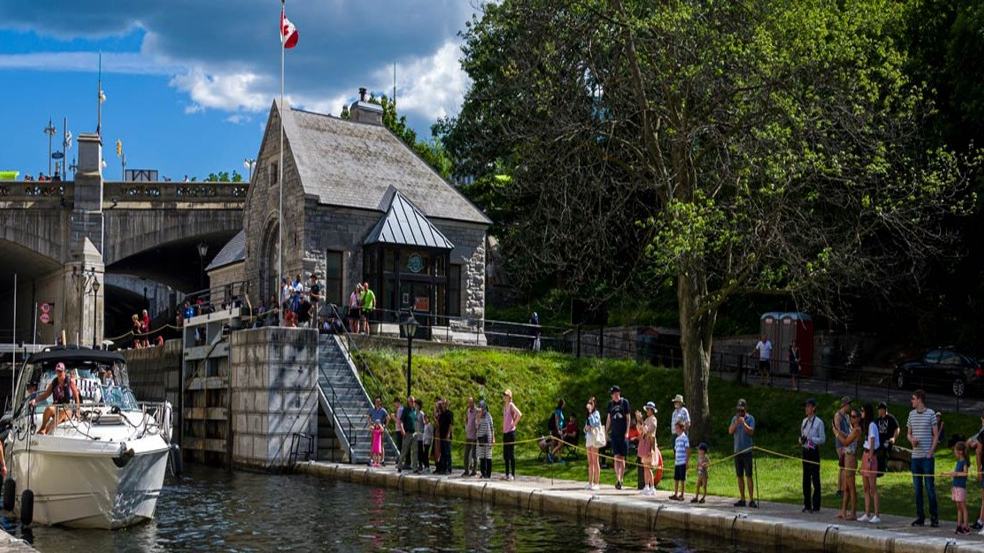
Canada's Rideau Canal remains an extraordinary working waterway. Here's how its historic lockstations and quiet stretches can shape a boating holiday, and why seasonal closures matter.
A working waterway whose history is still afloat
The Rideau Canal is not simply a preserved canal to admire from a footpath. Parks Canada describes it as one of North America's best-preserved slackwater canals, retaining its original route and much of its nineteenth-century infrastructure while continuing to serve boats. That living purpose is what makes it compelling for a leisure-boating holiday. A lock passage is both a useful piece of navigation and a direct encounter with the engineering decisions that shaped the waterway.
The route links communities through a succession of rivers, lakes and engineered sections, offering a variety of scenery as well as the practical interest of locks. For crews who enjoy travelling slowly, the appeal is the shift between open water and carefully managed narrow passages. Progress is measured not solely in kilometres but in approaches, conversations with lockstaff and the sense of entering a new reach. It is an unusually approachable way to encounter heritage from a boat.
UNESCO World Heritage status recognises the wider significance of the canal, but that designation does not remove the ordinary demands of operating a small craft. Mooring, clearance, local rules and the time required to lock through remain important. First-time visitors can study the official Parks Canada material before committing to an itinerary, especially when vessel dimensions or limited holiday time could affect which section is realistic.
Why the locks are the main event
A lockstation is not an interruption to a Rideau voyage; it is one of the defining experiences. A boat enters the chamber, is secured and rises or falls as water levels change under the direction of the operating team. The procedure rewards preparation and patience. Lines should be ready before arrival, loose items stowed, and every person on board given a clear and sensible role rather than improvising while the boat is already in a confined space.
Those watching from the shore see the movement of gates and water as a public demonstration of historic engineering. On board, the process is more intimate: timber or masonry walls slide past and the boat slowly finds its level with the next section. It is useful to treat the lock as a shared operating environment, with clear communication and careful attention to instructions from staff. There is no value in forcing a hurried manoeuvre to save a few minutes.
Different crews enjoy different rhythms. A small motor cruiser might plan a series of lock passages with short village stops, while a paddler may choose a more modest portion with designated access points. Neither journey should be packed so tightly that an ordinary wait becomes a problem. Canal holidays tend to be memorable because of small encounters and unexpected pauses as much as the major scenic stretches.
The boating season is a serious planning detail
As of 24 October 2026, Parks Canada is explicitly advising that its Rideau Canal lockstations are closed for the season. The agency says the historic site is closed from around Canadian Thanksgiving in mid-October until Victoria Day in mid-May, and warns that navigation aids may be missing or not in their normal positions outside the operating season. This feature is therefore a guide to planning a future navigable-season visit, not a suggestion to cruise the locks now.
The distinction matters because a waterway that appears open on a map may lack the services and safety infrastructure a visitor expects. Parks Canada also warns of unmarked hazards and poorly maintained areas during the closed period. Travellers considering a spring trip should not assume a universal date for every service or facility. Consult the official 2027 opening information when published, together with lockstation hours, fees and any local notices that affect access.
A practical boating plan begins with a modest first day, a clear understanding of lock operating times and enough slack for changing conditions. Build overnight options into the schedule and identify where fuel, water and supplies can actually be obtained. Some mooring opportunities are associated with lockstations, but permitted stays and facilities vary. Check the relevant Parks Canada guidance and confirm any private marina services directly before departure.
Making a slow-water holiday rewarding
On the scenic sections, patience is as important as technique. The canal connects broad lake views with sheltered shorelines where birdlife and passing small craft provide the day's interest. Keep speed and wake appropriate to local conditions, and leave room for less experienced boaters to manoeuvre. The best part of a canal journey may be the quiet stretch immediately after a lock, when the engine settles and the landscape opens again.
For paddlers, the waterway offers a different scale of adventure but not a completely risk-free one. Wind on larger reaches, passing motorboats and the logistics of carrying equipment around restricted areas all need consideration. Choose distances to suit the least experienced member of the group, carry effective flotation and communicate a route to someone ashore. Water conditions and the interaction of paddlers with lock operations require particular attention at busy points.
The Rideau Canal's strength is its mixture of practical boating, preserved machinery and accessible Canadian towns. Visitors can spend as much energy learning how the waterway works as they do admiring the landscape. A successful trip is not necessarily the one that covers the whole route; it is the one with sufficient time to enjoy each segment safely. With the 2026 navigation season over, now is an excellent moment to research routes rather than attempt the passage.