
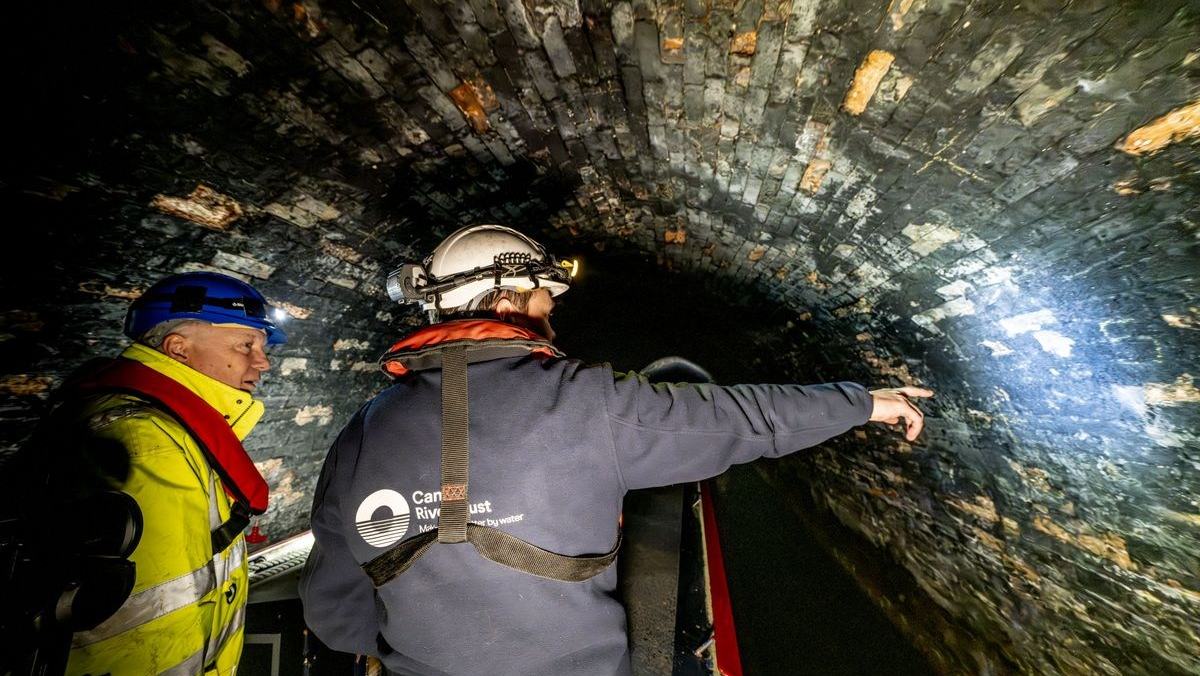
Engineers working for Canal & River Trust have carried out a detailed survey of Preston Brook Tunnel on the Trent and Mersey Canal, producing a three-dimensional digital model of the historic passage. The work forms part of the structure’s six-yearly principal inspection and uses a specially equipped survey boat rather than relying solely on manual measurements taken in poor lighting.
A historic tunnel examined with new technology
Engineers working for Canal & River Trust have carried out a detailed survey of Preston Brook Tunnel on the Trent and Mersey Canal, producing a three-dimensional digital model of the historic passage. The work forms part of the structure’s six-yearly principal inspection and uses a specially equipped survey boat rather than relying solely on manual measurements taken in poor lighting.
The tunnel is an important section of the recreational navigation network, even though it was built for freight traffic more than two centuries ago. The survey is intended to make maintenance better informed, not to transform the tunnel into a digital attraction. The immediate benefit is improved evidence about the condition of its brickwork and underwater structures.
The route reaches back to James Brindley
Work on Preston Brook Tunnel began in 1766 under the canal engineer James Brindley. He died before its completion, and his brother-in-law Hugh Henshall took over the work. The tunnel opened to traffic in 1775, forming part of the route developed to connect Britain's industrial areas and move freight more efficiently.
Bricks and mortar that have survived since that period require careful understanding. The tunnel has experienced serious damage: in 1982 a thirty-metre section collapsed, affecting a Post Office building above, although no one was injured. That history helps explain why detailed structural inspection is essential.
Combining sonar, photographs and laser data
For the latest inspection, sensors aboard a boat recorded surfaces above and below the waterline. Laser scanning and photography provide a picture of accessible masonry, while sonar helps document underwater areas. The resulting digital twin is intended to allow engineers to revisit measurements and compare details without returning immediately to the site.
Such models can reduce uncertainty when planning repairs and may help avoid unnecessary works. The Trust's engineering team believes better information could save significant sums in future projects, though the actual savings will depend on what inspections reveal. Digital representation supplements professional assessment rather than replacing it.
What visiting boaters should know
Preston Brook Tunnel remains a live navigational structure, and leisure craft must obey operational restrictions, traffic arrangements and instructions from the navigation authority. A boater preparing to pass through should check current guidance for the tunnel rather than assume that historical descriptions provide adequate navigation advice.
The story also demonstrates why canal heritage is more than picturesque stonework beside a towpath. Keeping a working route open demands engineering decisions informed by modern surveying and respect for historic construction. Its continuing usefulness for boating depends on maintaining that balance. The combination of new surveying tools and traditional masonry expertise may also help explain to future visitors why the tunnel still requires active care after two and a half centuries. Preserving its working function is a continuing responsibility.
Source
Canal & River Trust