
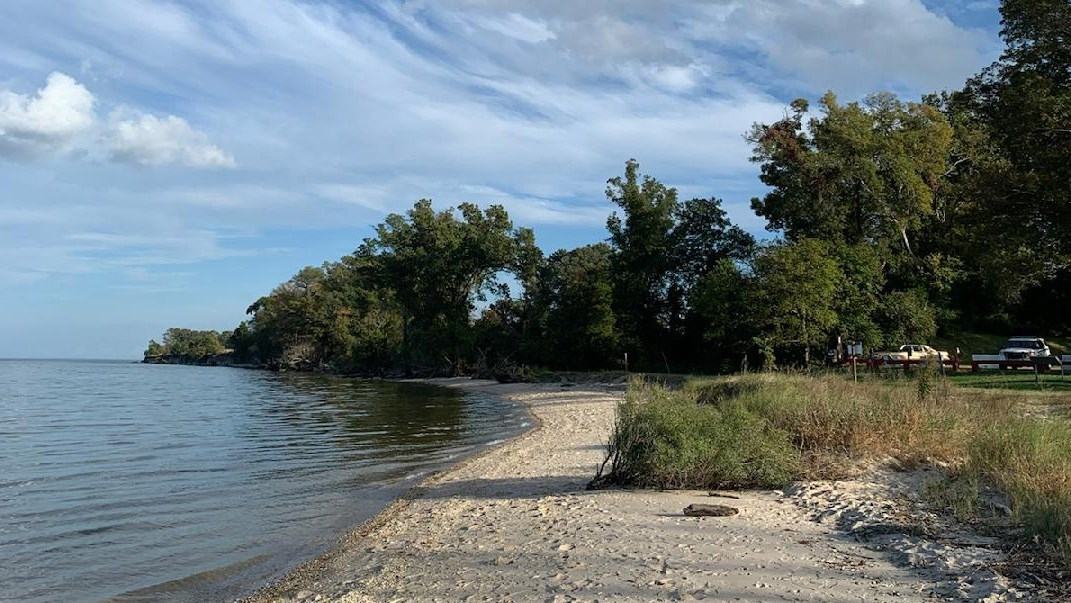
The Potomac River Beach at George Washington Birthplace allows kayaks and canoes from one designated shoreline, with strict access hours and tidal-current cautions.
A small-boat visit to a historic Virginia landscape
The Potomac River shoreline at George Washington Birthplace National Monument offers a rare opportunity to combine a short canoe or kayak outing with a visit to a place of national historical significance. The National Park Service identifies Potomac River Beach as a permitted launching area for non-motorised paddlers, while protecting other parts of the park shoreline from launch and landing. It is not an open invitation to put a boat in wherever the bank looks convenient.
A successful visit begins with understanding that distinction. The sandy beach, broad views and proximity to the historic landscape create a tempting setting, but the Potomac remains a tidal river with real currents and changeable conditions. The experience is best approached as a carefully planned independent outing, not an unsupervised first lesson in paddling.
Know which days the beach is open
The National Park Service states that Potomac River Beach is closed to visitors on Mondays and Tuesdays. Its published opening hours are Wednesday through Sunday, nine in the morning until five in the afternoon. These are important limits for anyone transporting a kayak from some distance, because a spontaneous visit outside those hours may not be possible.
Check the official park page close to departure for any temporary change or weather-related closure. Launching a small craft also involves more preparation than stepping onto a beach: unloading, checking equipment, getting afloat and returning before closing should all fit comfortably inside the permitted period. Allow time to carry the boat back without racing the clock.
Only one designated launch area
The park specifically identifies Potomac River Beach as the designated place where kayaks and canoes may be launched. Shorelines along Popes Creek and the park ponds are closed to launching and landing watercraft. The beach frontage also excludes motorised boat launching. Those restrictions protect sensitive settings and help visitors use the waterfront in an orderly way.
A paddler should therefore resist the apparent convenience of a smaller path, an empty creek bank or a tempting spot closer to a parked vehicle. Unless park staff have identified an alternative for the visit, use only the published launch area. Plan the return to the same permitted location, and check whether any section of the shoreline has additional temporary restrictions.
Tides and currents deserve respect
The Potomac is not a sheltered ornamental pond. The National Park Service warns about tidal currents, strong flow and underwater hazards around the beach. It discourages swimming because of these risks and local water-quality concerns. For kayaks, the lesson is that water which looks calm from the shore can still move enough to complicate a return journey.
Assess wind direction, the tide and the forecast before committing to a route. Avoid paddling beyond the skill level of the least experienced person in the group. A conservative plan may be to remain close to the authorised launching area and return early, particularly when the tide and wind could combine to increase the effort required. If conditions look uncertain, enjoy the shoreline from land.
What the shoreline tells visitors
The waterfront belonged to a landscape linked with transport and trading long before leisure boating became familiar. The National Park Service interprets the Potomac as part of the historical setting of Washington’s birthplace. Experiencing a river from a small craft can illuminate the scale and importance of waterways in a period when overland connections were less convenient than they are today.
That context makes the place attractive to people who normally prefer a museum or historic house to a boating holiday. It also encourages a more reflective pace: watch the river’s width, the changing shoreline and the relationship between land and water. Take photographs only when the boat is stable and attention is not needed for paddling or navigation.
A realistic family outing
Families considering the beach should separate a relaxed shore visit from an independent paddle. The park’s access rules do not imply that kayaks, instructors, buoyancy aids or rescue cover are provided. Visitors must establish their own safe arrangements and confirm any local operator or instruction independently if they need them.
Everyone afloat should have a correctly fitted life jacket and understand basic water safety. Children require especially close supervision, including when walking near the water. A first experience in a river environment may be better undertaken with a qualified guide elsewhere before attempting this particular tidal shoreline. There is no need to make a day memorable by taking unnecessary chances.
Facilities and beach etiquette
The National Park Service notes that the beach has a paved parking area but no restroom facilities at the beach itself. Access from the parking area includes a grassy, gently sloped route leading to very soft sand, so moving a heavy kayak may be awkward. Visitors with mobility or carrying concerns should assess that journey before arriving with equipment.
The rules also prohibit fossil collecting, although ordinary beachcombing is possible within the park’s stated limits for items such as empty seashells and suitably small driftwood. Treat this as a protected public landscape rather than a private picnic spot. Remove litter, respect other visitors and keep clear of any areas not intended for access.
Build the day around sound decisions
The strongest visit is often the simplest one. Arrive during the published opening window, review the current weather and tides, assess the authorised launching route and decide whether conditions suit the party’s abilities. If they do, a modest paddle can complement time exploring the park’s historical setting. If not, the beach remains a worthwhile place to observe the water.
Before setting out, read the National Park Service’s current Potomac River Beach guidance and seek park staff advice where an access rule is unclear. The important details are specific: Wednesday-to-Sunday access, the designated non-motorised launch, restrictions elsewhere and the hazards of tidal water. Respecting them is what makes this quiet Virginia shoreline a rewarding leisure-boating destination.