
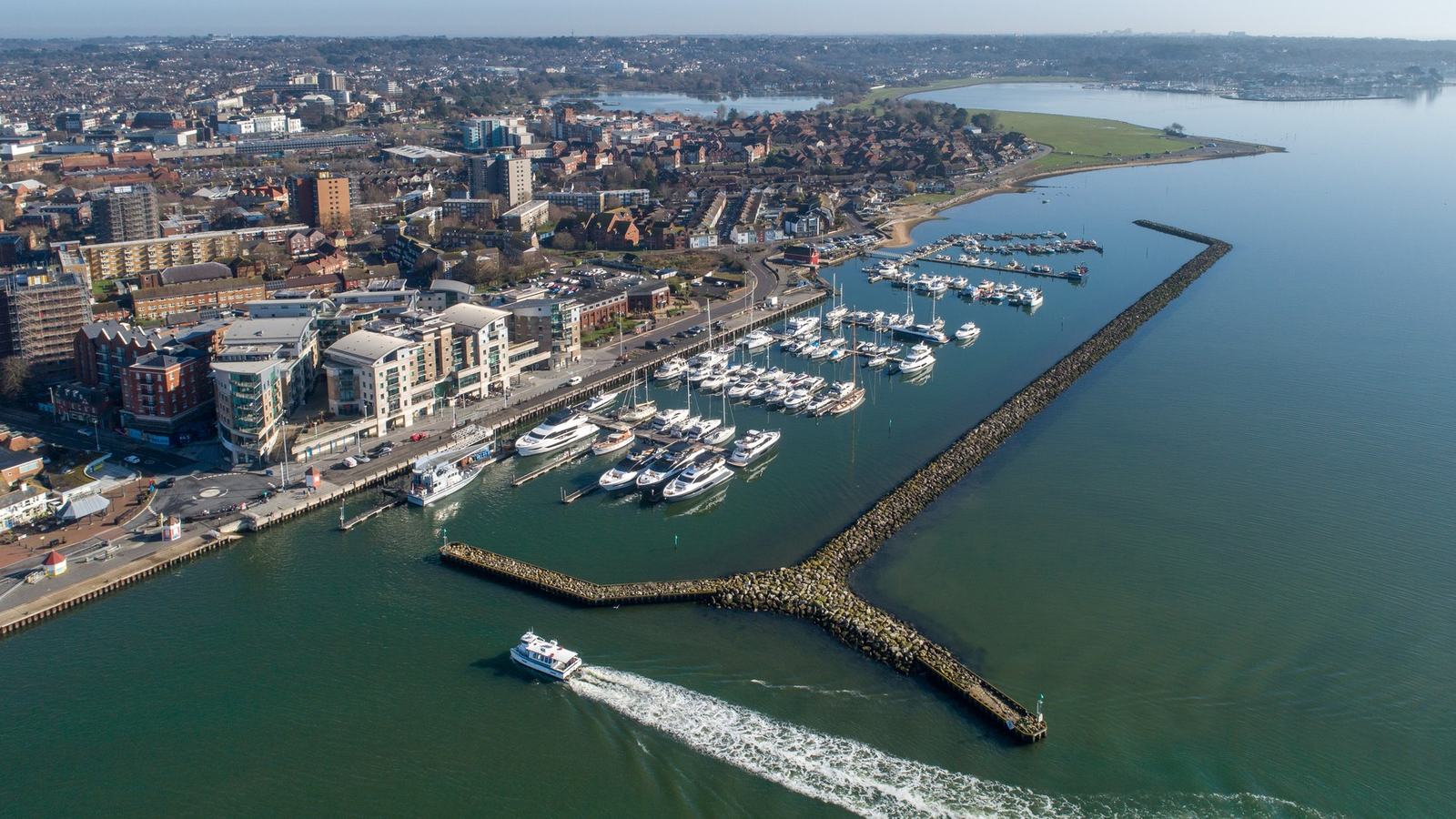
Poole Quay Boat Haven and Port of Poole Marina offer visiting boaters serviced berths, access to the waterfront, harbour scenery and practical facilities for a Dorset stay.
A harbour visit that starts on Poole's town quay
Poole Quay Boat Haven occupies a useful position at the eastern end of Poole Town Quay, placing visiting boaters close to cafés, restaurants, local attractions and the town's waterfront. The marina operator says its first facility opened in April 2001 and provides 125 fully serviced pontoon berths for visiting and longer-stay craft. For a crew travelling through Dorset, the location creates the possibility of a genuinely walkable shore visit: arrive, secure the boat and step into a busy quayside setting without arranging transport from a distant harbour.
The marina is part of a wider harbour system where conditions and traffic deserve careful attention. Poole Harbour is well known to recreational sailors and motorboaters, but it is not simply a sheltered lake in which ordinary navigation considerations disappear. A skipper planning a visit should consult the current harbour guidance, charts, tidal information and local notices. The pleasure of being able to walk straight into town comes after those responsibilities have been handled, and the availability of a berth should be confirmed with the operator.
Two marinas create distinct styles of stopover
Poole Quay Boat Haven and Port of Poole Marina are operated as complementary destinations. The Quay facility is close to shops and waterfront activity, while Port of Poole Marina sits nearer the main shipping channel and is promoted for views towards Brownsea Island and the Purbeck Hills. The operator describes the second site as having opened in June 2011, following a one-million-pound investment by Poole Harbour Commissioners. Both welcome leisure craft, but their positions mean that an overnight stay can feel different depending on which marina is booked.
A guest keen to dine ashore and wander the quay may place a premium on the town-centre location. Another visitor might prefer the outlook and setting of Port of Poole Marina, accepting a different arrangement for getting ashore. Neither should be chosen solely because a booking page mentions Poole. Confirm the exact marina, the type of berth and the route to shops or restaurants when reserving. That simple check can prevent an arrival-day disappointment and lead to a more satisfying stay.
What the published berth capacities actually mean
The operator lists 125 fully serviced pontoon berths at Poole Quay Boat Haven, accommodating a mix of visiting and longer-term vessels. It states that boats up to 75 metres may be considered by prior arrangement, a specialist provision that should never be treated as a promise of an available large berth. Port of Poole Marina has annual berthing for up to 75 vessels and can welcome larger visiting boats by arrangement. Its published information identifies long-term berths for boats up to twenty metres.
Those figures are useful orientation, but a visitor's berth depends on length overall, beam, draft, traffic, intended dates and the operator's practical allocation. A small cruiser and a large motor yacht may not use the same part of the pontoons. It is wise to state complete vessel dimensions at the enquiry stage and to ask whether rafting or a particular approach arrangement applies. The marina office is the source for confirmed availability, not a general capacity statement on a promotional page.
A busy quay with dining and independent shops
Poole Town Quay adds life to a marina stop. The official description highlights nearby cafés, bars, restaurants and local attractions, so a crew can plan an evening out without making a major onward journey. The waterfront changes character through the day as working harbour movements and leisure visitors bring different rhythms. Even a short stay can feel like part of a Dorset holiday rather than an administrative pause to top up water and prepare for the next leg.
The practical advantage is flexibility. Some visitors may want a quick lunch before continuing, while others can spend an afternoon exploring and return to the boat for a quieter meal aboard. Individual businesses and events have their own seasonal hours, and a quayside location can be lively on busy evenings. Travellers who value absolute tranquillity should consider the character of the berth when choosing the marina. An attractive photograph of the harbour does not tell the full story of noise or foot traffic.
Brownsea Island and the Purbeck views
Both marina descriptions draw attention to the harbour landscape, particularly Brownsea Island and the hills of Purbeck. These views help give Poole a different atmosphere from an inland town marina: open water and low landforms remain visible beyond the berths. A quiet morning on deck can be an enjoyable way to appreciate the setting before visitors head into town. The harbour also offers a broader area to explore when conditions, permissions and the vessel's capabilities make a further trip appropriate.
Scenic appeal should not be translated into casual navigational advice. Brownsea Island and other parts of Poole Harbour are subject to their own access considerations, tidal channels and environmental protections. Anyone planning to go beyond the marina should refer to authoritative harbour information and check the current arrangements for visiting island attractions. The point of a stopover guide is to suggest possibilities, not to replace local pilotage or imply that every attractive stretch of water is open to all craft.
Facilities that make an overnight practical
The operator says that both marinas provide fresh water, shore power, showers, toilets, waste disposal and twenty-four-hour security. These services are particularly valuable on smaller boats where self-contained amenities are limited. A crew arriving after several days underway can use the stop to clean up, reorganise supplies and enjoy a night with dependable shoreside access. The marina's fully serviced pontoons also offer a different experience from anchoring, where water and electricity need to be managed entirely aboard.
Facilities should still be checked in advance, particularly for unusual electrical connections, accessibility requirements or waste-handling needs. A published list gives a good overview but does not confirm that every service is available at every individual berth or at every hour. Visiting with pets or young children can introduce further questions about access gates and movement around working areas. A quick discussion with the marina office can help a crew choose the right site and arrive with realistic expectations.
The Port of Poole Marina water-taxi connection
Port of Poole Marina advertises a complimentary water-taxi service connecting with Poole Quay Boat Haven and swinging moorings in the Wych Channel. This can make the quieter marina position compatible with a visit to the quayside. The operator's description also mentions complimentary parking, useful where boat owners are meeting friends arriving by road. Such services add flexibility for a mixed group, but the water taxi's current operating times and pickup arrangements should be confirmed rather than assumed.
A water-taxi connection changes the way the evening is planned. A crew meeting friends ashore needs to know the last practical return, while someone carrying heavy stores may need to consider where bags can be transferred. Conditions can affect small-boat operations, so an advertised link should not be treated as guaranteed transport in all weather. The prudent approach is to ask the marina directly about the service for the specific dates and keep a sensible alternative in mind.
Seasonal cruising and winter berthing
Poole Quay Boat Haven describes its principal boating season as April through October, while also offering winter berthing packages. That creates opportunities for visitors outside the most crowded summer weeks, although the atmosphere and services may differ with the season. For crews who enjoy quieter waterfront towns, an autumn or winter stay could be attractive if the weather and passage plan allow. The decision should follow current marina availability and local conditions, not simply a calendar label.
Early sunsets and cooler weather change daily boating routines. A visitor might choose a shorter shore walk, book an early restaurant table and use the remainder of the evening aboard. Shore-power arrangements become more important for comfort, while deck surfaces and boarding points need extra care in poor weather. The marina operator is best placed to explain its winter package terms; this guide does not assume that a visitor tariff or summer event timetable continues unchanged throughout the year.
Preparing the vessel and the crew for arrival
Before setting course for Poole, visitors should contact the marina with the boat's length, beam, draft and desired stay. The operator publishes contact details and describes facilities at both sites, while harbour and local authorities maintain navigation and bridge information. The marina's website identifies VHF channel 80 as a contact point for the boat havens. Skippers should check applicable channels and the latest official directions as part of ordinary passage planning, because published information can change.
Once the crew has an allocated berth, practical preparations make the arrival smoother. Lines, fenders and a clear plan for stepping ashore should be ready, especially when wind or traffic affects a narrow manoeuvre. Passengers should know where they will stand and when they can move safely. A harbour-side holiday begins more comfortably when the last minutes of the passage are calm. The marina team can advise on local arrangements, but responsibility for the vessel remains with its skipper.
A Dorset boating break with room to explore
Poole's principal appeal is the combination of well-equipped berthing and an immediately accessible town waterfront. A boater can choose the livelier Poole Quay Boat Haven or enquire about the contrasting setting at Port of Poole Marina, then plan meals and excursions according to the crew's interests. The harbour landscape provides its own reward, while proximity to shops and restaurants helps a short visit feel complete. For leisure boaters, that balance between convenience and scenery is what turns a necessary berth into a destination.
The best itinerary leaves some space for changing conditions. A crew may decide to stay for a second day, visit an attraction by approved transport or simply spend a relaxed afternoon on board. Current berth availability, tariffs, water-taxi operation and any harbour restrictions should be confirmed directly with the marina operator and relevant authorities. With those details settled, Poole offers the ingredients for an enjoyable Dorset stopover: water, town, services and a wider coast waiting to be explored.
Source: Poole Quay Boat Haven and Port of Poole Marina official information.