
Tomales Bay offers relatively sheltered kayaking beside Point Reyes National Seashore, but visitors must respect tide, wildlife closures and camping rules.
The sheltered appeal of Tomales Bay
Tomales Bay sits on California's Marin County coast, with Point Reyes National Seashore bordering much of its western side. The inlet extends around fifteen miles, or twenty-four kilometres, creating a distinctive route for paddlers who want to explore water framed by low hills and undeveloped shoreline. The National Park Service identifies it as the area's most popular place for kayaking.
The bay can look placid in a photograph, yet it remains a tidal waterway exposed to wind and local currents. Choosing a short, sheltered route provides a more manageable introduction than aiming to explore the entire length in one outing. A guided trip can be useful for first-time visitors, particularly those unfamiliar with tidal navigation or the protected shorelines.
A landscape that rewards careful pace
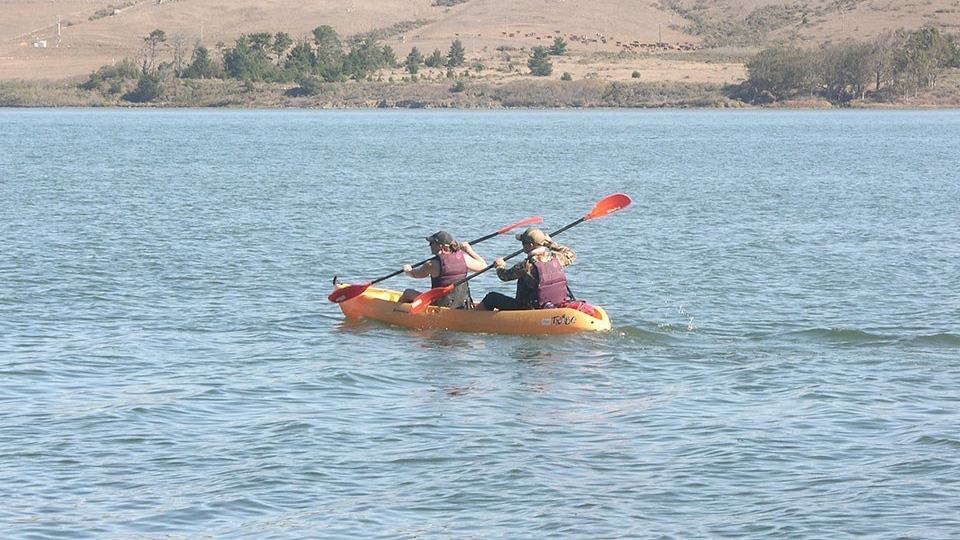
A kayak allows people to observe the changing light on the hills, patches of eelgrass and the movement of birds without the noise of a motor. The official park photograph shows two paddlers seated in a yellow kayak on calm water, accurately depicting the setting discussed in this guide. It is an invitation to enjoy the view at a comfortable pace rather than to chase speed or a distant destination.
Paddlers should not mistake quiet travel for having no environmental impact. Small craft can approach nesting or resting birds closely enough to cause disturbance, and landing on an attractive beach may be prohibited. Observing wildlife from a distance and using existing permitted routes can make the outing more respectful and enjoyable.
Launching and finding an appropriate route
Tomales Bay has several access points, and the Park Service publishes a boat-in camping map showing launches, beaches and useful landmarks. Even visitors who are not camping can consult that map when considering possible routes. The availability and suitability of a particular launch should be checked ahead of time rather than assumed from an online photograph.
Tides can alter shallow passages and the shape of landing areas, while wind may create chop on exposed sections. A visitor should plan how to return to the launch under the conditions likely later in the day. Carrying a map and confirming the weather reduces the risk of turning a relaxed day on the water into an unexpectedly difficult return.
Seasonal protection in the estuaries
Drakes Estero and Estero de Limantour are also associated with paddling, but the National Park Service restricts access to protect wildlife. Kayaking and canoeing are permitted from July 1 through February 28, while boating is closed from March 1 to June 30 during a critical part of the harbour seal pupping season. The estuaries are wilderness areas where motorised craft are prohibited year-round.
Those dates demonstrate why a kayaking itinerary must be based on the specific protected area rather than general regional advice. A route that is permitted in autumn may be closed to all boating in spring. Visitors should check the park's current notices before departing, as additional wildlife restrictions can apply elsewhere around Point Reyes.
Respect closures around nesting birds
The park also identifies Pelican Point, Duck Island and the eastern side of Hog Island as closed to public access throughout the year to protect nesting and roosting birds. These restrictions are part of what preserves the bay's ecological character. A paddler should allow enough distance from islands and closed beaches that the boat does not encourage animals to leave their resting places.
The Point Reyes headlands have further vessel restrictions, and temporary closures may protect sensitive marine mammals or seabirds. Consulting the Bear Valley Visitor Center and current park maps is useful, especially for visitors planning a route near the open coast. A waterway that looks open on a recreational chart may be governed by additional conservation rules.
Boat-in camping with the correct permit
For paddlers who want to stay overnight, some beaches on the western side of Tomales Bay are available for permitted boat-in camping. A reservation is required, and access is limited to the areas identified by the National Park Service. A beach suitable for a midday rest is not necessarily open for a tent, a campfire or an overnight landing.
Camping by kayak requires attention to dry storage, waste handling and the weight of equipment carried aboard. Visitors should also understand whether the tide could reach their chosen landing during the night. An experienced local outfitter may help with route selection, but the guest remains responsible for knowing the applicable park rules.
The open Pacific coast is a different proposition
Point Reyes also offers open-ocean kayaking possibilities, including parts of Drakes Bay, but the National Park Service warns that this is potentially dangerous and unsuitable for most paddlers. Breaking surf, swell, cold water and strong winds create requirements far beyond a gentle paddle on a sheltered estuary. A calm-looking ocean should not be treated as evidence of an easy route.
Independent coastal paddlers need advanced handling, rescue capability and equipment appropriate to the environment. A holidaymaker who has only used a recreational kayak on a lake may be better served by a guided bay outing. There is no loss in choosing the less exposed route when it leaves more time to appreciate the scenery and wildlife.
A gentle holiday governed by responsible choices
Tomales Bay is most rewarding when a paddler brings patience to the experience. A short trip can include the feeling of open space, birds moving above the water and views across the hills without covering a great distance. Careful choices about launches, tides, access and wildlife are part of the enjoyment rather than interruptions.
The Park Service's kayaking information should be consulted again before travel for updated closures, conditions and the latest boat-in camping requirements. A real photograph of paddlers on the bay illustrates what the destination can offer in suitable weather, but visitors must select a route based on the conditions they actually encounter. That is the foundation of a memorable Point Reyes outing.