
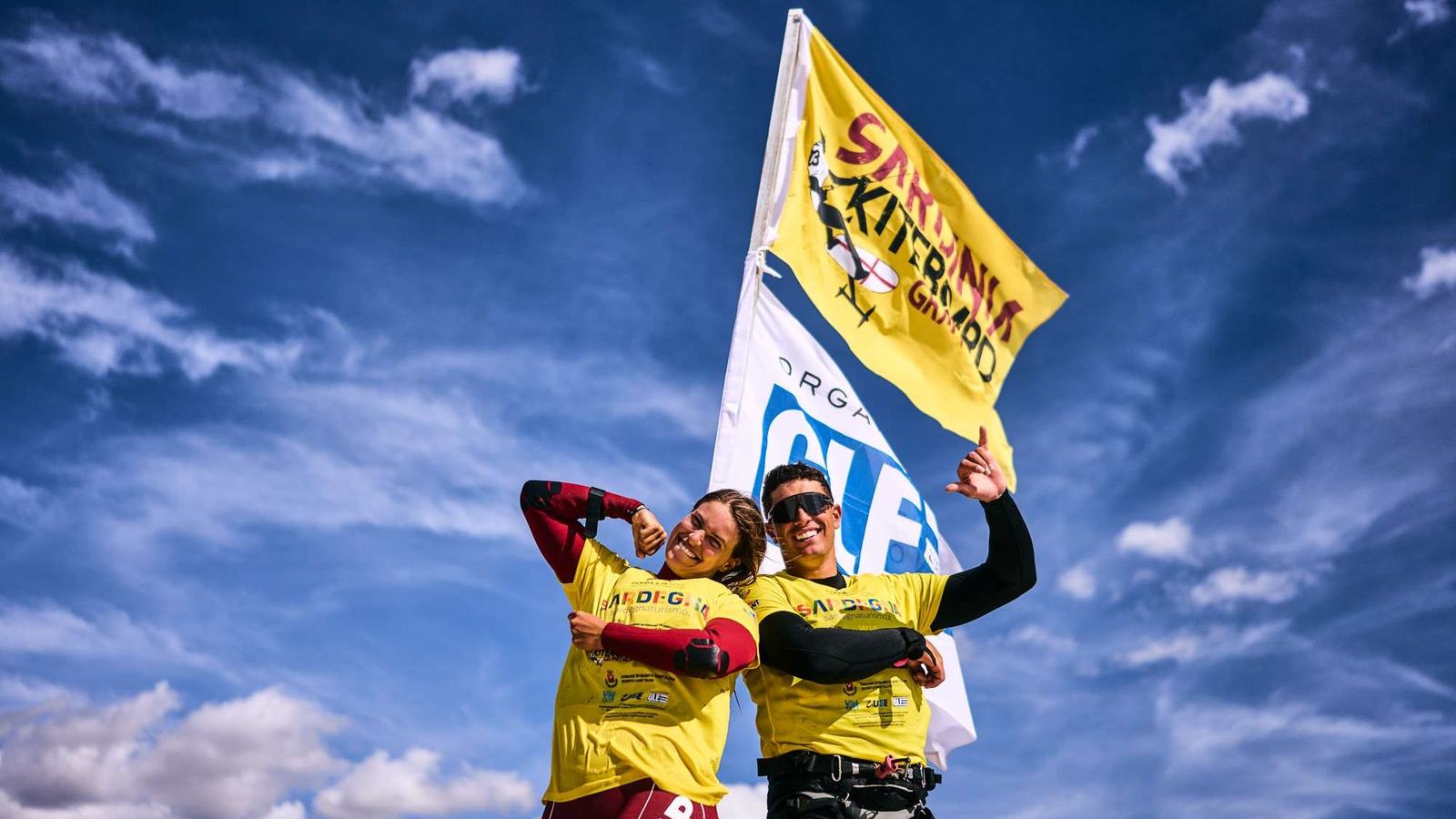
Sardinia's Poetto Beach crowns two Formula Kite winners as Riccardo Pianosi wins at home and Lauriane Nolot adds to her remarkable season in the 2026 Grand Slam.
Sardinia stages a thrilling Formula Kite finale
Poetto Beach near Cagliari has provided the setting for another dramatic finish to the Sardinia Kiteboard Grand Slam, with local rider Riccardo Pianosi and French athlete Lauriane Nolot claiming the two top titles. The concluding races took place on 11 October 2026, following several days in which the competitors had to adapt their tactics to Sardinia's demanding coastal conditions and highly competitive knock-out format.
The competition is of particular interest to visitors who enjoy the Mediterranean from a boat, beach or waterside hotel. Formula Kite's high-speed hydrofoiling boards are a striking sight, seemingly flying over the surface as the athletes use the wind for propulsion. This year's final was held in north-westerly offshore Mistral conditions of around eighteen to twenty-three knots, which made careful judgement especially important.
Poetto's popularity as a sailing and kiteboarding destination rests on both its broad shoreline and its ability to host high-level international competition. A beach visit during a regatta can feel different from a conventional seaside holiday, with coaching boats, officials and intensely focused competitors preparing in view of spectators. Enjoying the spectacle safely means respecting marked areas and the organisers' water-access arrangements.
Nolot turns season-long success into another victory
In the women's fleet, Lauriane Nolot arrived at the final with considerable momentum after winning major titles earlier in the season. Her French training partner Lysa Caval was another automatic finalist, while Israel's Maya Ashkenazi and Great Britain's Ella Geiger advanced from the preceding knockout rounds. The late stages demanded excellent starting technique as well as the speed to keep the boards foiling.
Several challengers made premature starts during the quarter-final and were disqualified under the U-flag rule, highlighting the small margins separating success from an early exit. Others lost vital distance after misjudged manoeuvres in gusty, unsettled water. For casual spectators, those moments explain why being the fastest rider down a straight is not enough to win an elite foil-kite race.
Nolot controlled the decisive final and added Sardinia to a season that had already brought European and world championship successes. Caval took second overall, with Ashkenazi finishing third. The result was more than a demonstration of equipment speed: it showed the value of choosing a reliable course, anticipating wind shifts and maintaining control when opponents attempt a different tactical approach.
Pianosi's home victory comes after a final-race scare
Riccardo Pianosi provided the local crowd with a memorable win in the men's competition, although the final was anything but routine. He had already shown the speed to challenge at the front, then lost his lead after a poor tack allowed American Noah Runciman and fellow Italian Flavio Marx to pass. With the finish approaching, the question became whether he could make up the lost distance without another mistake.
His recovery depended on a timely gybe toward the finishing mark. Pianosi turned earlier than the other leading riders and found a more efficient route, accelerating across the finish in front. The result illustrates an appealing aspect of kite racing: a tactical decision taken in seconds can matter more than a seemingly comfortable lead only moments before.
Vojtech Koska of the Czech Republic secured second overall despite a costly start during the men's final, while Marx earned third to place a second Italian on the podium. Runciman finished fourth. These positions reflect the competition format as well as the final race itself, another reason why spectators following the event should pay attention to the official scoring rather than just the first board they see crossing a line.
Formula Kite presents a different spectacle from conventional beach sailing because riders travel on submerged hydrofoils with far less of their board in the water. A competitor's choice of angle, the quality of each tack and the ability to remain balanced all become highly visible as the fleet changes direction. Watching at close range gives families an introduction to the same wind-awareness and shared-waterway principles that matter to recreational sailors and boat owners.
What the weekend says about Sardinia and watersports
Poetto has become an established international venue for kiteboarding, with this year's event marking a decade of major competition at the beach according to the organisers. It is easy to see the appeal: a broad expanse of water, a strong sporting community and conditions that can produce extraordinary speeds. Yet the same offshore wind that rewards expert racers can be dangerous for beginners who lose control of their equipment.
Anyone inspired by the spectacle should start with a recognised local kite school, appropriate safety gear and supervision. Learning to control a kite, recover a board, judge offshore conditions and recognise the movements of other water users is more important than buying racing equipment. Independent sessions should be planned around suitable forecasts and approved launching areas, not around what professional competitors can manage.
The championships also demonstrate how watersports complement the wider leisure-boating economy. Spectators may combine a trip to the event with sailing, coastal walks and exploring Sardinia's food and accommodation, while competitors and their support teams make use of local transport and shore facilities. Those wider benefits need not depend on building new permanent venues for every competition.
For the international competitors, the next major focus is the world championship programme scheduled in Fortaleza, Brazil, in January 2027, with qualification opportunities linked to the Los Angeles Olympic cycle. For visitors to Poetto, the 2026 event will be remembered for an exceptional French women's champion and a hard-fought home victory that was settled by smart decisions in difficult wind.