
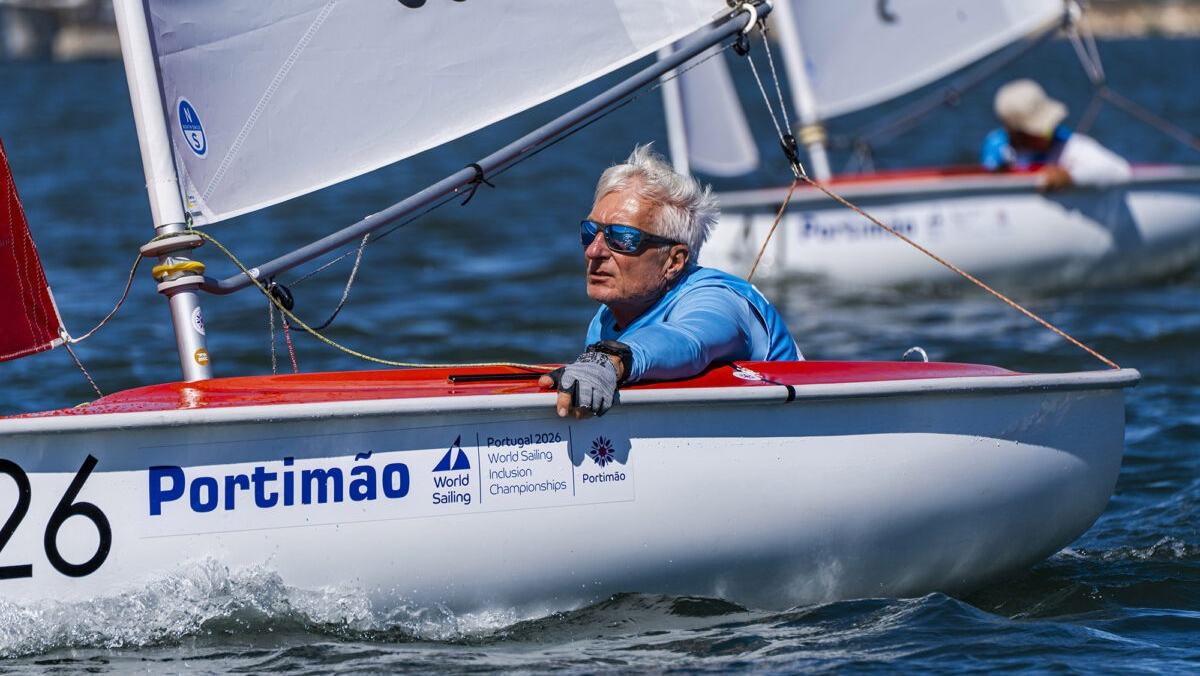
At the 2026 World Sailing Inclusion Championships in Portimão, Polish sailor Piotr Cichocki raced both individually and alongside his wife Joanna in adapted keelboats.
A husband-and-wife crew in Portugal
Piotr Cichocki arrived at the World Sailing Inclusion Championships in Portimão competing in both the single-person and two-person keelboat events. In the latter, the experienced Polish sailor raced with his wife Joanna, making the competition a shared family experience.
World Sailing profiled the pair on 9 October as Cichocki pursued medals across both classes. Their partnership offers a human perspective on a sport that often highlights results rather than the relationships between crew members.
Adapted boats make different roles possible
Inclusive sailing programmes use equipment and methods intended to help people with different physical abilities or impairments take part. The Hansa 303, raced in Portimão, is one of the small keelboat designs associated with this approach.
Clubs offering adapted sailing should assess each participant's needs and provide suitable instruction. The existence of an inclusive class does not mean every location has every boat or facility available.
Working together changes the experience
Sharing a boat means discussing manoeuvres, observing wind shifts and responding to changing competition conditions as a team. Married partners may bring an existing understanding of each other, although sailing still requires clear communication.
The Cichockis' race experience illustrates that learning together can be rewarding even when the crew is ambitious and competitive. Newcomers can enjoy a similar sense of cooperation in supervised club sessions without racing at international level.
Competition remains an important motivation
Cichocki is an experienced sailor whose career has included offshore sailing and the Paralympic Games. His enthusiasm for close racing remained clear as he approached the final stages of the 2026 championships.
The account described his position before the last day, not the final classification of every event. Readers interested in medals should consult the organisers' confirmed competition results.
A way into sailing for more people
The championship brought a wide range of sailors to Portugal, demonstrating different ways to take part in small-boat racing. The Cichockis' story also places companionship alongside high-performance sport.
People interested in adapted sailing can look for local Sailability or similar programmes with experienced instructors. A welcoming first session can matter more than immediately deciding whether to race.
The practical challenge of sharing a small boat
A husband-and-wife crew can bring long-established habits of communication onto the water, but sailing still requires clearly agreed responsibilities. A small keelboat provides little room for uncertainty during a tack or approach to a mark. Each partner needs to understand which controls they are responsible for and when the other person needs a clear warning rather than a silent assumption.
That teamwork can be practised away from competition. A couple learning together might start by deciding who steers, who handles the sails and how they will exchange jobs during a calm training session. Switching responsibilities occasionally can make both people more capable without forcing either to abandon the tasks they enjoy most. A supportive instructor can help couples develop routines that fit the boat.
Equipment that makes inclusive sailing practical
An adapted keelboat still needs suitable flotation, secure seating, reliable controls and a safe way of transferring participants aboard. Different sailors may require different aids, and no single modification is appropriate for every participant. The presence of adapted equipment should be treated as an invitation to ask how a club supports access, rather than evidence that a boat will suit every visitor without preparation.
Before booking, a participant can discuss boarding arrangements, mobility needs, weather limitations and the type of instruction offered. Staff should explain what they can provide and what they need to know in advance. Thoughtful planning protects privacy as well as safety, allowing sailors to describe only what is relevant to a comfortable experience rather than having to justify their desire to take part.
Lessons from close one-design racing
One-design competition reduces some differences between boats, placing greater weight on starting decisions, handling and communication. For the Cichockis, sailing in a two-person configuration also means combining individual skills in a way that must remain effective under racing pressure. A small mistake in timing can cost places, but the crew can recover by staying calm and concentrating on the next manoeuvre.
Recreational crews can take the same principle into ordinary sailing. After an imperfect tack or untidy approach, the useful response is to identify what happened and prepare for the next decision. Blaming another person rarely makes the boat faster. The best teams develop language that is direct when action is needed and constructive once the immediate task has passed.
The difference between participation and independence
Inclusive sailing should provide meaningful decisions and opportunities to build skill, not simply carry someone around the harbour as a passenger. Participants may want to steer, learn sail trim or eventually race, and the route toward those goals should reflect individual confidence and ability. Training centres need to offer a progression rather than regard a first experience as the final achievement.
Independence at sea also has sensible limits. Every sailor, regardless of ability, must respect the skipper's responsibility for safe operation and the weather conditions. A participant who can carry out a task successfully in sheltered water may need further support in stronger winds. Good instruction recognises progress while allowing people to develop at a pace that makes lasting participation possible.
Turning an inspiring story into a local opportunity
A successful international regatta can attract attention to inclusive sailing, but most future participants will encounter the sport through a modest club event or introductory session. Local availability matters: an accessible pontoon, a suitable boat and volunteers who understand the programme may be more useful than an impressive list of distant competition results.
Anyone inspired by Piotr and Joanna's partnership can start by asking a recognised sailing centre whether it runs accessible or two-person keelboat sessions. It is reasonable to ask about costs, facilities and routes into regular crewing before making a commitment. The enduring message is that sailing can become part of family life when the opportunity is practical, welcoming and safe.
An inclusive sailing programme also needs practical policies about information and consent. Participants should know who will be present on the boat, what help is being offered and how any photographs or personal stories may be used. Clear arrangements support dignity and trust and allow sailors to concentrate on improving their skills rather than negotiating expectations while the boat is already underway.
Returning to the club after a successful session can be a useful time to inspect what went well in the equipment setup. Adjusting a seat, changing the lead of a control or rethinking an instruction may make the next outing more comfortable. Small improvements are often easier to sustain than a costly redesign undertaken before the crew has gained practical experience.
Source
World Sailing