
Explore boating beyond sea kayaking at Michigan’s Pictured Rocks, with Munising Bay sailing, quiet inland lakes and clearly explained vessel restrictions.
Michigan's Pictured Rocks National Lakeshore has become closely associated with kayakers navigating its sandstone cliffs, yet the park offers a wider variety of boating experiences for people who own modest craft. Small sailboats can be carried to Munising Bay from Sand Point Beach, canoes belong on sheltered inland waters, and suitable motorboats can explore Lake Superior from established launch ramps. The National Park Service sets out these differences in its official non-kayak boating guidance, distinguishing between vessels appropriate for a powerful inland sea and those better used on smaller lakes. That distinction is the foundation for a satisfying holiday. Pictured Rocks is not a place where any boat can be launched anywhere. It is a varied destination whose special scenery rewards matching the craft, access point and crew to the particular stretch of water.
The appeal of an alternative boating holiday
The sandstone cliffs, wooded coastline and clean-looking waters of Lake Superior make the area a memorable destination even before anyone boards a boat. For a small-boat owner, the first practical question is not which photograph looks most dramatic but where the vessel can be operated sensibly. The National Park Service identifies three broadly accessible boating areas: Lake Superior, including Munising Bay; Little Beaver Lake, connected to Beaver Lake; and Grand Sable Lake. Their characteristics and rules differ markedly. An afternoon with a small dinghy on a sheltered bay should not be confused with a passage along exposed cliffs. By thinking of the park as several distinct boating environments, visitors can enjoy the landscape without taking on unsuitable conditions merely to reach a celebrated viewpoint.
Sailing in the comparatively sheltered Munising Bay
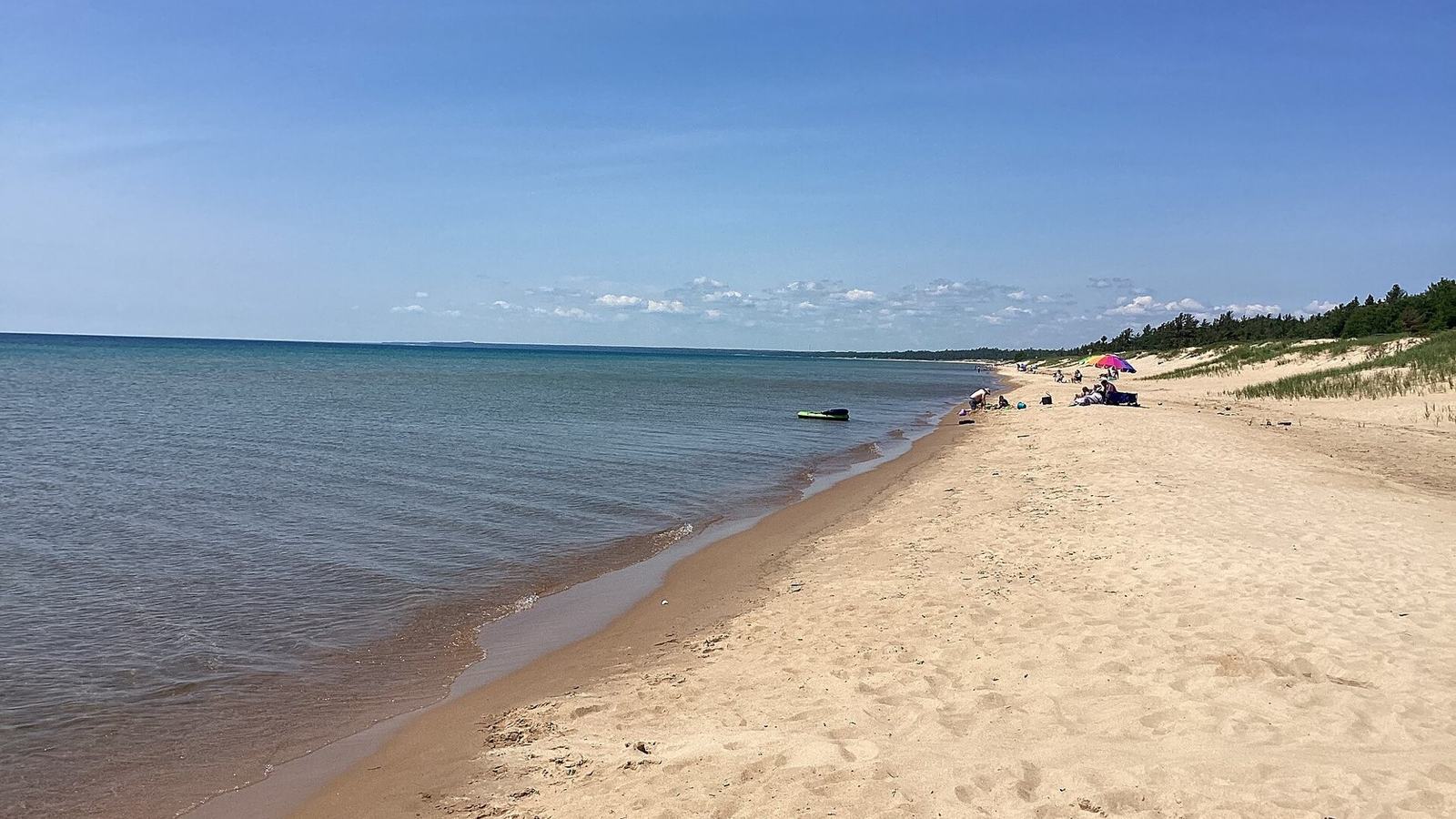
The park specifically says that small sailboats can be carried from the Sand Point Beach parking area to Munising Bay. That makes the beach relevant to people with portable sailing dinghies, although it is not a commercial marina or a guarantee that every design can be carried safely. Munising Bay is described as generally more sheltered than the open Lake Superior shoreline, which can be useful for suitable small-boat outings. The word generally matters. Weather and wave conditions may change, and a dinghy sailor should have the competence to handle gusts or return ashore without assistance. A pleasant day might involve a conservative sail close to an authorised access point, with the extraordinary lake scenery enjoyed at a relaxed pace.
Why the famous cliffs demand different vessels
The Pictured Rocks cliffs rise approximately 50 to 200 feet directly out of Lake Superior, according to the National Park Service. Their drama is part of the attraction, but the high shore can leave very few protected landing opportunities when the wind and waves increase. The NPS cautions that motorised boats and properly equipped sea kayaks, rather than open recreational canoes, are appropriate for the exposed lake. A small sailing dinghy that is enjoyable within Munising Bay should not be assumed suitable for a coastal passage beneath the cliffs. Careful boat selection is not a restriction on the pleasure of travel; it prevents an appealing landscape from becoming an unreasonable risk for an inexperienced crew.
Launching a motorboat at the correct ramp
For motorboat owners, the NPS identifies the City of Munising ramp, approximately one mile west of the town harbour on M-28, and a Burt Township ramp in Grand Marais harbour as established Lake Superior access points. Both deserve independent checks for current ramp condition, parking arrangements and any applicable fees. A visitor should also plan how a vessel and trailer will be recovered after returning from the lake, particularly if wind or congestion affects the ramp. Unlike carrying a dinghy to Sand Point, launching a powered boat may involve a substantial trailer and a different approach to storage. A straightforward preparation routine can make the boating day more enjoyable than improvising once other users are waiting to launch.
Little Beaver and Beaver Lakes for canoes
A canoe holiday within Pictured Rocks is better centred on the inland lakes than on Lake Superior. The park points paddlers to Little Beaver Lake, Beaver Lake and Grand Sable Lake, describing their sheltered surroundings as places to enjoy a slower northern-woods experience. Little Beaver connects to the larger Beaver Lake through a shallow channel, and the available access is not identical to a deep-water marina. A canoe can make the landscape feel intimate, particularly when wildlife can be observed without the sound of an engine. The ability to move quietly does not eliminate the need for safe equipment, appropriate weather and respect for wilderness rules. A short outing can be satisfying without attempting to cross the largest possible area.
Electric motors and horsepower limits
Motorboat rules vary among the lakes. On Lake Superior, the NPS permits motorboats and engines of any size subject to applicable regulations. Grand Sable Lake has a fifty-horsepower limit, while Little Beaver Lake and Beaver Lake are electric-motor-only waters within the Beaver Basin Wilderness. These rules matter to owners who might otherwise assume that a trailerable boat can be used throughout the park. An outboard tender suited to Munising Bay might be prohibited or restricted on an inland lake. Even an electric-motor boat should be operated within current rules and with consideration for other users. Choosing an appropriate waterbody before transporting the craft avoids frustration and protects the experience of people seeking a quieter setting.
Paddleboards have a place too
The National Park Service describes Munising Bay as a comparatively sheltered place to practise paddleboarding and also identifies the inland lakes as potentially suitable for paddleboards. Such descriptions should not be interpreted as assurance that all weather is safe or that instruction is unnecessary. A person standing on a paddleboard may be exposed to sudden changes in wind or fatigue, and cold-water conditions can complicate recovery after a fall. A sheltered launch is a useful starting point for selecting a route, not a substitute for assessing it. Travellers who are unfamiliar with the water may be better served by a short supervised outing rather than heading into open water because the bay looks calm from shore.
A lake whose weather can change suddenly
Lake Superior has a justified reputation for challenging conditions. The NPS warns that marine weather can change rapidly and recommends checking a current forecast along with the local Great Lakes buoy data before leaving harbour. A sailor or motorboat operator must consider more than wind speed at the moment of departure. The direction of waves, visibility and the availability of a safe return route matter, especially near cliffs without landing options. The safety plan should allow a trip to be cancelled or shortened. A boat that is capable on a calm inland lake may behave very differently in steep waves. Boating is most rewarding when the crew treats changing conditions as a normal part of decision-making rather than a reason to press on.
Wake and shoreline rules
The park's official guidance requires slow or no-wake speed within one hundred feet of the shore, other vessels, piers, people, rafts and swimming areas. That requirement is especially relevant on a busy holiday weekend when different kinds of small craft share the water. The wake of a passing motorboat can affect a canoe, paddleboard or anchored vessel even when the driver considers the movement modest. Operators should maintain a lookout, anticipate where other people are travelling and avoid creating unnecessary wash. Courteous boating also benefits swimmers and people relaxing along the shore. A holiday destination remains attractive when all its users recognise that they share responsibility for safety and enjoyment.
Personal flotation and Michigan's rules
The NPS states that an appropriate lifejacket is required by law for every person aboard a boat. Michigan additionally requires children under six to wear one while riding on an open deck when the vessel is underway. These are minimum legal requirements, not a recommendation that adults in small craft can disregard buoyancy equipment whenever the weather is pleasant. A dinghy sailor or canoeist should wear suitable equipment and understand how to respond to a capsize. Visitors should check the current United States Coast Guard and Michigan regulations for the type of craft being used. Safety practices need to match the boat, crew and water temperature. A family holiday should begin with correct equipment rather than last-minute compromises at the launch.
Pet restrictions on different lakes
The park's pet rules also vary by location. Pets are prohibited in boats on Little Beaver and Beaver lakes because these waters lie within the designated Beaver Basin Wilderness. The NPS allows pets aboard boats on Lake Superior and Grand Sable Lake subject to other restrictions, while some beaches within the wilderness zone are off limits to pets. A traveller bringing a dog should check the precise current rule for both the boating area and any intended landing. It would be a mistake to assume that a pet permitted on one lake can be taken ashore on any beach. Clear expectations avoid disruption for the owner and help protect the areas where wildlife and natural conditions receive particular consideration.
A journey that can remain comfortably modest
Pictured Rocks need not be experienced as an endurance challenge. A visitor with a portable sailboat might choose an appropriate session in Munising Bay, followed by a walk near Sand Point. Another family may bring a canoe for Little Beaver Lake and spend time listening to birds among the forested banks. A more experienced motorboat crew may investigate an organised cruise along a suitable part of Lake Superior, with the marine forecast shaping every decision. These are distinct ways of enjoying the same national lakeshore. Their value does not depend on reaching the most exposed cliff or taking a dramatic photograph. Choosing the right boating environment is an achievement in itself.
The photographic and source record
The lead image is an authentic photograph of Sand Point Beach at Munising, taken by PolarisNC on 28 June 2026 and released as Creative Commons Zero on Wikimedia Commons. The picture documents the actual beach identified by the NPS for small sailboat access, not an unrelated Great Lakes location or a claim that a sailing event took place on the pictured day. The photograph has been resized for editorial publication, with its source and public-domain dedication recorded. The article's boating rules, launch locations and safety cautions come from the National Park Service's primary non-kayak boating guide. Live conditions and any newer restrictions must be checked against current official park notices before travel.
A lakeshore suited to more than one kind of boat
Pictured Rocks offers a varied boating holiday precisely because its waters are not all the same. Munising Bay, the exposed Lake Superior cliffs and the smaller inland lakes create opportunities for sailing, powered touring, canoeing and paddleboarding when the appropriate craft is used. The central lesson is straightforward: match the experience to the vessel and crew, respect local limits and treat weather as a decisive factor. In return, visitors can explore a remarkable Michigan landscape without relying on a large yacht or a demanding offshore passage. The pleasure comes from time on the water and the knowledge that each outing was planned for the place it actually takes place.
Sources and photograph attribution
Official destination and boating guidance: National Park Service — Pictured Rocks Non-Kayak Boating. Current access, rules, weather and reservations must be checked independently before travel.
Photo: PolarisNC — “Sand Point Beach in Munising, Michigan at daytime.jpg” (CC0), via Wikimedia Commons; resized and JPEG-converted for editorial presentation. Source: https://commons.wikimedia.org/wiki/File:Sand_Point_Beach_in_Munising,_Michigan_at_daytime.jpg. Licence: http://creativecommons.org/publicdomain/zero/1.0/deed.en. Original rights remain with the credited creator or as specified by the source and licence.
