
Pictured Rocks National Lakeshore offers dramatic sea kayaking beneath coloured sandstone cliffs, with experienced guides and cold-water preparation essential.
A shoreline that looks different from a kayak
Pictured Rocks National Lakeshore occupies a remarkable stretch of Lake Superior coast in Michigan, where mineral-stained sandstone cliffs rise above clear, changing water. A kayak provides an especially intimate view of the patterns and recesses in the rock, making it possible to appreciate features that can look small from the shore. The scenery is dramatic, but the National Park Service stresses that conditions along the exposed coast require preparation.
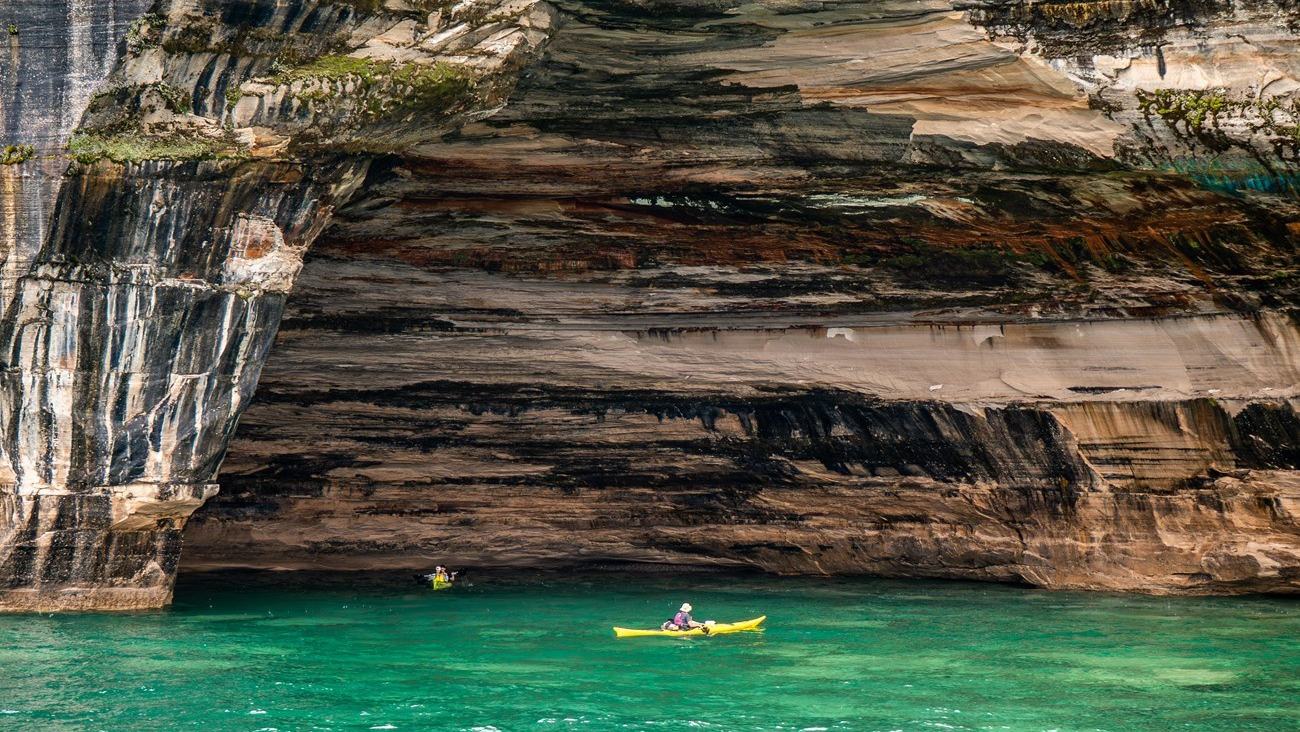
A calm image of yellow kayaks beneath towering cliffs should not be taken as a promise of easy water. Lake Superior is an inland sea with the ability to build powerful waves, and steep rock faces provide limited places to land. Travellers seeking the famous cliff views should choose a route suited to their ability or use a properly authorised local guide.
Experienced sea kayakers or guided groups
The Park Service advises that paddling along the cliffs should be undertaken by experienced sea kayakers or with a qualified guide. A sit-in sea kayak intended for open water, appropriate flotation and rescue equipment, and the ability to manage unexpected conditions are central requirements. A broad recreational kayak suitable for a small sheltered lake may not be appropriate for exposed coastal travel.
An organised excursion can reduce the complexity of deciding where to launch and when to turn back, although the operator still needs cooperation from passengers. The guide will assess weather and group ability before departure. A professional decision to cancel an outing when conditions deteriorate should be respected rather than treated as an inconvenience.
Choosing an officially authorised operator
Pictured Rocks National Lakeshore operates a commercial authorisation process for companies providing guided kayak trips. The NPS publishes an official list of businesses authorised to guide within the national lakeshore, allowing visitors to distinguish permitted operations from unrelated online advertisements. Schedules and prices should be confirmed directly because authorisation does not guarantee a departure on a specific day.
Travellers should ask whether transport to the launch, suitable clothing and safety equipment are included, and whether prior experience is required. Some trips can involve a support vessel or a longer approach, while others are structured around shorter stretches of the coast. The right choice depends on the crew and the forecast rather than the promise of the largest number of caves visited.
Lake Superior demands cold-water thinking
The water can remain very cold even during summer, while offshore wind and fog can change conditions rapidly. The NPS warns that calm water at Munising Bay or Grand Marais does not guarantee similar conditions along the more exposed cliffs. A paddler should check the specific marine forecast and remain alert to changing clouds and wave patterns after departure.
Clothing needs to be chosen for an unexpected immersion rather than only the air temperature. Appropriate personal flotation equipment, useful communication and a plan for assisted recovery are necessary, especially where the nearest accessible shore is some distance away. A short route in suitable weather is more worthwhile than a long one that leaves a group exhausted.
Alternatives on smaller inland lakes
The national lakeshore also includes inland waters such as Little Beaver Lake and Grand Sable Lake, where shallow launches can offer different opportunities for small craft. These may be more appropriate for some recreational paddlers than the open Lake Superior shore, depending on local conditions and applicable rules. They allow visitors to enjoy forested scenery without making an exposed cliff trip their only boating option.
An inland lake can still develop wind and waves, and access may be seasonal or restricted. Visitors should read the relevant park notices, check the launch and establish a practical return before leaving shore. A family with limited paddling experience may have a far more enjoyable afternoon on suitable sheltered water than trying to imitate an advanced sea-kayaking itinerary.
The geological spectacle deserves an unhurried pace
Minerals and weathering have given the cliffs varied colours, and the relationship between rock and water can look different as the light shifts. Paddling slowly allows the group to notice changes in texture and the scale of the shoreline without rushing from one landmark to the next. An experienced guide can also explain how erosion shapes caves and arches over time.
The natural environment should not be treated as a playground where every recess must be entered. Waves may rebound from a rock face, and approaching an unstable cliff can create hazards that are not obvious in a photograph. Remaining at a responsible distance may be both safer and better for appreciating the wider scene.
Respect the shore and other water users
The lakeshore supports wildlife and sensitive habitats, so visitors should use authorised access and keep rubbish secure. A kayak's quiet movement can be an advantage for observation, but paddlers should not deliberately approach nesting birds or resting animals. Camping and landings may also be governed by permits and seasonal requirements.
Motorboat operators sharing the water should avoid creating unnecessary wake near small craft, while kayakers should remain visible and avoid obstructing channels. Everyone benefits when the trip is conducted as part of a shared recreational landscape rather than in isolation from other users.
An authentic photograph and a realistic invitation
The official National Park Service image shows two yellow kayaks beneath the coloured sandstone cliffs of Pictured Rocks. It is a real scene from the destination rather than a generated graphic or photograph of an unrelated coast. That makes it a useful visual introduction, although the actual conditions on any future visit must determine what is possible.
A careful visitor can begin with the NPS kayaking information, choose a suitably authorised operator and allow an alternative day for poor weather. Pictured Rocks offers extraordinary small-boat scenery precisely because the lake and cliffs are powerful natural features. A memorable outing respects that power while leaving enough time to enjoy the view.